

First 'pounds for pylons' energy bill discount sites revealed
Households living within 1600ft of upgraded pylons will get £250 a year off their electricity bills.
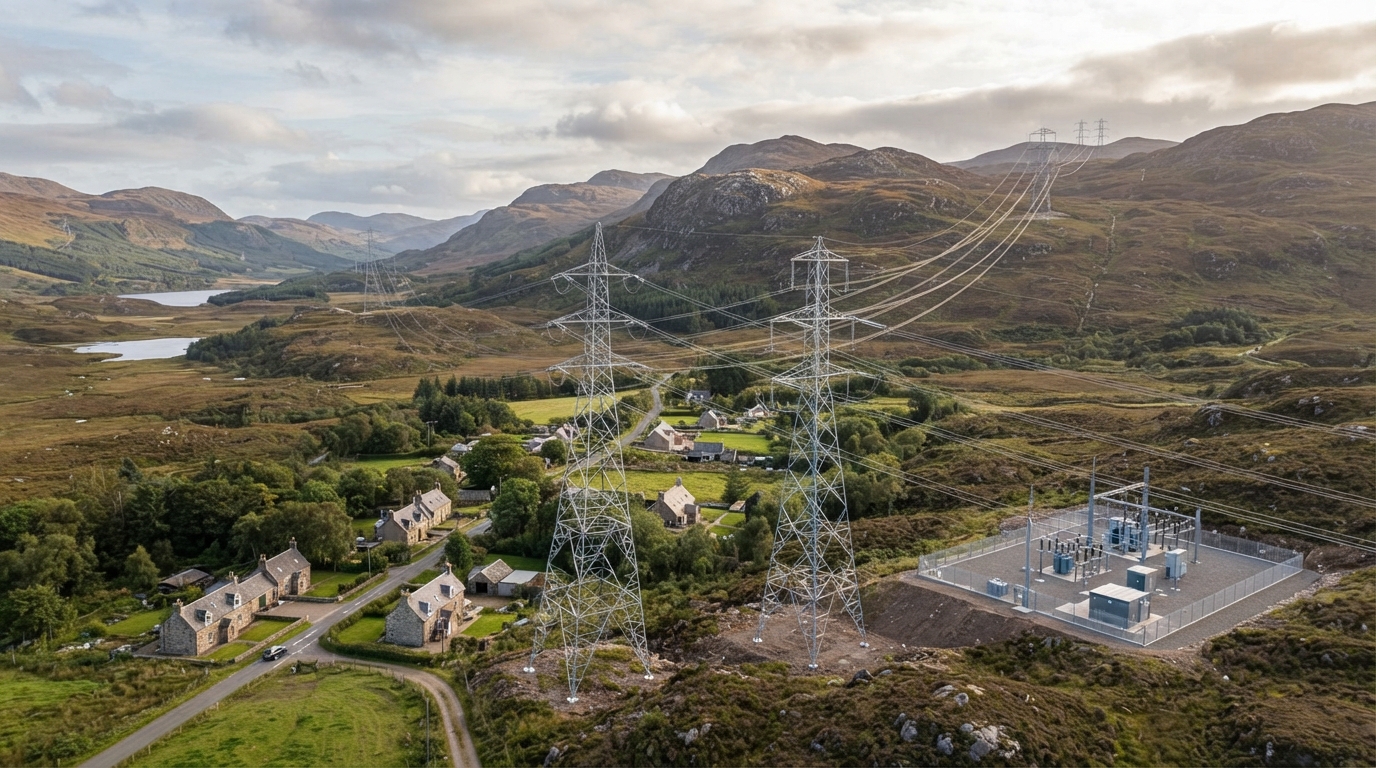
The initial locations have been disclosed where households situated near newly upgraded electricity pylons and substations will qualify for an annual £250 reduction on their energy bills.
Under a scheme sometimes referred to as "pounds for pylons," customers residing within 1600 feet (500 meters) of 43 transmission projects across Britain will be eligible for these payments for a duration of up to 10 years.
UK ministers assert that modernizing and replacing infrastructure that is decades old is crucial for the distribution of renewable power and for enhancing energy security.
However, critics contend that these discounts offer insufficient compensation for the adverse effects on homes, communities, and the environment.
Approximately two-thirds of these projects are located in Scotland, intended to bolster the rapidly expanding wind energy sector. Nevertheless, significant upgrades are also planned throughout Britain, encompassing regions north of London, East Anglia, the Midlands, and North Wales.
UK Energy Minister Michael Shanks stated that grid upgrades are "a vital part of how we deliver secure, homegrown energy and unlock economic growth across the country." He further remarked, "It is a moment of national renewal – upgrading what was built largely in the 1960s for the modern age and is our route to bringing down electricity bills for households across the country. It's vital we build again as a country and we are determined those communities which host pylons should benefit, which is why we're bringing down the energy bills of those hosting this vital national infrastructure."
The Department for Energy Security and Net Zero indicates that Britain's electricity grid was predominantly designed for an era reliant on coal and gas-fired power stations, and now necessitates substantial upgrades to manage increasing volumes of renewable energy. Ministers explain that the lack of capacity sometimes leads to wind farms being paid to cease operation because there isn't adequate network infrastructure to transport the electricity to homes and businesses that require it.
The Beauly to Denny power line, extending from the Highlands to central Scotland, has already undergone upgrades and became operational in 2015.
To finance this discount scheme, approximately 80 pence per year will be added to all energy bills. Most qualifying households will automatically receive the discount on their electricity bill every six months, though some, such as those with commercial meters, might need to apply. The first payments are slated to begin early next year, at which point eligible customers will receive further details from their supplier or the energy regulator Ofgem.
An assessment conducted earlier this year estimated that between 120,000 and 160,000 households could eventually benefit from these discounts as more projects are implemented.
Rural campaign groups argue that the loss of landscapes cannot be quantified, and some residents near proposed projects deem the offered compensation an insult.
Kate Matthews of the Save Our Mearns campaign group, which is opposing plans for upgraded pylons in north-east Scotland, including the Kintore to Tealing project, described the discount scheme as an insult. She stated, "£2,500 off electricity bills over 10 years is a slap in the face for residents facing ruined businesses and unsellable homes. This government is either massively out of touch or is showing their contempt for affected residents and energy consumers." Matthews added that the plans have already caused "mental anguish" for residents who now anticipate a decade of development involving noise, road closures, and heavy traffic. "Then a lifetime of pylons impacting on their environment, agriculture, tourism, property values, physical and visual amenity to name a few," she concluded.
The dimensions of the pylons will vary based on their location and purpose; however, in north-east Scotland, some of the proposed latticed structures are approximately 187 feet (57 meters) tall. Their appearance would be similar to the already upgraded line from Beauly to Denny, where pylons range from 138 feet (42 meters) to 213 feet (65 meters). Many projects incorporate a combination of underground and pylon-supported cables, along with substations, converter stations, and other equipment used in electricity transmission.
Campaigners have advocated for larger sections of the network to be "undergrounded." However, National Grid and transmission companies argue that this would be considerably more expensive and complicate repair work.