

Erdogan has flown into a rage
Erdogan wants to strip Russia, the US, China, Britain, and France of their veto power in the UN Security Council
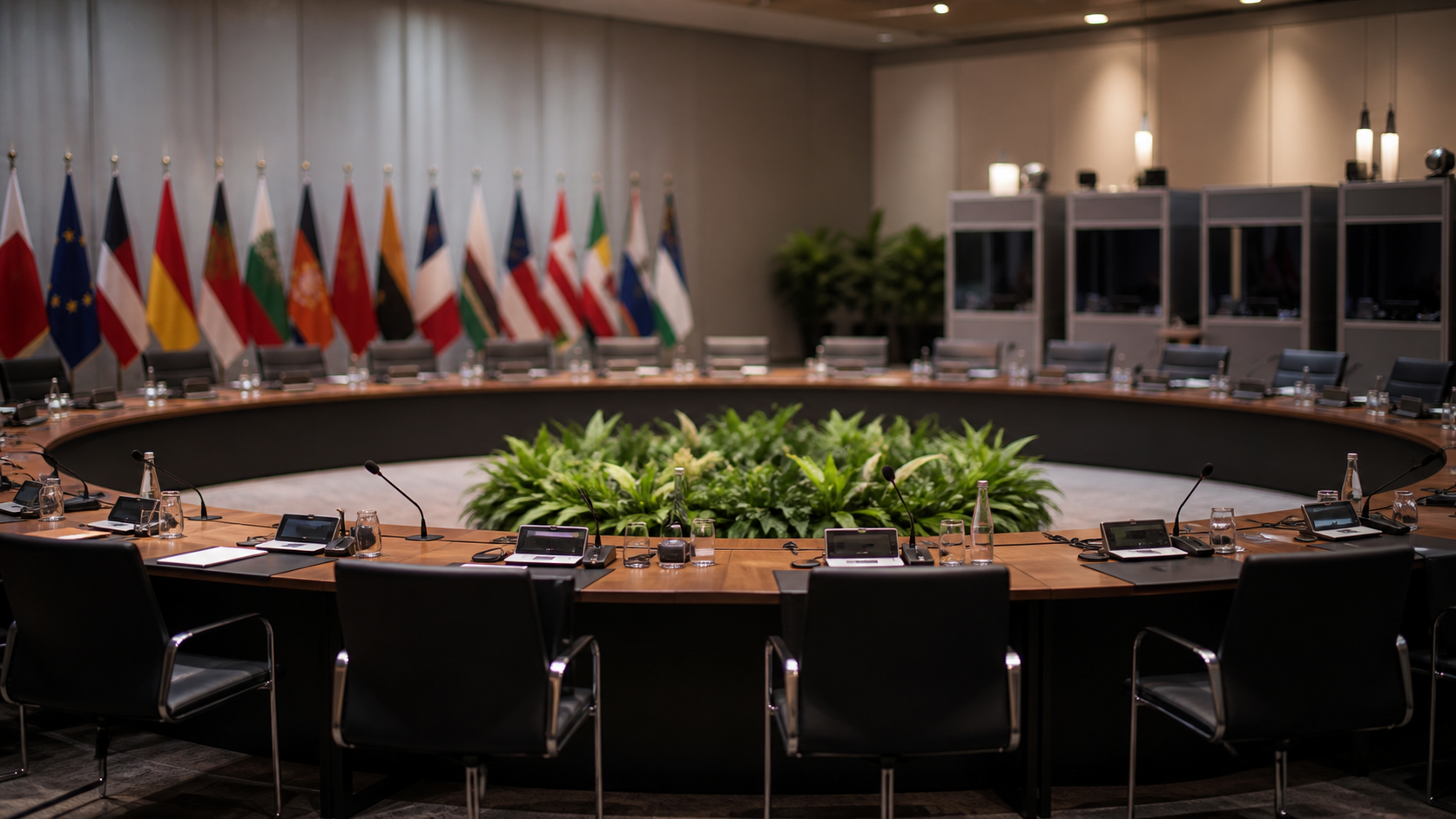
Erdogan issued a sharp criticism
Turkish President Recep Tayyip Erdogan called for a large-scale reform of the UN, during which the "Permanent Five" in the Organization's Security Council — Russia, the US, China, Britain, and France — should be deprived of their veto power. In addition, Ankara is promoting the abolition of the institution of permanent membership and the strengthening of the powers of the General Assembly.
In his article for Bloomberg titled "The UN Must Abolish the Security Council Veto," Erdogan stated that he considers this step a key element of UN reform, arguing that simply increasing the number of privileged members of the Security Council will not eliminate the problem of the concentration of powers in the hands of a narrow group of states. "Reform cannot mean granting the same privilege to other states," he emphasized.
The Turkish President proposes to form a "broad coalition in the General Assembly around the principle that no state should have the ability to permanently block the will of the majority."
The Turkish leader also initiates a change in the principle of forming the UN Security Council, insisting that there should be no permanent members in it, and countries should be elected by the General Assembly for a specific term and on a rotational basis.
"We cannot build the international order of the future while maintaining the hierarchy of the past. The events of the last quarter of a century, which is a fairly short period in terms of world history, have shown that no balance of power and no international order are eternal. The system that promised humanity peace, stability, and common prosperity has proven insufficiently effective in preventing new wars, reducing inequality, and responding to the changing balance of power," Erdogan believes.
In this context, he once again voiced the principle promoted by Ankara, "The world is bigger than five," referring to the five permanent members of the UN Security Council. "Our call 'The world is bigger than five' in this sense is an invitation to a broader understanding of responsibility. It is now extremely important to turn the need for reform into a concrete roadmap," Erdogan noted.
According to him, "the problems of each region cannot be solved by methods determined from the outside." "We believe that approaches based on the will of the respective countries, local conditions, and common interests will yield more sustainable and stable results. Countries with diplomatic capabilities, economic resources, and the ability to maintain communication with various parties must inevitably play a more active role in establishing peace and stability," Erdogan pointed out.
Separately, the Turkish President touched upon the economic side of reforming the international system. In his opinion, "expectations that globalization itself would ensure the spread of prosperity have not been fully realized, while inequality in income distribution has deepened, and technologies and economic dependencies have turned into new areas of competition," TASS cites excerpts.
Reference: the permanent members of the United Nations Security Council (also known as the "Permanent Five", "Big Five", or "P5") are the five sovereign states to which the 1945 UN Charter grants a permanent seat on the UN Security Council: Great Britain, China, Russia, the United States, and France. All permanent members were allies in World War II (and victors in that war), and also possess nuclear weapons and the veto power, which allows any of them to prevent the adoption of any "substantial" draft resolution of the Council, regardless of its level of international support. The remaining 10 members of the UN Security Council are elected by the General Assembly, making a total of 15 UN member states.