

England's mayors to be given power to introduce tourist tax
The government is expected to detail how local leaders will be able to impose levies on overnight stays.
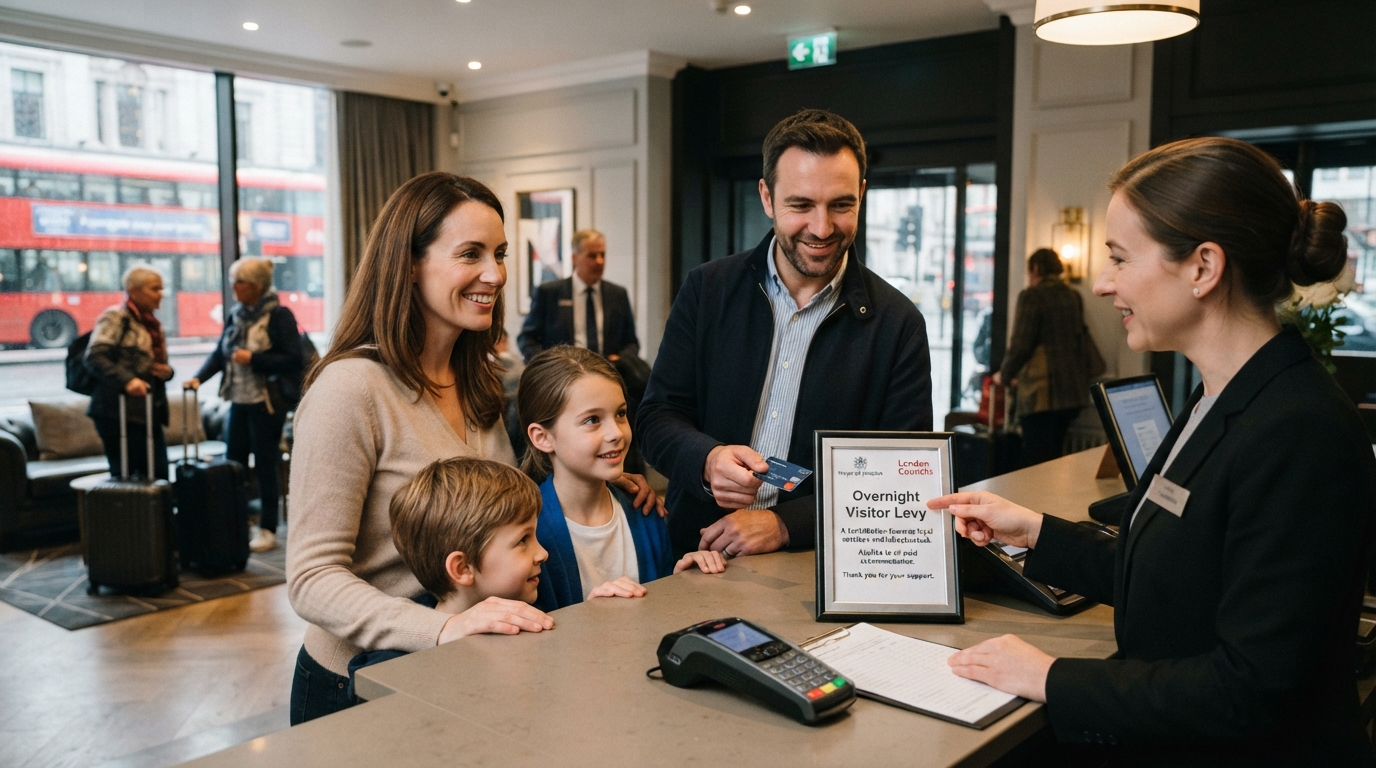
England’s mayors are to be handed the power to bring in a tourist tax
Cities such as London are expected to use the new powers to impose a charge on overnight stays
Mayors in England are set to be given the authority to introduce an overnight visitor levy on tourists, under plans due to be announced by the government later.
Local leaders would be able to impose an uncapped levy, described as a “tourist tax”, as a percentage of accommodation costs rather than as a flat-rate fee.
Hospitality leaders have warned that “jobs are now at risk” because of the proposals, and said families holidaying in England would feel the impact.
Ministers are said to believe, however, that mayors are unlikely to make it too costly, with budget holidays protected by the fact that it is not a flat fee.
The idea was first floated under former Prime Minister Sir Keir Starmer in November and is similar to schemes already operating in Scotland and European capitals.
The government will set out more details after Housing Secretary Angela Rayner meets mayors in a virtual meeting held at No 10 North on Thursday.
Under the plans, local leaders would decide how the money raised should be reinvested.
A government source said “it will be up to local leaders and local voters” in England “to decide what is right for their area”.
But it means a holiday in England could become more expensive if local leaders choose to introduce the tax.
Leading trade body UKHospitality has criticised the proposals, warning they are “not going to be painless”.
Its chief executive Allen Simpson said it would add about £100 to £120 on average to the cost of a family holiday in England, amid concerns that mayors would take advantage of the fact there is, in theory, no upper limit for the levy.
“We know, don’t we, that local government is struggling for funds - it was hit very hard by austerity,” he told BBC Radio 4’s Today programme.
“If you only devolve one tax raising power, of course local mayors are going to pull that lever until it snaps.”
He added: “It will be the case that you’ll have holiday parks which can’t open in the shoulder seasons and of course people who go on holiday will just have that little bit less money in their pocket.”
A 5% tourist tax for overnight stays was introduced in Edinburgh in July
The Overnight Visitor Levy, which was outlined in the King’s Speech in May, has not yet been brought forward in Parliament.
Prime Minister Andy Burnham has presented the policy as part of his broader devolution agenda, with mayors able to set out plans for how new revenues will be invested by March 2028.
He was mayor of Greater Manchester when the city introduced the City Visitor Charge in April 2023 - a £1 per room, per night fee - to pay for measures aimed at attracting more visitors.
Regional mayors say the levy is necessary to raise more income to invest in local priorities and support economic growth.
Such taxes are common in Europe and elsewhere in the world, with New York, Amsterdam and Rome applying overnight charges to accommodation stays to fund local services. However, they are capped in several European cities.
Mayor of London Sir Sadiq Khan supports a tourist tax on overnight visitors, which could raise more than £350m a year for the capital, according to analysis in January.
The figure from Central London Forward (CLF), which represents 12 central London local authorities, was based on a 3% levy on the cost of a room, whether in a hotel or short-term let.
In Scotland, local authorities can charge a visitor levy on overnight accommodation.
In Edinburgh, the rate is 5% for those staying overnight in hotels, bed and breakfasts and self-catering accommodation - capped at five nights.
In Wales, a capped levy of £1.30 per person per night is due to be introduced in April next year.