

'Emotional rollercoaster' - Lindsay Clancy jurors speak out on what led to mistrial
The three jurors said after 40 hours, a lone male juror wouldn't agree with the rest of the panel to find Clancy not guilty by reason of insanity.
**'Emotional rollercoaster' - Lindsay Clancy jurors speak out on what led to mistrial**
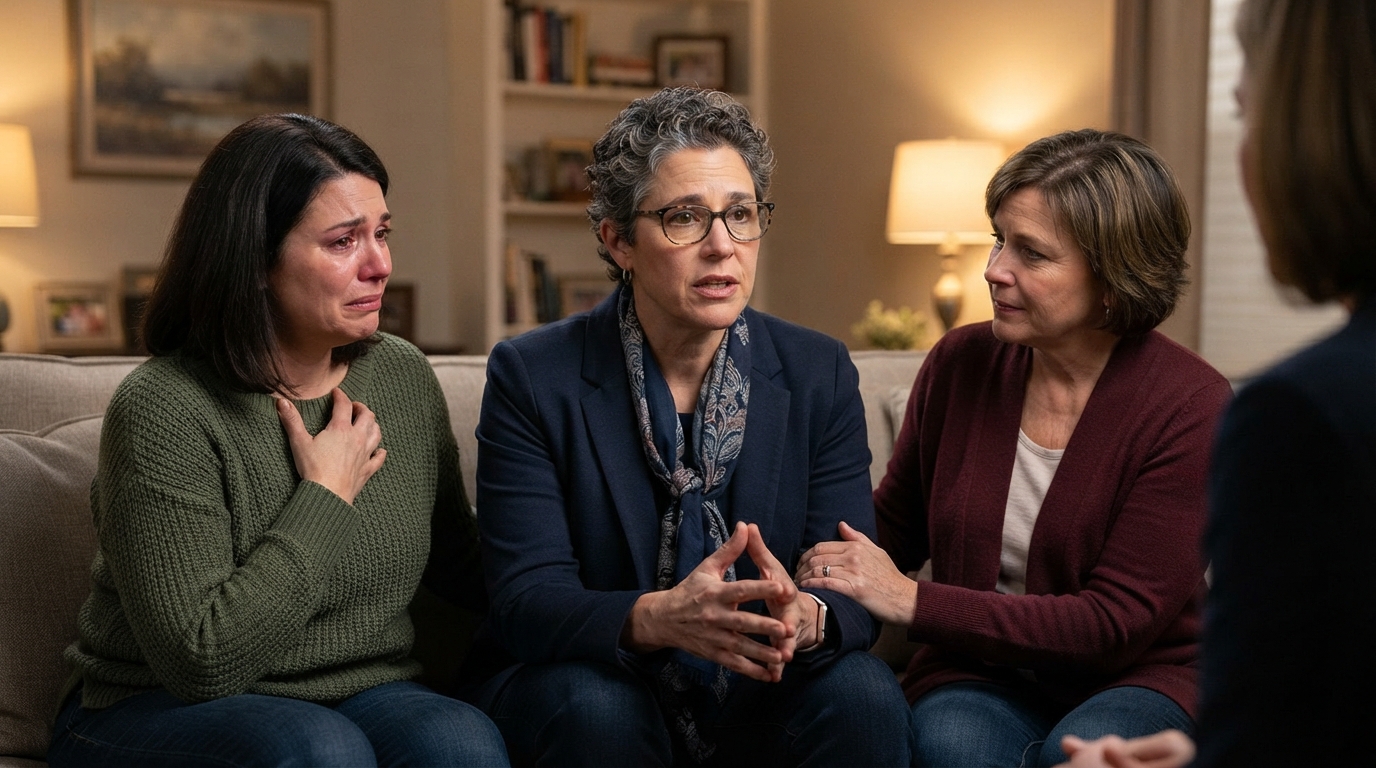
Jurors in the Lindsay Clancy trial have spoken publicly for the first time about the private deliberations and the deadlock that came before the high-profile case ended in a mistrial.
Three female jurors — including the foreperson — told NBC that the panel was prepared to return a verdict finding Clancy not guilty by reason of insanity in the killing of her three children, but one juror refused to agree.
The foreperson said the male juror "admitted he had reasonable doubt" about her criminal responsibility, but still would not accept a not guilty verdict.
Clancy has not disputed the killings, but her lawyers argued she had been suffering from postpartum psychosis. Prosecutors said she made a deliberate choice.
The names of the nine women and three men on the jury have not been released, and the judge prohibited any photographing or filming of them during the trial to protect their anonymity.
In the US, however, once a case is finished, any juror may decide whether to speak publicly about the case and the deliberations. Jurors often do so — some even write books — after major cases such as Clancy's.
The BBC, which was in court during the trial, has confirmed that the three women who spoke to NBC were on the jury.
In the NBC interview, broadcast on Tuesday, the foreperson — a retired fifth-grade teacher — described failing to reach a verdict as "awful" and an "emotional roller coaster".
She said the deliberations were hard and involved "lots of crying" and "lots of tears and then hugging".
"I was so sad, so sad that we couldn't come up with a verdict for Lindsay. It was so heartbreaking," she added.
Across the interview, the three women said the jury was almost unanimous in favor of its verdict, but the holdout juror would not change his position.
The foreperson said the lone juror "admitted he had reasonable doubt and I started filling out the forms, I was so excited".
She said she was halfway through completing the verdict forms when the holdout juror, whom she identified as a man, went on: "But I'm still not going to say that she's not guilty by reason of insanity," she said he told the panel.
The man has not come forward and has not responded to the remarks.
The three jurors said their deliberations sparked arguments and shouting, which at times could be heard through the walls.
Under Massachusetts law, Clancy did not have to prove her mental illness or that she lacked criminal responsibility. Instead, the prosecution had to prove beyond reasonable doubt that she was criminally responsible when she killed her children, criminal defence lawyer Elyse Hershon previously told the BBC.
"We weren't trying to figure out if she murdered the children. She did and she's admitted that," the foreperson said in the NBC interview. "We're trying to figure out - did she know right from wrong at that time."
The three jurors said they were not convinced by the prosecution.
"Everything proved that she loved her children so she had to have snapped and not known what she was doing," the foreperson said.
Another juror, who works for a government defence contractor, said the holdout juror had concerns about what medication Clancy was taking.
"We had the toxicology reports. We could see exactly the amounts," she said, adding that nurses on the jury discussed that issue. "He just completely disregarded the information that they gave," the juror added.
The third juror, a chef at a senior centre, said she found the prosecutors "very, very harsh", adding: "They had no character witness in regard to Lindsay of being a bad mother."
During the trial, prosecutors called dozens of witnesses, including several doctors, in an effort to show that Clancy had made a calculated decision to kill her children in the basement of their Massachusetts home.
The case took a series of dramatic turns as the jury deliberated for nearly 40 hours over seven days to decide Clancy's fate. The panel signaled several times that it was deadlocked — and at one point told the judge that one juror was not following the judge's instructions on reasonable doubt.
That prompted Clancy's defence attorney to ask that the holdout juror be removed from the panel — a request that was quickly rejected — before the jury again said it could not reach a unanimous decision.
Judge William Sullivan then declared a mistrial on Friday.
The mistrial leaves both the case and Clancy's future unresolved, as prosecutors decide whether to retry the case with a new jury.
Clancy's lawyer, Kevin Reddington, has since said he hopes to reach an agreement with prosecutors so the case does not go to a second trial.
The three jurors told NBC they hoped there would not be another trial — but if there is, all three said they plan to attend in support of Clancy.