

El Salvador sends 2,000 troops to Haiti to rescue four missing soldiers
The troops are trying to recover four military personnel who went missing in an ambush on the outskirts of the Haitian capital Port-au-Prince.
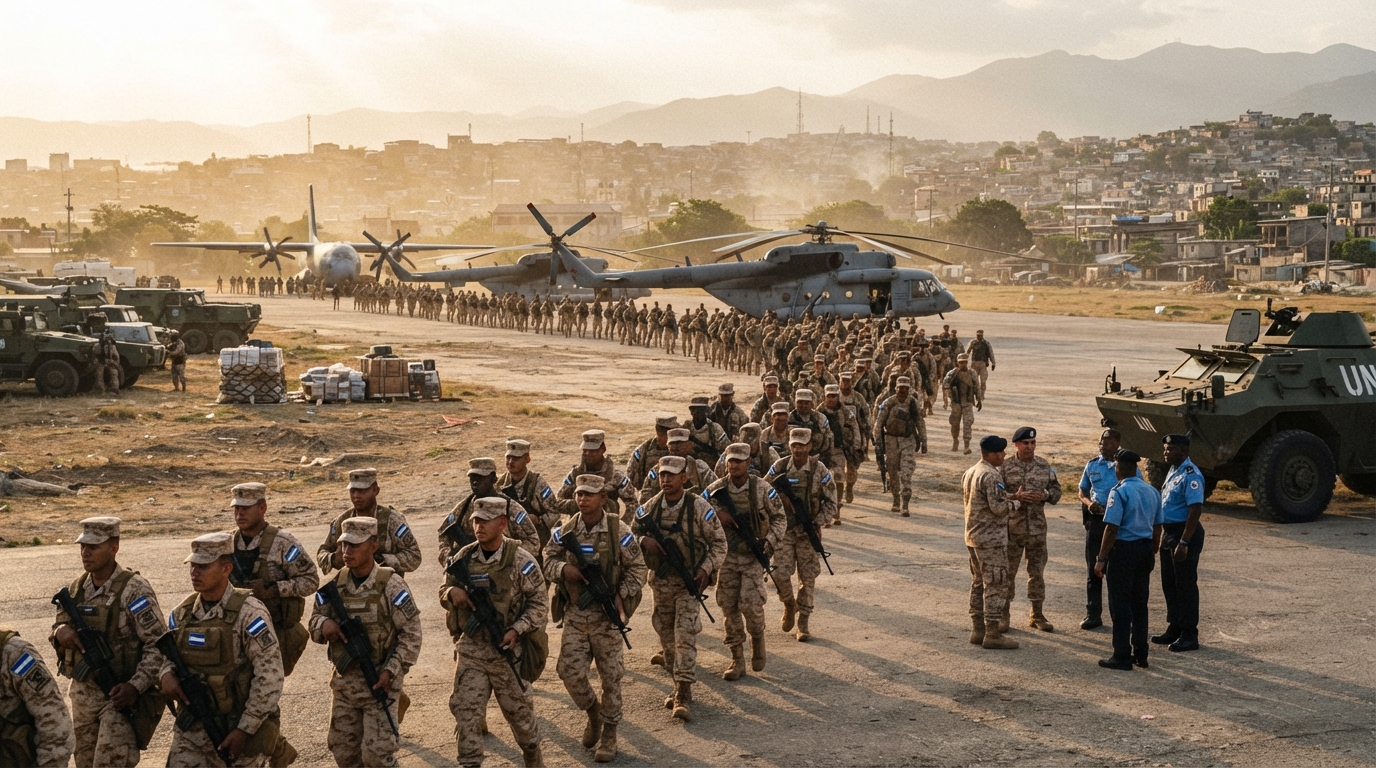
El Salvador has sent more than 2,000 troops to Haiti as part of an effort to recover four nationals who disappeared in the Caribbean nation nearly two weeks ago.
El Salvador President Nayib Bukele conveyed the "robust deployment" to Haiti Prime Minister Alix Didier Fils-Aime earlier this week, the Salvadoran foreign ministry said in a statement on Wednesday.
The statement added that Bukele said the soldiers would also support ongoing "security efforts against gangs in Haiti".
Relations between the two Central American countries have grown more tense over the disappearance of the four air force technicians, who were serving with a UN-backed anti-gang organisation in Haiti.
The four soldiers from the Gang Suppression Force (GSF) were returning to their base in an armoured vehicle when they were attacked in Croix-des-Bouquets, an area of the Caribbean island nation controlled by armed groups.
No gang has claimed responsibility so far.
The Salvadoran foreign ministry said the "large-scale operation" was "supported by various countries and international organisations".
Haiti handed over four bodies to special forces, saying they belonged to the missing servicemen, but Bukele said they did not match.
He said one of the bodies was a child’s and another was wearing the military uniform of a different country.
Last week, Bukele threatened in an X post to wipe out Haiti’s gangs, saying he would repeat the action he has taken in El Salvador if they did not release the Salvadorans.
The UN Security Council approved expanded powers for the GSF to address worsening gang violence in Haiti.
The multinational force has had difficulty reaching areas dominated by gangs. The UN says more than 5,700 people have been killed in gang-related violence in Haiti this year, and armed gangs control much of the capital.
Haiti has been devastated by gang violence for years, but the situation has deteriorated in the political vacuum that followed the assassination of President Jovenel Moïse in 2021.