

Dozens dead after boat capsizes in north-western Nigeria
The incident took place in the country's northwest Sokoto state, with many of the victims feared to be children.
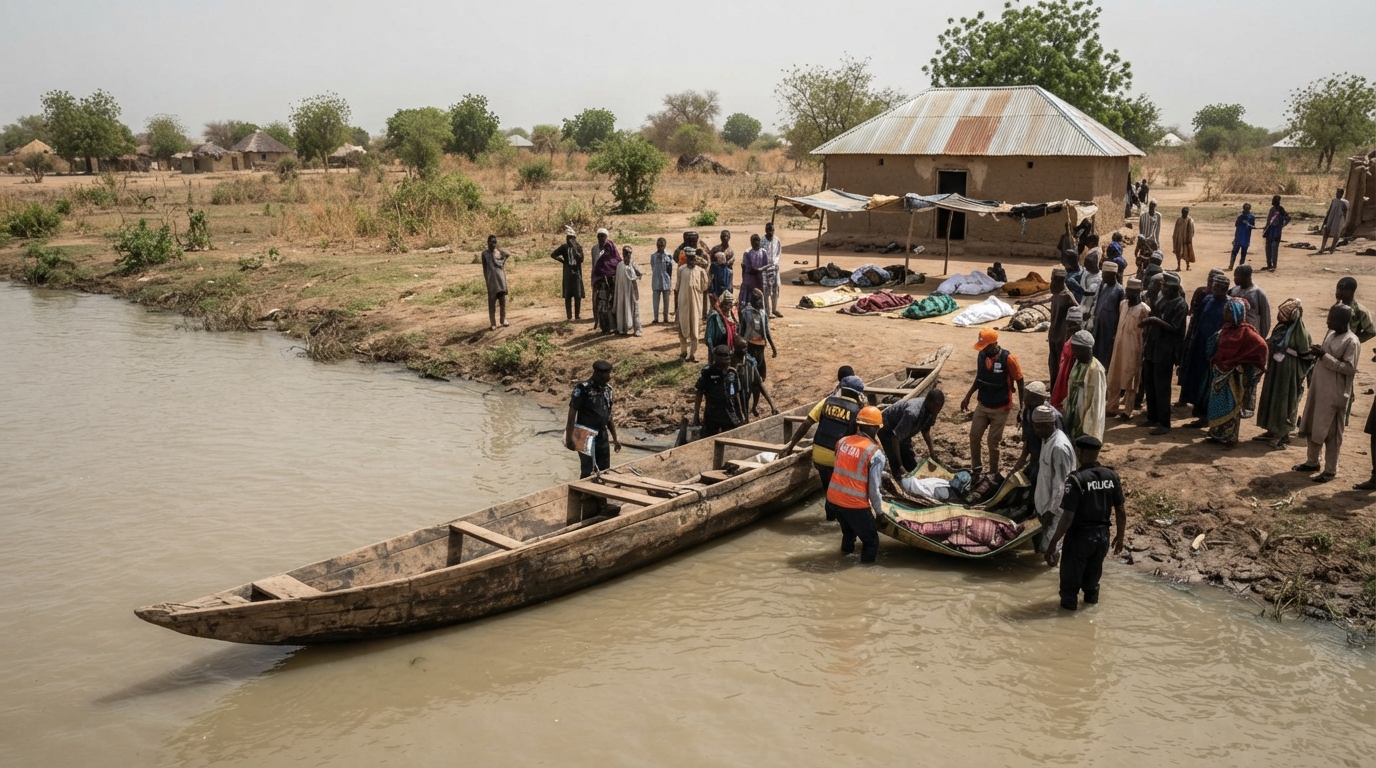
A vessel overturned in Nigeria's north-western Sokoto state, resulting in the deaths of at least 46 individuals.
Officials report that the boat was thought to be carrying over 70 people, predominantly children, and a search operation is currently underway.
Police spokesperson Ahmad Rufai informed the BBC on Thursday that 46 bodies were discovered near Gorau in Gorony. Sixteen individuals have been rescued, while 15 remain unaccounted for.
Rufai added that the area is challenging to access, and security and emergency personnel are en route to the location.
A witness informed Reuters that he believed the children on board were traveling with farm owners and laborers heading to a rice harvest.
The witness stated that they observed 50 bodies, many wrapped in mats and traditional cloths, laid out in front of a community mosque prior to burial.
Ezekiel Manzo, spokesperson for Nigeria's emergency management agency (Nema), told the BBC that "Gorau is a very remote place... the team has moved to that remote location."
Boat accidents are a frequent occurrence in Nigeria, often attributed to overcrowding, poorly maintained vessels, and lax enforcement of safety regulations. Last month, at least five people perished when a boat capsized in Jigawa state.
In January, at least 26 individuals drowned when a boat transporting farmers and fishermen from Jigawa to Yobe state overturned.
Following a separate incident where a boat potentially carrying over 200 passengers capsized, 54 bodies were recovered from the River Niger.
Authorities have suggested various measures, including supplying safer boats and life jackets, dredging waterways, stationing water guards at jetties and terminals, and ensuring boat operators are adequately trained and licensed.
However, many of these recommendations have not been fully implemented or properly enforced.
For millions of Nigerians, especially in rural areas, rivers serve as a crucial mode of transportation. Numerous villages are situated near waterways, and inadequate roads and a scarcity of bridges can impede land travel.
Wooden boats are frequently utilized to transport people and goods, including to markets and nearby communities.