

Don't ignore breast pain: symptoms and causes of mastopathy
**Don't ignore breast pain: Signs and causes of mastopathy**
There are various causes of breast pain. For example, injuries or spinal diseases. Also, taking antidepressants, combined oral contraceptives, and blood pressure medications can cause painful sensations in the mammary glands. However, the most common cause is mastopathy, which occurs in 30-80% of women aged 30 to 50.
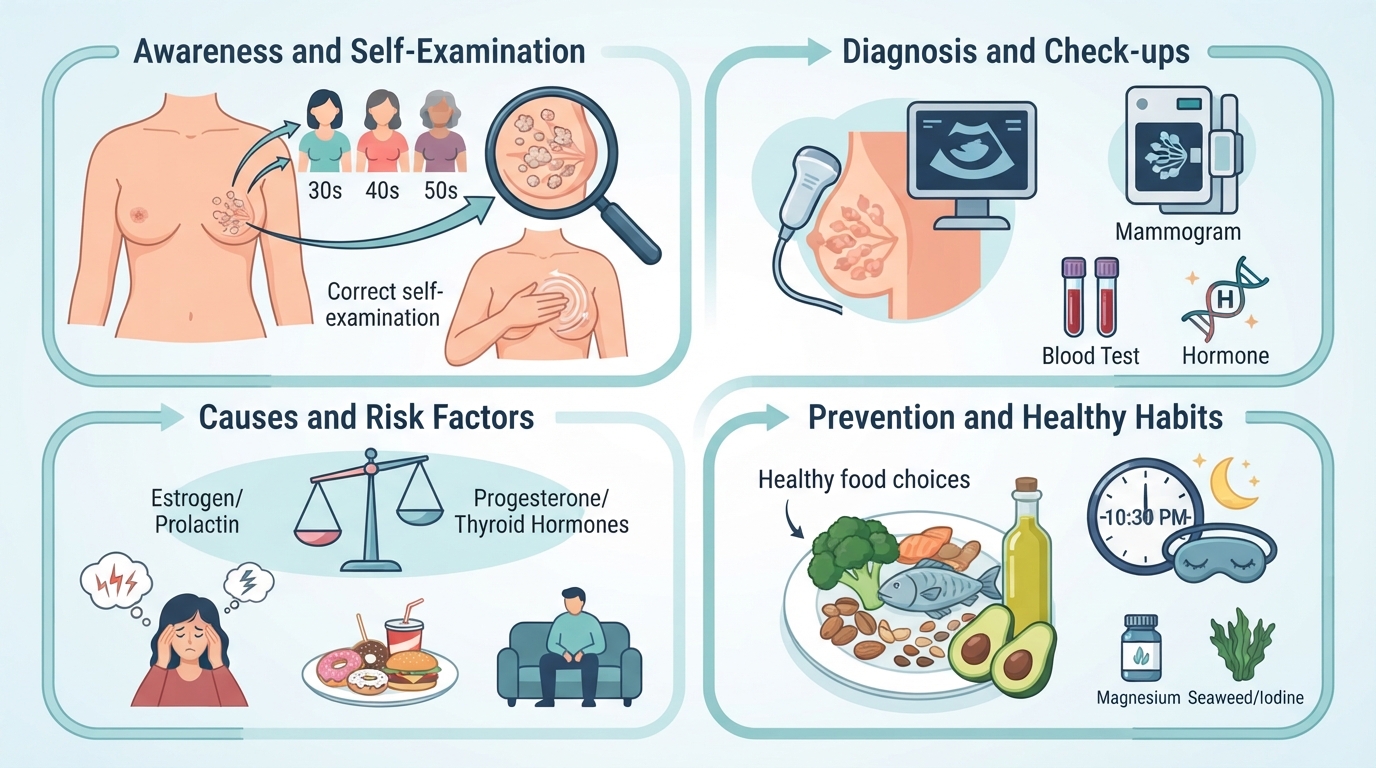
The most common complaints in women with mastopathy are pain, swelling, hardness, and increased sensitivity in the breasts. The patient's condition usually worsens under the influence of stress, and over time, hard nodes that are felt when palpated appear. Therefore, it is important to learn how to perform self-examinations in order not to miss the onset of the disease. You can ask your gynecologist or mammologist to show you how to do a self-examination.
In mastopathy, the mammary gland tissue does not grow evenly, which leads to benign changes, such as the formation of nodules, hard glands and cysts. Pain is not always a symptom of mastopathy, but if unpleasant sensations bother you regularly, you should consult a doctor.
Mastopathy can also be asymptomatic, so it is recommended to do a mammogram once a year and undergo an annual examination by a gynecologist. The question of the need for mammography is decided by a mammologist.
It is also advisable to take tests for thyroid hormones (TTG, free T3, free T4, antibodies to TPO and TG) and sex hormones (FSG, LG, prolactin, estradiol, and progesterone on the 20th day of the menstrual cycle) once a year.
**Why does mastopathy develop?**
Usually, mastopathy occurs as a result of hormonal imbalance. This is caused by the predominance of estrogens, increased prolactin levels, iodine deficiency, and thyroid dysfunction. Any disruption in the functioning of the thyroid gland also affects the mammary glands. A woman's lifestyle also plays an important role in the development of mastopathy: bad habits, poor nutrition, stress, vitamin and mineral deficiencies, and a sedentary lifestyle.
Low levels of melatonin in the body are another reason for the development of mastopathy. Breast cancer is 60-65% more common in women who work night shifts or live in cities with strong light at night. Therefore, it is very important to go to bed on time, use blackout curtains or a sleep mask.
**How to overcome mastopathy?**
The traditional approach to the treatment of fibrocystic mastopathy is based on taking oral contraceptives, diuretics (water pills), and painkillers. However, this result can also be achieved with the help of other measures.
**Dietary changes:**
* Eliminate foods that cause inflammation and disruption of the intestinal microflora from your diet: sugar, refined carbohydrates and grains, meat and milk from animals that are not grass-fed, refined vegetable oils.
* Eat more vegetables that have protective properties against breast cancer (broccoli, cauliflower). Eat more foods rich in fiber (vegetables, fruits, nuts, seeds), as it helps to remove excess estrogen from the body and maintains a normal intestinal microflora.
* Be sure to include healthy fats in your diet, such as olive oil, avocado, and omega-3 fatty acids. They are essential for hormone synthesis and fighting inflammation.
**Improve your digestive system:**
* Regular bowel movements are essential. Food retention in the colon can cause toxic waste to enter the bloodstream.
**Fill in the deficiency:**
* Iodine deficiency can lead to the development of fibrocystic mastopathy. The mammary gland tissue becomes sensitive to estrogen, which leads to the formation of microcysts. Organic iodine reduces pain, shrinks cysts and nodules, without negatively affecting the thyroid gland.
* Magnesium is necessary for the production of estrogen, progesterone, and testosterone. It also plays an important role in the detoxification process in the liver.
**Establish a sleep routine:**
* Go to bed by 11:00 PM and combat insomnia if you have it.