

Don't fall for this - how to protect yourself from AI scams
Trading standards officers say AI is "super-charging" existing scams through clones and fake websites.
Don't be fooled by this - how to protect yourself from AI scams
Shoppers are being warned to be careful about where they buy from, as criminals are using AI to make scams more convincing.
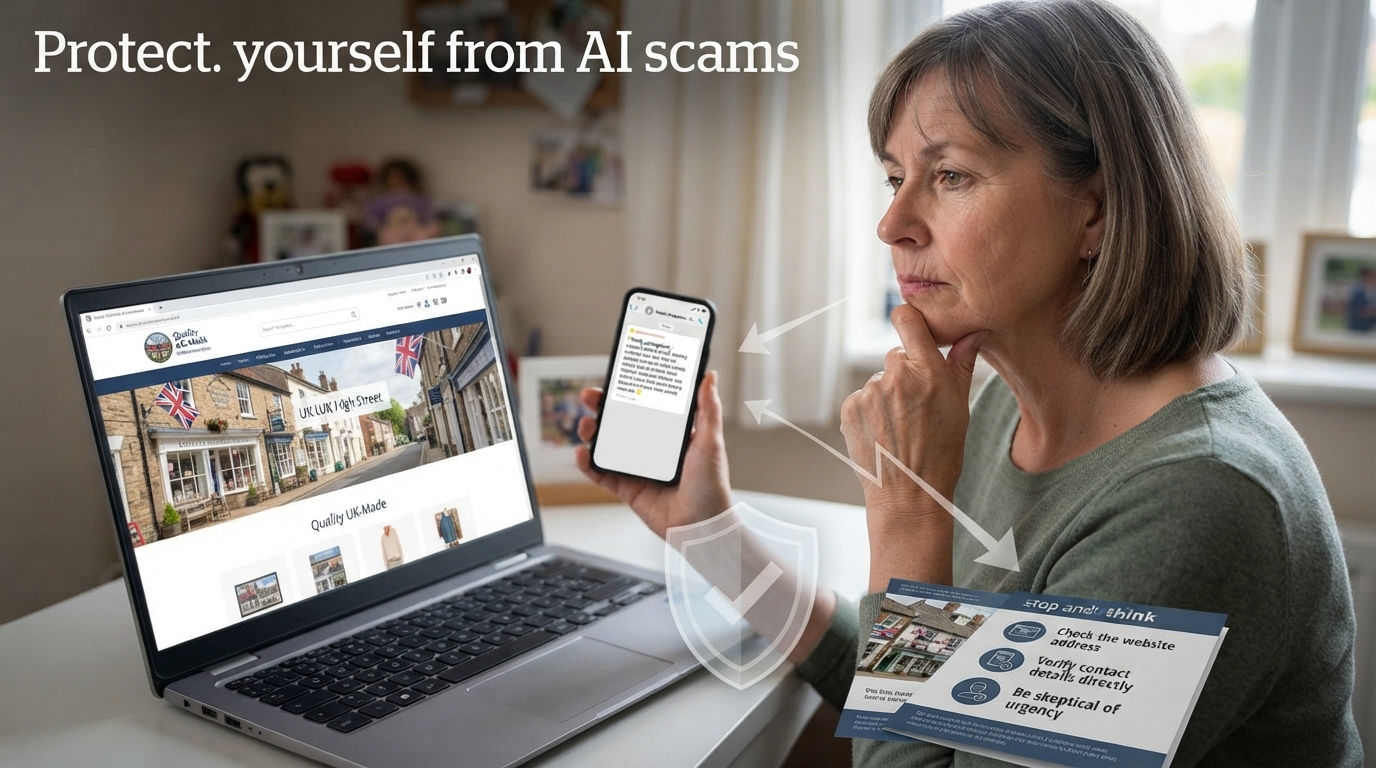
Some fraudsters have created websites for fake retailers that claim to be family-owned businesses selling quality UK-made products. The images may show a UK High Street with Union Jack flags in view.
If you place an order, you are likely to find that the product never arrives, or that it is a cheap, mass-produced item from a country such as China, trading standards officers say.
According to National Trading Standards, AI-generated images like these, along with voice cloning and deepfake videos, are increasingly being used to trick people out of their money.
For the first time, it has produced an AI scam watchlist.
Tricks include:
- Cloned or newly created websites that look polished and professional very quickly and at low cost
- Romance scams where AI is used to remember victims' personal details and keep conversations going over weeks or months
- AI-generated deepfake videos and voice-cloned audio used to impersonate family members or close friends asking for money in an "emergency"
- Error-free, personalised phishing emails, text messages and social media posts generated by AI on a huge scale
Some old scam-avoidance methods may now be less effective because of AI's advantages.
Typos or grammatical mistakes can no longer be relied on to identify scams, says consumer group Which?.
Trading standards says some ways to protect yourself include:
- Never sending money, gift cards or personal or financial information to someone you have not met in person
- Doing your research, such as checking whether a shop's address is real, using the , to make sure a company is authorised to give financial advice, and contacting a business directly to check whether a job advert is genuine
- Not assuming someone is genuine just because you have heard their voice or seen them on a video call
In general, they say to stop and think before paying, sharing personal information or taking action. You should be especially cautious of pressure or urgency, because criminals want you to act before you have time to think.