

Do not bundle up and do not stuff with antibiotics. The Ministry of Health explained how to protect children from ARVI and influenza
Do not bundle up and do not stuff with antibiotics. Ministry of Health explained how to protect children from ARVI and influenza
With the arrival of autumn, children more often encounter ARVI and influenza, so it is important for parents not only to observe preventive measures, but also to competently care for a sick child. The Ministry of Health of Uzbekistan explained how to reduce the likelihood of infection, which signs require increased attention, and why antibiotics should not be given on one's own for viral infections.
In autumn, conditions for the spread of viruses become more suitable. Due to the cool weather, windows and doors remain closed more often, rooms are ventilated less frequently, and children constantly interact with each other in schools and kindergartens.
To reduce the risk of infection, the Ministry of Health recommends teaching children from an early age to regularly wash their hands with soap, avoid close contact with sick people, and dress according to the weather. At the first signs of a cold, it is better to keep the child at home — this will help them recover and reduce the risk of infecting others.
Lifestyle also plays an important role. A child's diet should be diverse and include vegetables and fruits, dairy products, eggs, meat, fish, and legumes. At the same time, it is advised to limit the amount of sweets, chips, crackers, carbonated and energy drinks. Adequate sleep and a stable daily routine are no less important. Before going to bed, it is desirable to reduce time spent with phones and tablets.
Why it is especially important to monitor influenza
Influenza spreads rapidly and can lead to serious complications. Usually, the first symptoms appear 1–4 days after infection. The illness often begins suddenly: the temperature rises, a cough, weakness, headache, muscle and joint pain appear, and a sore throat may occur.
Symptoms must be monitored especially closely in young children. In severe cases, difficulty breathing, dehydration, and loss of appetite are possible. Complications of influenza include pneumonia, otitis media, sinusitis, meningitis, and other diseases.
Vaccination remains one of the methods of prevention. It reduces the risk of severe influenza and complications. Before vaccination, the Ministry of Health advises consulting a family doctor.
If a child falls ill
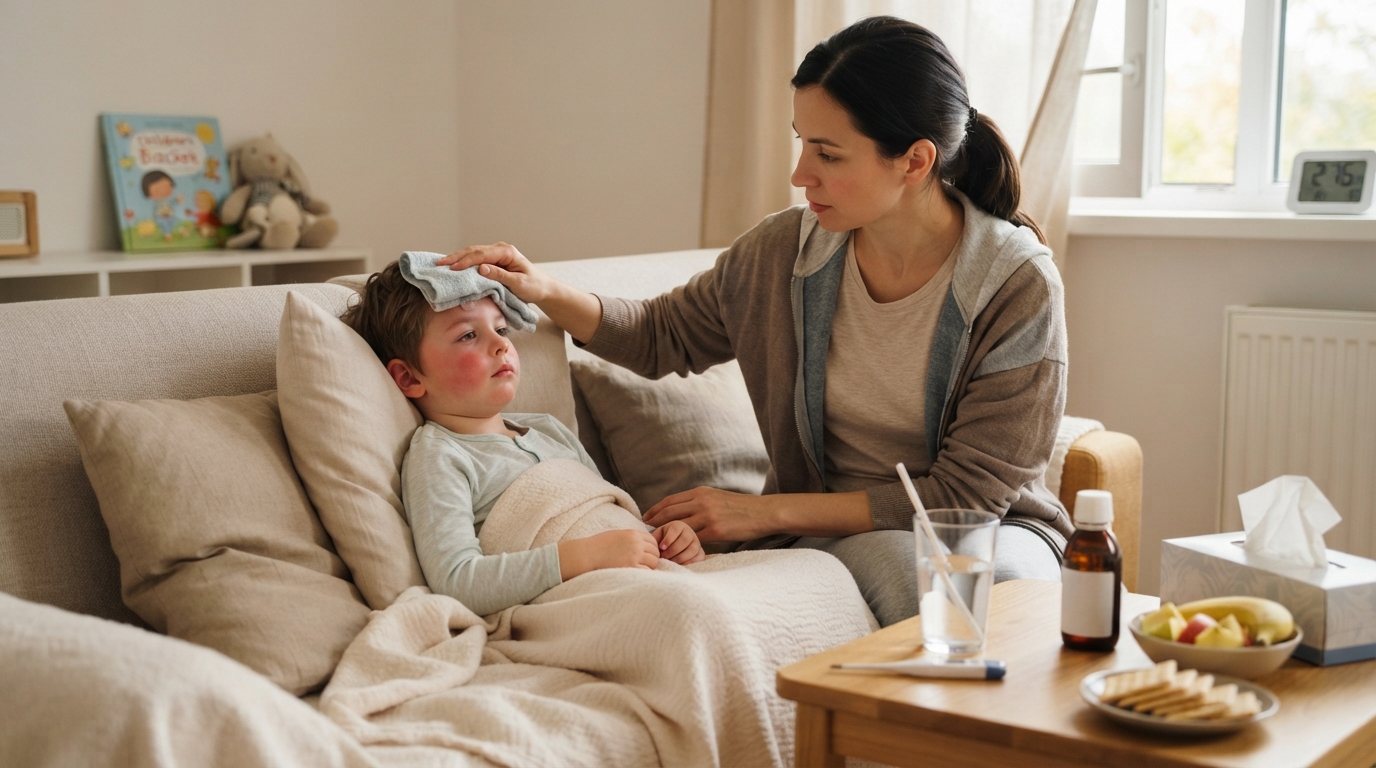
With a common ARVI, in most cases, home care is sufficient for the child. They need to be given fluids more often in small portions, the room should be regularly ventilated, and they should not be overheated. For nasal congestion, saline solutions can be used. There is no need to force the child to eat — it is enough to offer light food suitable for their age. It is recommended to breastfeed infants more frequently.
At the same time, you must not give antibiotics on your own. ARVI is caused by viruses, while antibiotics act on bacteria and do not treat a viral infection. Their uncontrolled use can lead to side effects and other complications.
During illness, it is also recommended to limit excessive amounts of sweets, fatty and fried foods, and fast food. Fruits and vegetables do not need to be excluded, and dairy products are not dangerous for most children. The main thing is to ensure a sufficient amount of fluids.
When medical help is needed
With a high temperature, it is important to focus not only on the numbers, but also on the general condition of the child. The Ministry of Health notes that antipyretic drugs are used at high temperatures, including paracetamol or ibuprofen, taking into account the child's age and body weight.
If the condition worsens, severe shortness of breath, difficult or rapid breathing, or severe drowsiness appears, if the child refuses food or breast, or becomes unusually restless, it is necessary to seek medical help.
Parents are also advised to avoid dangerous treatment methods: do not treat the throat with iodine or other aggressive agents, do not mix different drugs on your own, and do not give injections without a doctor's prescription. You should not fumigate the room with isirik (harmala) or other smoke-producing agents — this can irritate the airways and worsen the cough.
At a high temperature, the child should not be bundled up in several layers of clothing and thick blankets. It is better to dress them lightly and ensure a comfortable room temperature.
The main preventive measures are simple: hand hygiene, proper nutrition and sleep, regular ventilation, clothing according to the weather, and vaccination. And if a child falls ill, it is important not to self-medicate and to closely monitor their condition.
At the beginning of 2026, the Ministry of Health of Uzbekistan recorded a sharp worsening of the epidemiological situation. According to data from the national bulletin for the second week of the year, the incidence of ARVI increased 1.9 times, and the number of cases of acute pneumonia more than doubled.