

Deposits in Uzbekistan's banks grew by 34% over the year
The Central Bank of Uzbekistan reported that deposits in the banking system grew by 34% over the year, reaching 482.7 trillion soums.
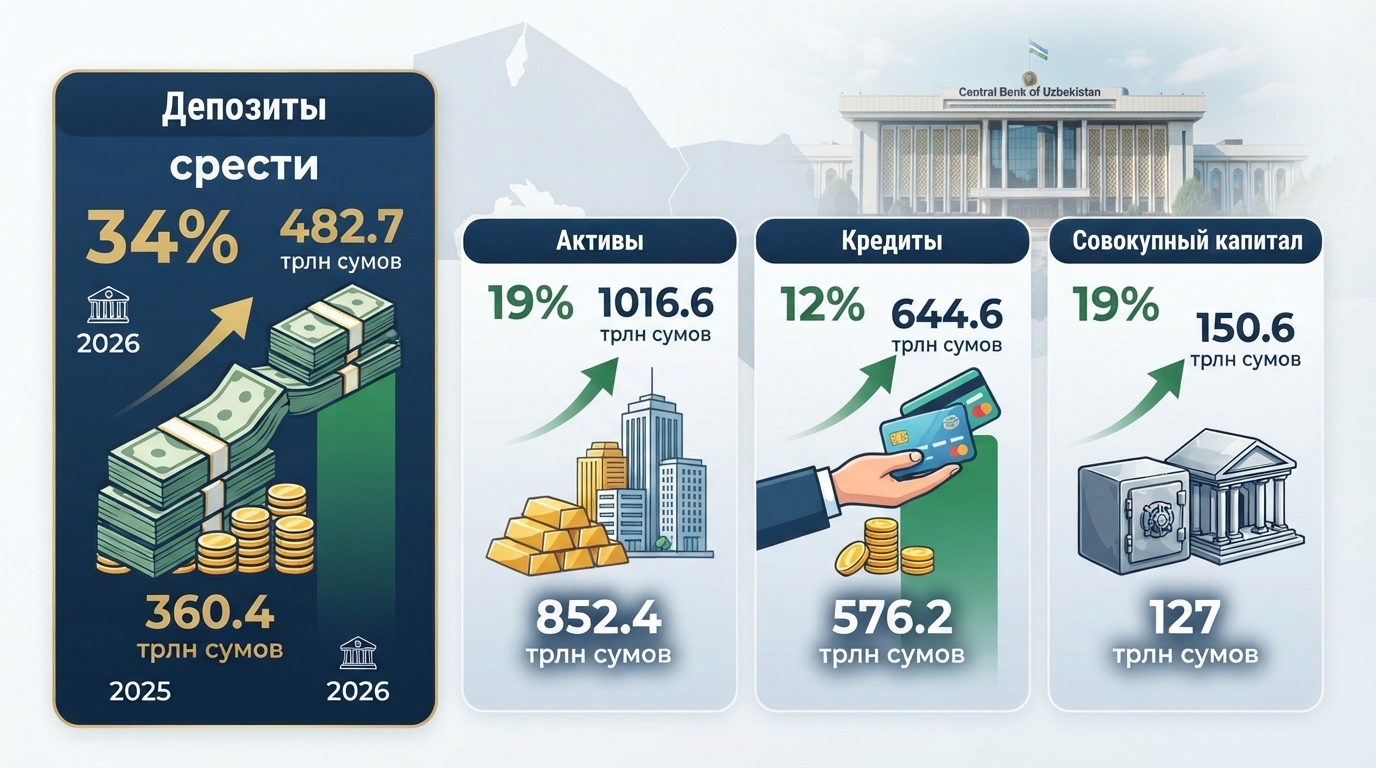
Deposits in Uzbekistan's banks increased by 34% over the year
As of August 1, 2026, deposits in the banking system of Uzbekistan reached 482.7 trillion soums, which is 34%, or more than 122 trillion soums, higher than the figure for the same period last year. A year earlier, the volume stood at 360.4 trillion soums. This was reported by the Central Bank of Uzbekistan.
Deposits became the fastest-growing area among the key indicators of the banking system. At the same time, the structure of deposits by maturity also changed.
Demand deposits grew from 106.8 trillion to 142 trillion soums, but their share in the total volume decreased slightly — from 30% to 29%.
Short-term time deposits, placed for a period of up to one year, increased from 120.5 trillion to 175.7 trillion soums, and their share rose from 33% to 36%. Conversely, the share of long-term deposits — over one year — decreased from 37% to 34%, although in absolute terms their volume grew from 133 trillion to 164.9 trillion soums.
Assets of the banking system over the same period increased by 19% and reached 1,016.6 trillion soums, compared to 852.4 trillion soums a year earlier.
Bank loan portfolios grew by 12% — from 576.2 trillion to 644.6 trillion soums. Thus, the volume of loans directed into the economy increased by almost 68.4 trillion soums over the year.
The total capital of the banking system amounted to 150.6 trillion soums, compared to 127 trillion soums a year earlier, representing a 19% growth.
According to the Central Bank, the growth rate of deposits outpaces the growth of lending, which expands the base of banks' internal resources.