

Dengue fever cases increase by 85 percent in Afghanistan
**Afghanistan’s dengue fever cases rise by 85 percent, WHO warns**
Afghanistan saw a significant increase in several infectious diseases in July, including dengue fever, COVID-19, acute watery diarrhea and respiratory infections, according to the World Health Organization (WHO). Seasonal outbreaks and resource constraints are putting a strain on the country’s health system.
The WHO recorded 473 suspected cases of dengue fever in July, an 85.5 percent increase from 255 cases in June. No deaths from the disease have been reported since January. The organization said the increase is consistent with seasonal trends over the past three years.
Confirmed COVID-19 cases have also risen sharply. In July, the number of cases increased by 79.3%, reaching 156, compared to 87 in June. Of the 1,488 samples taken by state laboratories, 10.5% tested positive for the virus. No deaths from the coronavirus have been reported since January.
Cases of acute watery diarrhea, a condition characterized by dehydration, increased by 31.6%, from 18,232 in June to 23,985 in July. There were 14 deaths in July, the same as in June. The WHO also described this increase as an annual seasonal pattern.
In July, 78,082 cases of pneumonia and acute respiratory infections were reported, an 18.9% increase compared to June. 198 people died from this disease. Suspected measles cases increased by 6.1 percent, reaching 2,414 in June and 2,562 in July. There were 11 deaths in June and 9 deaths in July.
Crimean-Congo hemorrhagic fever was among the diseases that decreased in July. There were 302 suspected cases and 9 deaths in July, compared to 483 cases and 21 deaths in June. The incidence decreased by 37.5 percent.
According to the report, from January to July, 780,561 cases of pneumonia and acute respiratory infections were registered in Afghanistan, and 1,563 people died. During the same period, 84,140 cases of acute diarrhea and 46 deaths were recorded, 17,403 suspected cases of measles and 71 deaths, and 1,258 suspected cases of Crimean-Congo fever and 55 deaths were recorded.
In the first seven months of the year, 1,651 suspected cases of dengue fever and 697 confirmed cases of COVID-19 were registered. No deaths were reported from these two diseases.
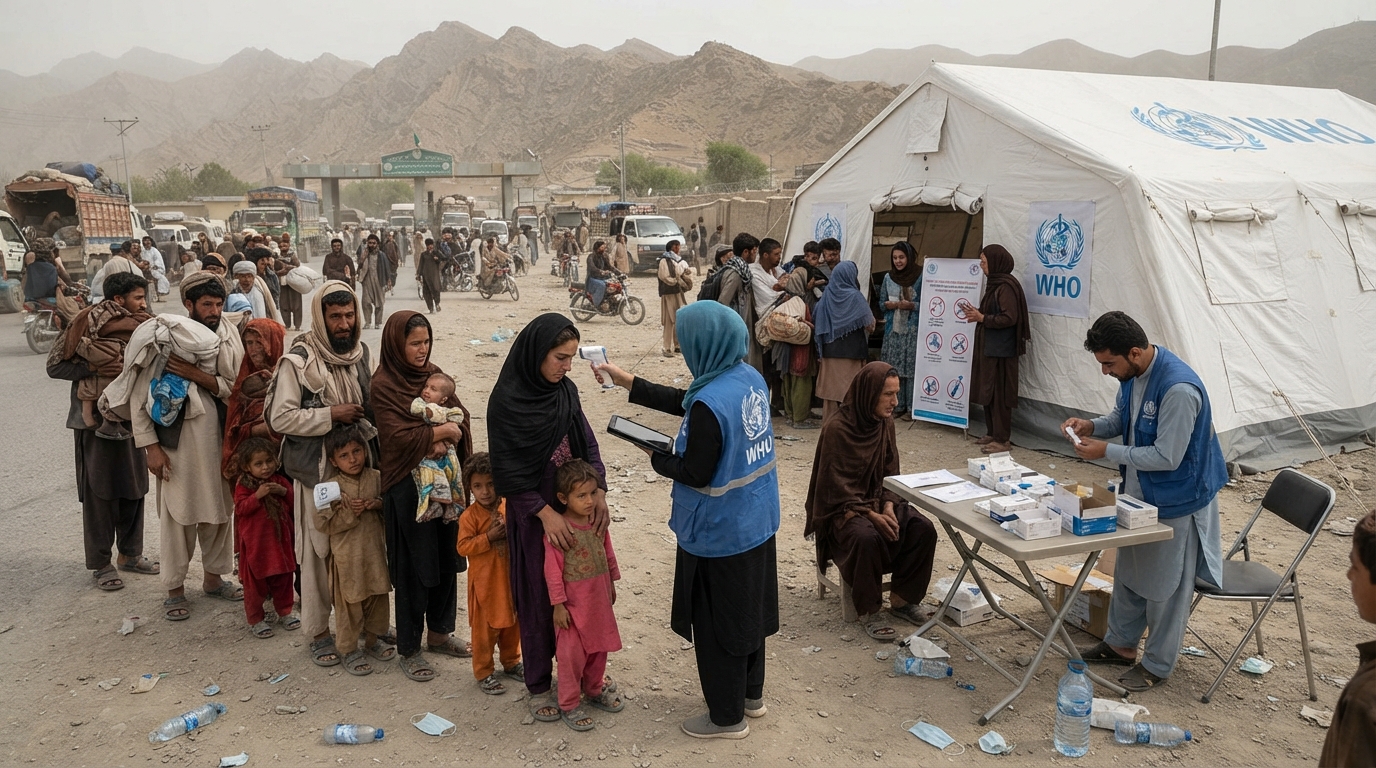
The increase in cases is also due to the influx of migrants returning to Afghanistan. This is increasing the pressure on health services at the border and elsewhere. According to WHO, more than 1.07 million people entered Afghanistan from January to July through five main border crossings.
The largest number of people crossed through the Torkham border with Pakistan — 549,200 people. 218,989 people returned from Islam Qala, 206,019 from Milak, 68,299 from Spin Boldak and 34,943 from Bahramcha.
Of the 1,077,450 people who returned over the seven months, 658,398 came with their families and 419,052 came alone. Nearly 80 percent of the returnees were men. In July alone, 155,925 people returned to Afghanistan. 62 percent of them came from Pakistan.
In July, 43,310 returnees and passengers were screened for infectious diseases at border crossings. WHO-supported teams screened 8,939 people.
The screenings identified infectious diseases among the returnees. Of the 301 suspected cases of COVID-19, 43 (14.3%) tested positive. Of the 98 suspected cases of dengue fever, 6 were confirmed. Of the 116 cases, 11 were confirmed to have acute diarrhea.
WHO continues to provide services in 33 primary care facilities in five regions, as well as in specialized hospitals. The organization-supported hospitals and facilities provided outpatient care to 78,021 patients in July. 59,754 patients received essential medicines.
3,563 children under 5 years of age received the third dose of pentavalent and measles vaccines. 687 pregnant and lactating women were vaccinated. An additional 1,023 pregnant and lactating women received advice on infant feeding.
The WHO has warned that the increase in seasonal diseases and limited resources are making it difficult to provide medical care.
"Seasonal outbreaks of diseases and resource constraints are putting serious pressure on epidemic response efforts," the WHO said in a statement.