

Debt burden and investments in artificial intelligence in the global economy
This international economic news digest covers the rising cost of servicing public debt in China, the impact of artificial intelligence investments on global economic growth, and changes in the labor market.
**Debt burden in the global economy and investments in artificial intelligence**
**Rising debt burden in China is narrowing options for economic stimulus**
According to the Financial Times, the increase in interest payments on public debt in China is limiting fiscal room to support economic growth and revive domestic demand.
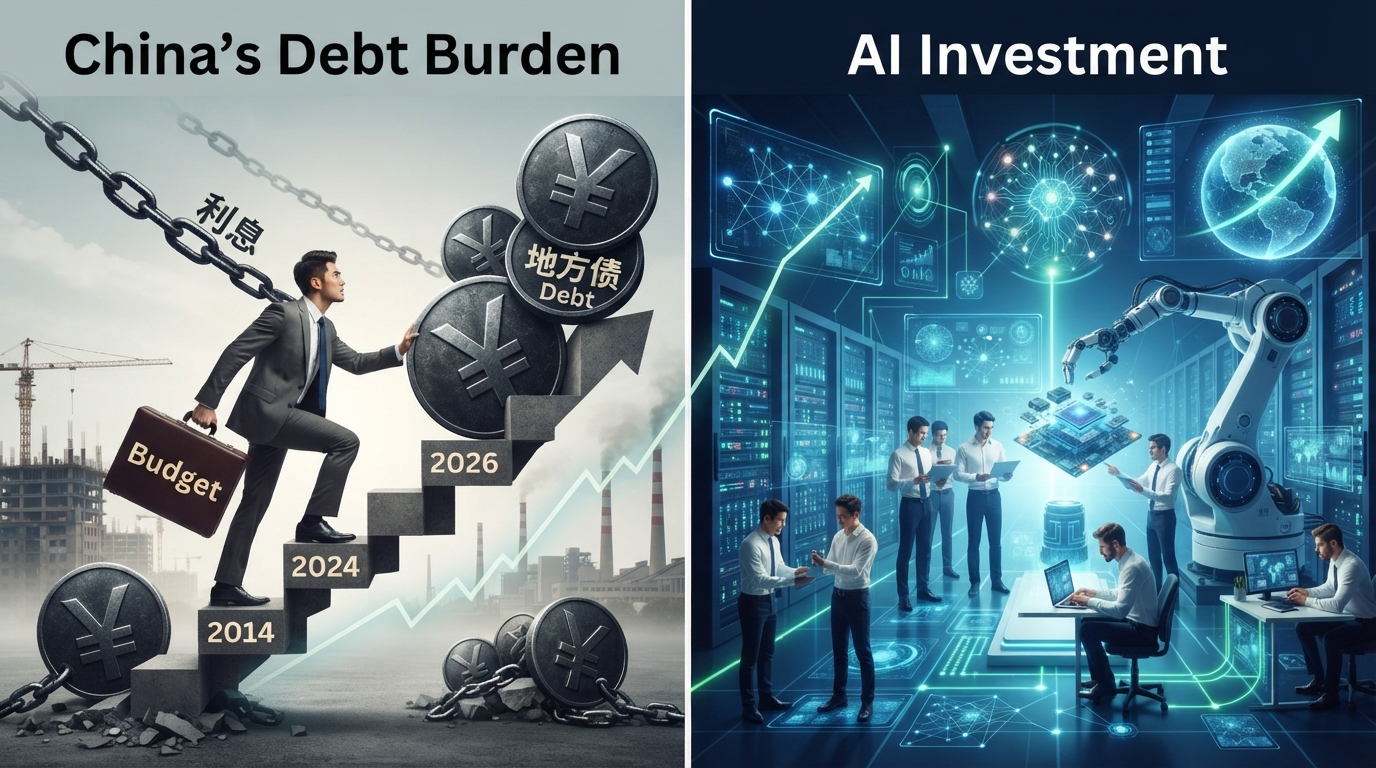
According to estimates by The Conference Board research center, debt service costs are expected to account for **19.2 percent** of the government budget in 2026. In 2014, this figure was **12 percent**.
The debt burden is also putting pressure on local government finances. Their interest payments have grown by an average of **16 percent** per year since 2014. Total interest payments by central and local governments are expected to reach **1.4 trillion yuan** (approximately **219 billion dollars**) in 2026, up from **348 billion yuan** in 2014.
Robin Xing, Chief China Economist at Morgan Stanley, expects the near-term focus to be on accelerating the execution of the budget approved at the beginning of the year.
**Investments in artificial intelligence are supporting global economic growth**
IMF Managing Director Kristalina Georgieva stated that massive investments directed into artificial intelligence (AI) infrastructure are helping to maintain global economic growth at around **3 percent**. Asian countries supplying hardware and technology products, including Thailand, are benefiting greatly from this.
According to Georgieva, the growth in investments in AI infrastructure could boost economic growth by **0.5–1 percentage point** in Asia's advanced economies and by **0.2–0.8 percentage point** in its developing countries.
At the same time, AI is changing task and skill requirements in the labor market.
According to IMF estimates, AI could over time affect **40 percent** of jobs globally: enhancing worker capabilities in some, while reducing the importance of others or causing them to disappear.
According to preliminary studies, **10 percent** of jobs in the US already require skills to work with AI.
While the number of jobs associated with routine and repetitive tasks is declining, job growth is occurring in two relatively low-paid sectors — construction and data centers.