

'Culture shift' needed in how UK does business, PM urges
Burnham has said those who take risks should be backed by government, but his government has been criticised for increasing business costs.
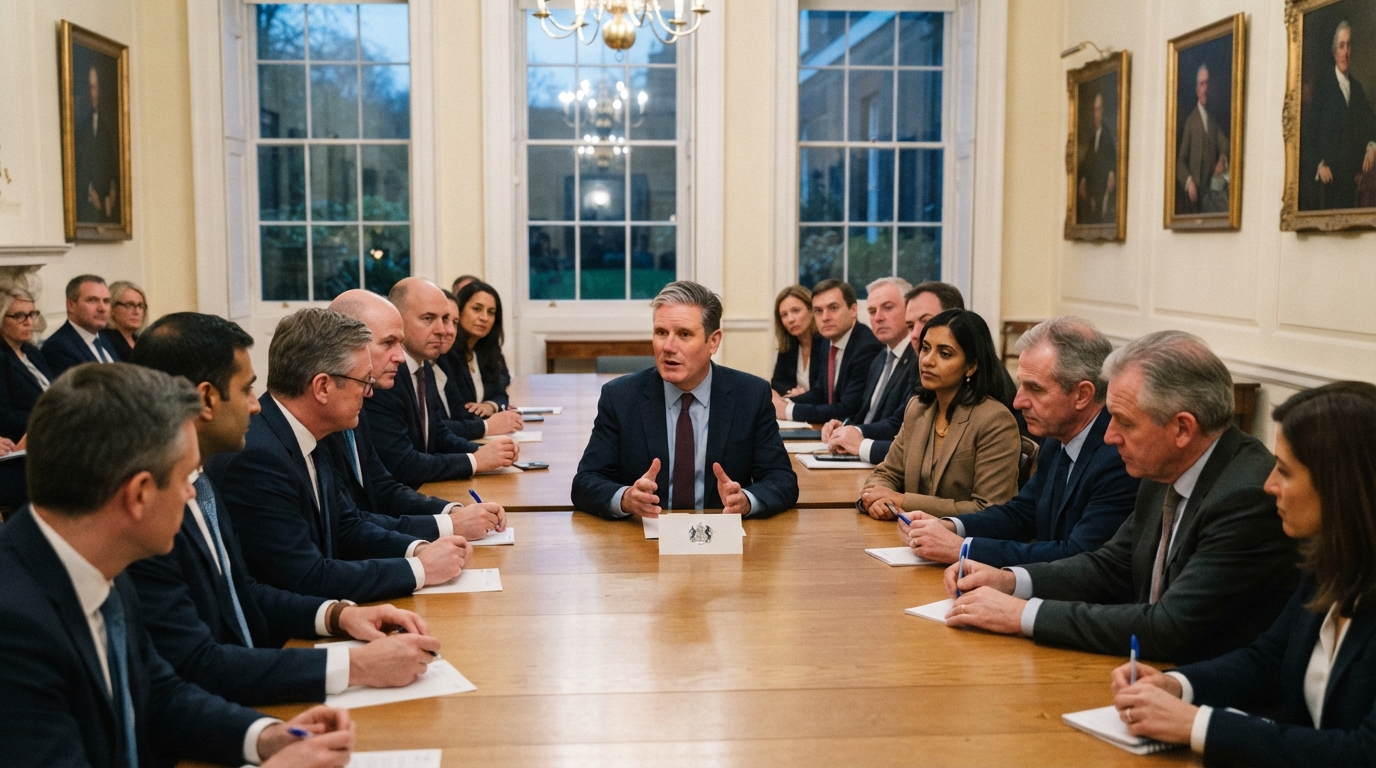
A "culture shift" is needed in the way the UK does business, Andy Burnham has said ahead of a meeting with some of the country's biggest business leaders.
The prime minister said businesses that take risks should be supported by government, and that local leaders should be given the authority to work with companies.
The current Labour government has faced criticism for raising business costs, including through changes to employer national insurance and the minimum wage under Burnham's predecessor Sir Keir Starmer.
Downing Street said Burnham will meet the chief executives of BP, Shell, HSBC, Morrisons, Sainsbury's, BT, Vodafone, Rolls-Royce, and several others at Number 10.
Before the meeting, Burnham said he would give people "the confidence that if they have a great idea, they'll get all the support they need to bring it to life".
"When local leaders have the tools to get things done and government works in partnership with business, you can pull in investment, create jobs and transform communities," he said.
He added that the government would be "a partner for growth to make every part of Britain better off".
Burnham will host a reception for the business community, with local leaders invited, before a private engagement with senior chief executives at Downing Street on Monday evening.
The meeting comes as higher borrowing costs in the UK and elsewhere create difficulties for governments seeking to spend on business support or investment.
Official figures showed an unexpected lift in the economy in July, partly driven by artificial intelligence (AI) investment, though experts expect growth to slow in the months ahead because of high energy prices.
The US-Israel war with Iran has caused a sharp rise in oil prices, which has fed through into higher energy and fuel prices, affecting households and businesses.
The increase in energy costs has raised fears that inflation will stay high and increase the likelihood that central banks will raise interest rates to keep price rises under control.
Expectations of higher interest rates, along with competition for debt from AI firms seeking funding for development, have pushed up government borrowing costs in many countries.
However, many say the UK has a particular issue with high government debt. The UK yield on 10-year bonds, a key gauge of government debt costs, is higher than in countries such as the US, France, and Japan.
Experts say this reflects several factors undermining investor confidence in the UK, including multiple prime ministers, chancellors and policy U-turns over a short period.
In an interview with the BBC last week, Chancellor John Healey called for a restoration of "confidence about Britain" while acknowledging the challenge of "historic high" borrowing costs.
Others have argued that the Labour government has created its own problems by increasing costs for businesses.
Conservative shadow business secretary Julia Lopez said: "The way for the prime minister to get businesses thriving, delivering jobs and driving growth is to cut their taxes.
"Labour's jobs tax and employer red tape have been devastating for businesses. The consequence has been a drying-up of the jobs market, weaker investment and businesses facing ever greater costs."