

Councils to share £5m in 'emergency food aid' as living costs rise
The money from the Welsh government will amount to around £200,000 to every council.
Councils to share £5m in 'emergency food aid' as living costs rise
Deputy First Minister Sioned Williams says families are facing a "tough winter" with inflation rising
Welsh councils are set to receive £4.8 million to deliver "emergency food aid" and other help for people struggling with cost of living pressures.
The funding from the Welsh government will be divided among the 22 local authorities, with rural councils receiving extra money because of "the added challenges" of providing support in more sparsely populated areas.
Deputy First Minister Sioned Williams said rising fuel and energy costs meant many families were facing another "tough winter" and that she was "targeting support where it's needed most".
Reform UK Wales said it welcomed the assistance, but argued the government could do more to support people in need.
The ongoing US-Iran war and pressures on oil supply in Saudi Arabia have pushed fuel prices up sharply in recent days.
With inflation rising and energy bills increasing next month, many people could feel greater pressure on their household budgets.
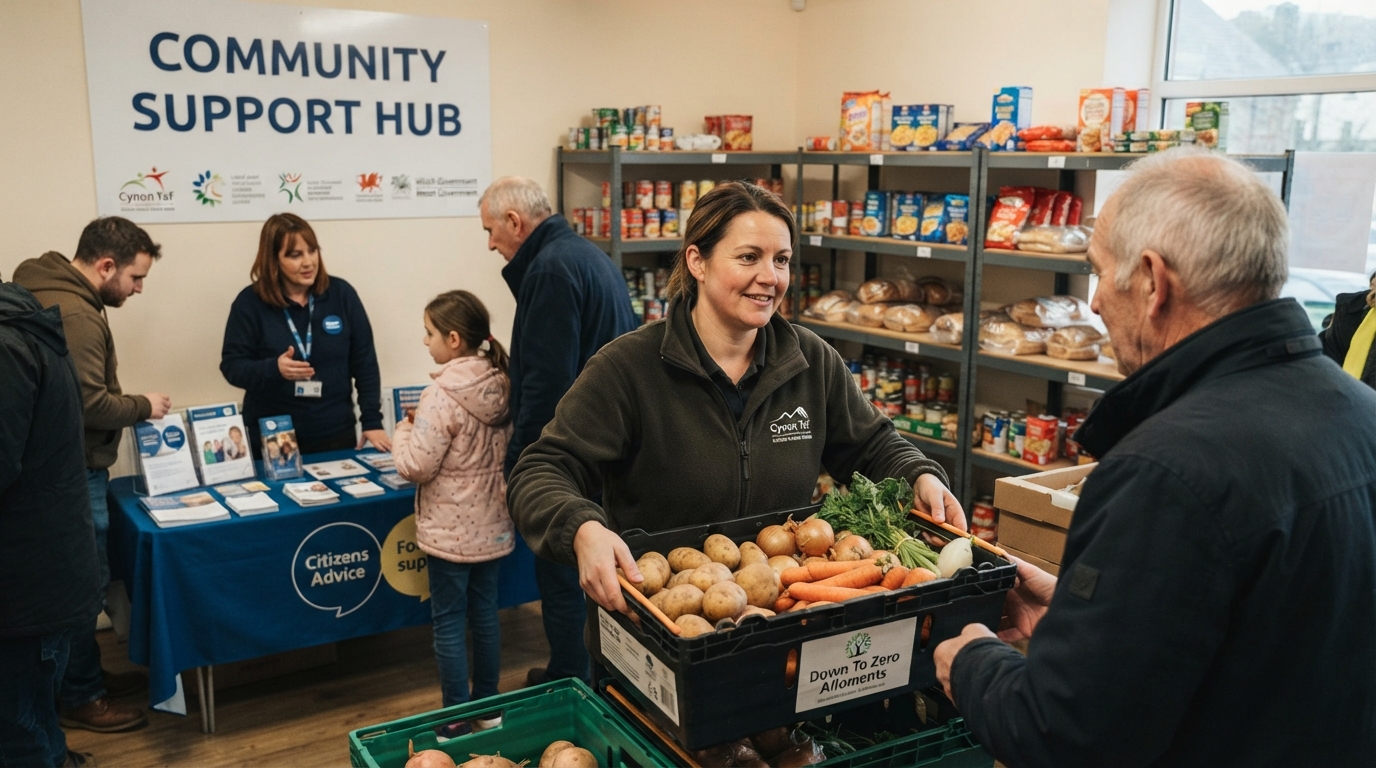
Local authorities will be able to pass the emergency funding to community groups such as food banks, lunch clubs and advice services.
Down To Zero, a project that has previously received funding, grows vegetables on allotments near Llantrisant in Rhondda Cynon Taf, and supplies free vegetable boxes to low income families as well as cheaper subscriptions to other households in the county.
Gareth Banks has volunteered with the organisation for two years and "absolutely loves it".
"We can offer really good value, organically grown, fruit and vegetables to local people who might not always be able to afford that kind of thing," he said.
Angharad Rogers says families with incomes are "still not able to pay for food"
The project is run by Cynon Taf, a social housing provider.
Angharad Rogers, Cynon Taf's director of housing and communities, said food poverty was becoming a bigger issue for tenants.
"We've seen quite a shift lately in the people... who are most in need and accessing food banks," she said.
"Families with incomes coming into the household are still not able pay for food and things like that, so we're seeing a lot families coming to us and asking for help."
Joy says fuel prices are "extraordinarily high"
UK inflation reached its highest point in five months in the year to August, according to the Office for National Statistics (ONS).
Overall, motor fuel prices were 23% higher than in August last year.
In Ystradowen, Vale of Glamorgan, drivers filling up their cars said they feared prices would rise further.
Ron Jones, from Cowbridge, said he was driving less but that higher prices were "to be expected, given the world as it is".
Joy Thomas said prices were "extraordinarily high" and she had looked for the cheapest petrol station she could find.
Lewis Wall, 28, from Ystradowen, said prices were "ridiculous".
"But what can we do about it? You can't control the price and everyone needs fuel."
Sioned Williams said the government would "do all we can to support families who are going to be finding it tough this winter".
"But we need to see wider measures and many of those leavers reside in Westminster," she added.
Williams urged the UK government to introduce cheaper energy prices for low income households, known as social tariffs.
"Social tariffs on energy is one of the main things I think that could really make a difference to people," she said.
The UK government said: "We have cut VAT on electricity bills from October, on top of the £150 we removed from bills earlier this year, and we will keep looking at what more we can do to protect families from unaffordable bills."
Reform said support to help ease the pressures of the cost of living "should be welcomed if delivered in the right way".
But it also said the Plaid Cymru government "could be doing more" if it did not "waste money" on projects like "spending taxpayer cash on planting trees in Uganda", referring to the long-running climate resilience programme funded by it.