

Cost of living on many minds ahead of Manx election
Residents, businesses and charities are focused on the economy ahead of the general election.
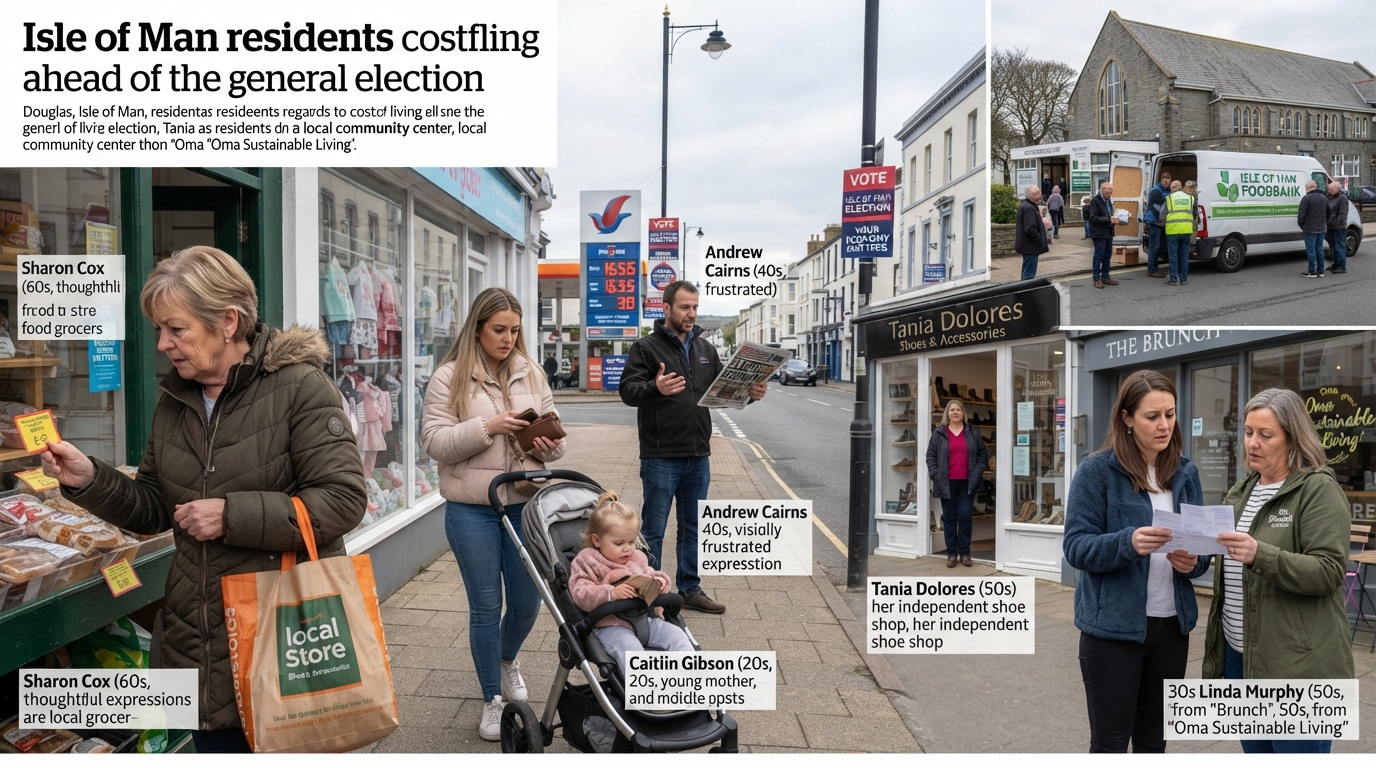
Cost of living is on many minds ahead of the Manx election
Growing the economy has been described as a top priority for most candidates
Residents, businesses and charities say they are feeling the strain of rising prices, with many naming the economy as a major issue ahead of the Isle of Man general election.
Several independent shops in Ramsey said trade had fallen and operating costs had become more difficult to handle, while the island’s foodbank said demand for help had doubled in two years.
The Isle of Man Chamber of Commerce warned the Island faced "a very hard five years" ahead, pointing to a shrinking tax base and the recent loss of many high‑earning jobs.
Candidates have been asked to set out how they will pay for their plans, back businesses and ease pressure on working families.
People in Douglas said higher prices were affecting everyday life, with several calling the cost of living their biggest concern before the election.
Sharon Cox, from Douglas, said life was "not affordable.. especially for older people and vulnerable people".
She added that prices were rising "not just by pennies", but by "25 or 30 pence" each time she went shopping.
Sharon Cox said daily life on the Isle of Man had become unaffordable
Mum-of-one Caitlin Gibson said she was living with her mum and found it hard to save anything while looking after her young daughter.
She said: "I can't really afford to move out. I can't afford to save anything, so everything I earn, which is very little in the first place, is going on my baby."
Another Douglas resident, Andrew Cairns, said rising fuel and energy bills were having "a massive impact".
Andrew Cairns said he could notice prices rising month on month
"Petrol is going up, electric, gas. You've only got to go in a shop a month apart and you can see the prices rising," he added.
He said it was on his mind ahead of the election, adding there was "a lot we can do to cut down our costs".
A number of businesses said the past few years had been among the toughest they had experienced.
Tania Dolores has run a shoe and accessory store in Ramsey for more than 10 years
Tania Dolores, from Tania Dolores Shoes and Accessories, said: "Every day is a struggle. We are not making what we used to make."
She said her takings were "exactly the same amount of money as ten years ago", but her bills were "much higher".
Amy Salter, from the Brunch cafe, said the cost of supplies and energy had changed the way the family business operated.
When the business opened three years ago, it was "a lot easier than it is now", she said, adding that even small increases in stock prices were having a major effect.
Linda Murphy wanted candidates to be looking out for small businesses
Linda Murphy, from Oma Sustainable Living, said footfall dropped sharply after government services were removed from the Post Office earlier this year.
She said she wanted to see in charge "somebody who understands and is looking out for small businesses, somebody who understands the value of the community, the high street and what it benefits".
Chairman of the Isle of Man Foodbank David Gawne said the third sector was also feeling the effects, and said the charity had become "something of a barometer" for the island’s economic pressures.
"Two years ago, we were giving out 200 parcels a month. We're now giving out 400 parcels a month and we're pushing that boundary now," he said.
He said 80% of the people it supported were working full time, but "not earning enough now to be able to support themselves or support their family".
Gawne said many families were living on a financial knife-edge.
"A lot of people are just one payday away from relying on the food bank… that is a reality for a lot of people."
He called on the next administration to make the economy a priority.
Claire Watterson said the next House of Keys needed to be ready for a tough five years
Business lobby group the Isle of Man Chamber of Commerce said the island was heading into "a very hard five years" of economic challenges, warning that pressure on public finances and the loss of high‑earning jobs had created a difficult climate for both households and businesses.
She said that after decades of economic growth, the latest statistics released by government showed the economy had fallen by 7.4% in the two years to March 2024.
And she added that in the last year, a thousand jobs had been lost in the export sector, which included financial, insurance and manufacturing sectors.
She described the figures as "incredibly concerning", with the real impact of artificial intelligence on the workplace still to be measured.
Watterson called for the election to focus on national issues rather than local ones.
"What we are voting for in September is our national government… how we are going to grow the Isle of Man economy and set us apart on an international stage," she said.