

The Senate of the Oliy Majlis of Uzbekistan approved a law designed to ease the regulatory burden on entrepreneurs. Specifically, the document amends the procedure for suspending transactions on companies' bank accounts.
According to the current Tax Code, tax authorities have the right to suspend transactions on entrepreneurs' accounts for up to 10 days. A court order is required for a longer suspension.
Suspension means the cessation of all debit transactions on bank accounts. This measure is used to ensure compliance with tax obligations.
As noted at the Senate meeting, the current procedure leads to a significant number of lawsuits even in cases where the entrepreneur acknowledges the violation and does not object to the measure.
According to the Supreme Court, between 2023 and 2025, economic courts reviewed more than 960,000 cases regarding the suspension of transactions on entrepreneurs' bank accounts. In 95% of cases, the tax authorities' requests were upheld. In the remaining 5% of cases, a significant portion of refusals were due to the taxpayer having already corrected the violation by the time the case was heard.
"Despite the fact that after fulfilling the relevant legal requirements, it is possible to lift the account restriction directly with the tax authority, cases still have to be referred to court, even if the entrepreneur has not filed any objections," Senator Erkin Gadoev stated in his report.
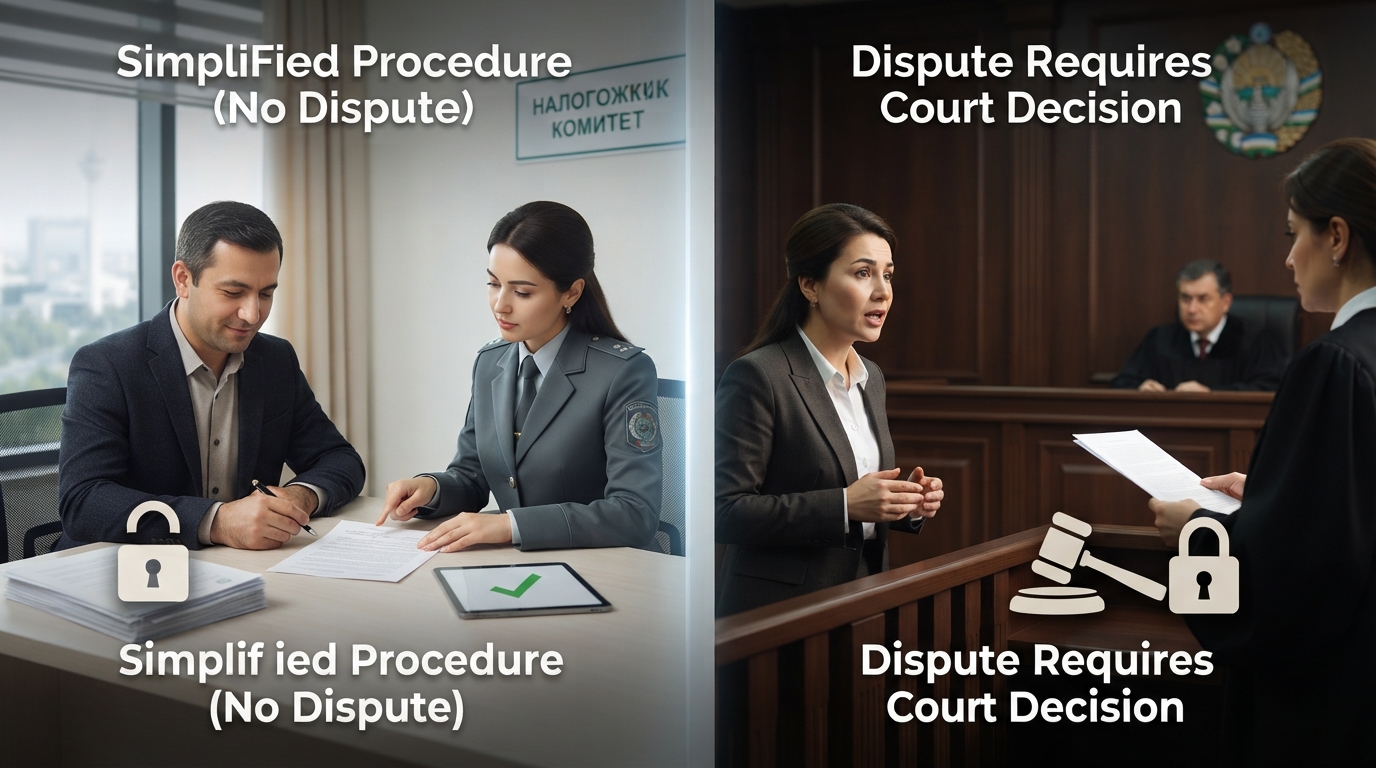
The law proposes dividing the procedure depending on the taxpayer's position. If the entrepreneur acknowledges the tax violation and does not object, the tax authority itself can suspend transactions on their bank accounts. After the violation is corrected, the tax authority will then lift the restriction.
If the entrepreneur disagrees with the tax authority's decision, the suspension can only be achieved by a court order. In this case, after receiving the taxpayer's objection, the tax authority must apply to the court no later than three days later. Along with the application, it is obligated to submit to the court the entrepreneur's objections, evidence of the violation, and confirmation that the taxpayer was notified accordingly.
If the court finds the taxpayer's objections justified or determines that the violation has already been rectified, the suspension of account transactions must be lifted on the day the court's decision comes into force.
The Senate stated that the changes should reduce the time and financial costs for businesses, as well as reduce the number of cases that tax authorities refer to economic courts.