

Christa Pike to be first woman executed in Tennessee in 200 years - but her defence say she's a victim too
Lawyers for Pike, who killed a fellow student in 1995, say she should get clemency and would not be sentenced to death if the crime happened today.
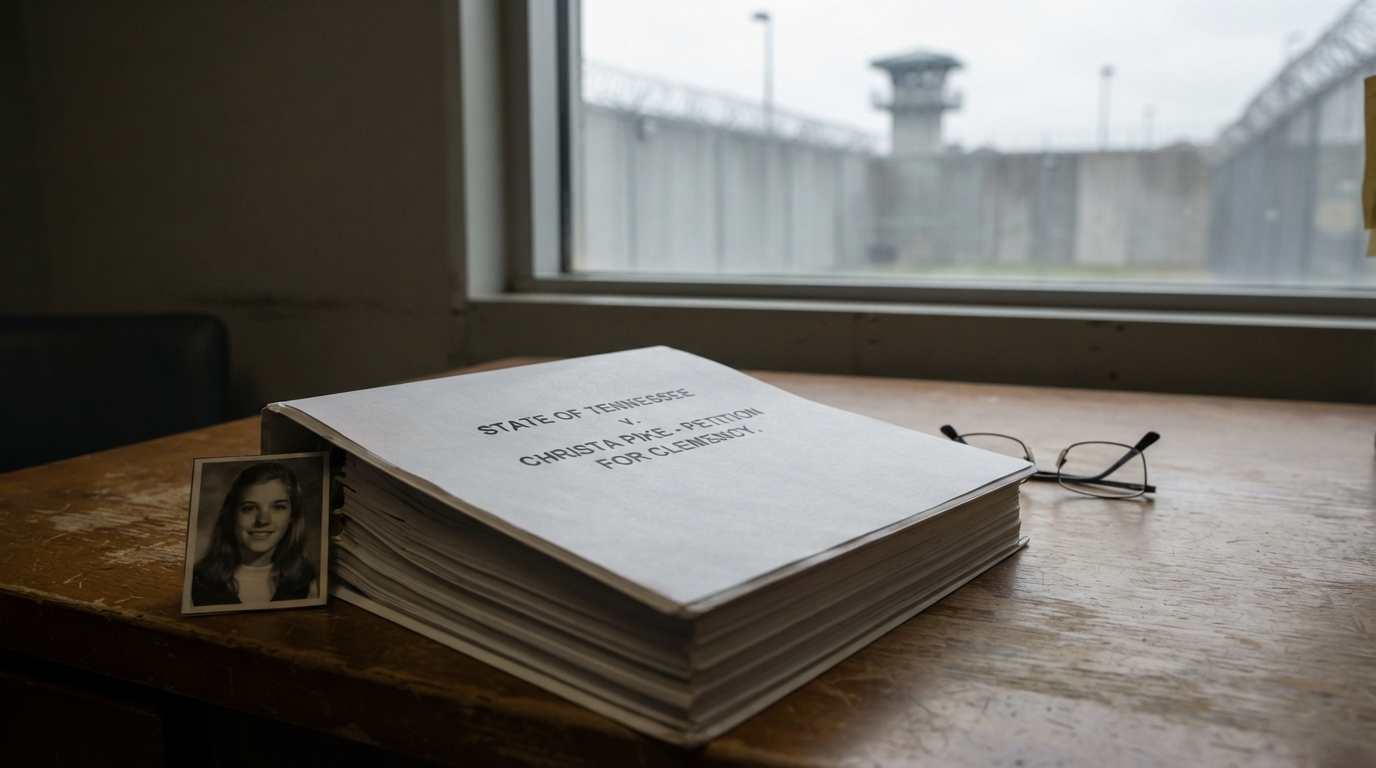
Christa Pike set to become first woman executed in Tennessee in 200 years, as her defence says she is also a victim
Christa Pike’s lawyers have submitted a clemency petition in an effort to have her sentence commuted before the 30 September execution date.
Ashlee Sellars last heard from her friend Christa Pike earlier this week, when Pike texted her from her death row cell as she awaits lethal injection by the US state of Tennessee.
Pike told Sellars she does not want any of her loved ones to be there on Wednesday when she is executed.
“She doesn’t want us to experience that,” Sellars says.
Sellars says it is difficult to square the woman she has known as kind and protective with the person who committed a brutal crime 31 years ago.
Pike, now 50, was 18 when she and her then-boyfriend, Tadaryl Shipp, beat, tortured and murdered Colleen Slemmer, a 19-year-old they met at a job training camp for troubled teens.
The killing sparked a media frenzy in Knoxville, Tennessee, in 1995 after Colleen was found with a pentagram, a symbol of Satanic ritual, carved into her chest.
Pike had accused Colleen of insulting her and trying to steal her boyfriend. Two other residents at the camp later testified that Pike had boasted about the murder before and after it happened, and had shown them a piece of Colleen’s skull.
A year later, Pike was sentenced to death, while Shipp, who was 17 at the time, received a life sentence with the possibility of parole.
Now, after years of unsuccessful appeals, Pike’s execution is scheduled for Wednesday. If it goes ahead, she will be the first woman executed in Tennessee in more than 200 years. Since the 1970s, only 18 women have been executed in the US, compared with 1,663 men.
Colleen’s mother has said she wants Pike’s execution to proceed so that her daughter “finally can be resting”.
But Pike’s lawyers, who filed a 226-page clemency petition, are still hoping for a last-minute reprieve, and UN human rights experts have also urged that the execution be stopped.
Pike has a documented history of childhood sexual abuse, abandonment and neglect. Her lawyers argue that if she were found guilty of the same crime today as a teenager, she would not receive a death sentence.
In the years since her sentencing, her defence team has uncovered details about her childhood that they say the jury never had the chance to hear.
“It is mind-boggling that they did not present any of her history of abuse and rape, even though they knew about it,” says Sandra Babcock, an expert in gender and the death penalty at Cornell Law School, who has worked on Pike’s defence.
“Her case is so uniquely compelling, not just because of her really incomprehensible history of sexual violence but the combination of that with her youth and her mental illness.”
In 1995, forensic psychologist Dr Diana McCoy was hired by Pike’s defence team and found that she had been severely neglected by both parents. McCoy’s report said Pike was physically and sexually abused by several of her mother’s husbands and boyfriends, and raped multiple times, once at age 11 and again at 17. It was later discovered that she had been repeatedly raped as a toddler by her grandmother’s boyfriend. McCoy said Pike’s mother did not believe her when she said the rapes happened.
However, Pike’s trial lawyer did not call McCoy to testify or summon many of the witnesses she recommended. These details emerged more than a decade later in a court hearing reviewing her case, when a new legal team argued ineffective assistance of counsel, a claim that was rejected by the judge.
In 2021, Pike was diagnosed with bipolar disorder in prison and has been medicated since.
Later, another forensic psychologist working for Pike’s defence, Dr Bethany Brand, who evaluated Pike in 2023, said her case was extremely rare because she had been abused by so many people who should have protected her.
“Her childhood was replete with physical, sexual, and emotional abuse. She was sexually violated by a number of men, starting before she was school age,” she says.
Brand says Pike had untreated manic episodes because of bipolar disorder and untreated PTSD. “Both of those things together absolutely influenced how threatened she felt by the girl she ended up killing and her lack of emotional control in that situation.”
Babcock adds: “If they let her be executed, then what it tells us is that the death penalty in this country is just a joke. It’s not for the worst of the worst. It is for the people who receive the worst legal representation and who are the most damaged and vulnerable.”
Last year, Tennessee’s Supreme Court ruled that Pike had not shown circumstances that would justify commuting her sentence. Her appeals had been exhausted and an execution date was set.
A federal appeals court had earlier ruled that the jury had already heard about her troubled childhood through testimony from her mother, father and aunt during the trial. It also said new evidence of bipolar disorder, PTSD and brain damage “mostly repeated” what the jury had heard and would not have altered the verdict.
The case has some similarities to the high-profile murder case of Lisa Montgomery, whose lawyers also argued she was a mentally ill abuse victim who deserved mercy.
Montgomery’s legal efforts failed to commute her sentence, and she was executed by lethal injection in Indiana in 2021.
Unless Tennessee Governor Bill Lee grants clemency, Pike will be executed on 30 September. That decision is unlikely to come until the last moment, and Lee has never granted clemency in a death penalty case before.
The Tennessee Supreme Court this week denied Pike’s request to stop the execution. Her lawyers say they have been discussing next steps.
For her execution day, Pike has asked for an all-female team. She says being restrained by a group of men would worsen her trauma. Tennessee has said the aim is for female guards to transfer Pike to the prison where she will be executed, but it has not guaranteed that will happen.
Colleen’s mother, May Martinez, supports Christa’s execution.
“She did the crime. I think she should pay for it,” she said on Knoxville TV station WBIR in 2021, and told the BBC this week that she still stands by those remarks.
Pike should suffer before she dies, Martinez told WBIR. “I would feel better that she felt the same pain that Colleen did.”
“My heart breaks every single day because I keep reliving it and reliving it, and I can’t no more, and I want this to happen before I die,” she added.
“There’s not a day goes by that I don’t think about Colleen or how she died and how rough it was. I just want Christa down so I can end it, relieve my daughter, so she finally can be resting.”
The Justice Coalition, a victims’ rights advocacy group, has raised money to help Martinez travel to Tennessee to witness the execution.
The group’s executive director, Robert Bracewell, said the sentence was decided by a jury of Pike’s peers and that it is what Colleen’s family wants.
“We stand firm with the family that on the 30 September her execution ought to proceed.”
Ashlee Sellars is left wrestling with two apparently conflicting beliefs: that Colleen’s mother has the right to feel justice has been done, and that everyone, including her friend Christa, deserves a chance at redemption.
“When I think about reconciling who you see on TV or the horrible tragedy that happened with Colleen, the only thing that makes sense to me is around mental health and trauma and the way that people process stuff in a moment when they don’t have the things that they need,” Sellars says.
“These horrible things happen in your youth and then those traumas moved through you, in our community, and you cause harm to somebody else.”
Sellars met Pike in prison while serving a 25-year sentence for her role in a robbery-murder. They used to speak through the meal flaps in their doors on the high-security unit. Sellars now works as an advocate for justice reform and victims of crime.
“People want to know that everyone’s life matters, right? They want to know that Colleen’s life mattered,” she says.
“Christa in this moment, I think she is fighting much more for her life to matter than she is to actually live.”