

China-Kyrgyzstan-Uzbekistan railway may be extended to Europe
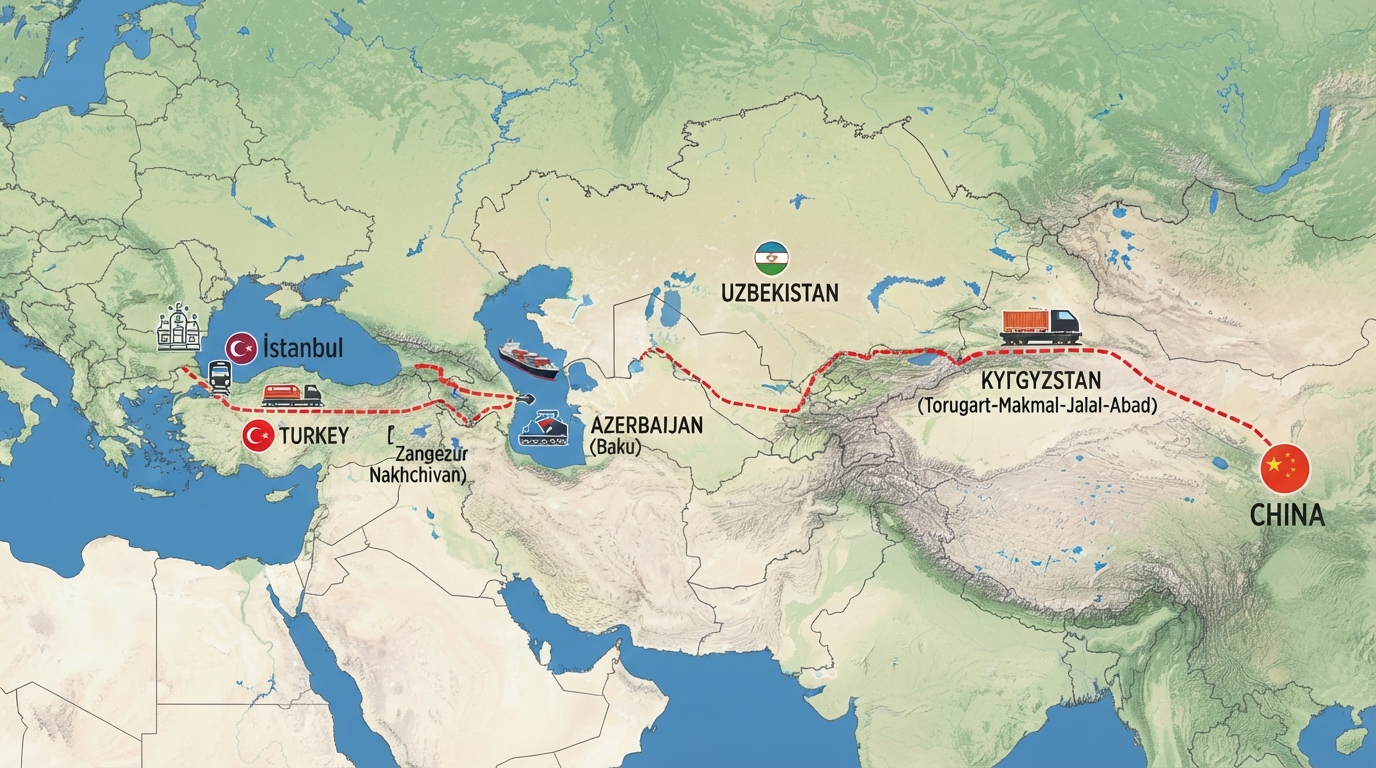
The China-Kyrgyzstan-Uzbekistan railway project is likely to become part of a major transport route that could eventually reach Europe. This route will pass through the Caspian Sea, Azerbaijan and Turkey. This was reported by Togrul Ismail, a professor at Kahramanmaraş Sutchu Imam University, to the AzerTac news agency.
The expert noted that this project will significantly change the transport geography of Central Asia, creating direct access to Western markets. According to the professor, the railway can connect to the Caspian Sea through Uzbekistan, and then to European countries through Azerbaijan and Turkey.
"Kyrgyzstan, which has long been considered a landlocked state, will find a short route to Western markets through this," says Togrul Ismail.
According to him, the development of such a route will also bring great benefits to Azerbaijan. It will help the country strengthen its position as a transport and logistics hub between Central Asia and Europe.
The expert linked the future of the project to the Middle Corridor (a route connecting China and Europe through Central Asia, the Caspian Sea, the South Caucasus and Turkey). He mentioned the transport routes passing through Zangezur as an additional link in this system. This route can provide a connection between the main territory of Azerbaijan, Nakhchivan, and Turkey.
Togrul Ismail noted that the Central Asian countries are interested in expanding transport routes, entering new markets and attracting investments. Azerbaijan, in turn, seeks to strengthen its position as a transport and energy hub between the East and the West.
Construction of the China-Kyrgyzstan-Uzbekistan railway officially began in December 2024. The Kyrgyz section of the railway will run along the Torugart-Makmal-Jalalabad route and will connect the railway networks of China and Uzbekistan. It was previously reported that the China-Kyrgyzstan-Uzbekistan railway could be extended to Turkey.