

Chief minister hopefuls quizzed by MHKs
Two candidates vying to be the island's chief minister faced questions from the House of Keys.
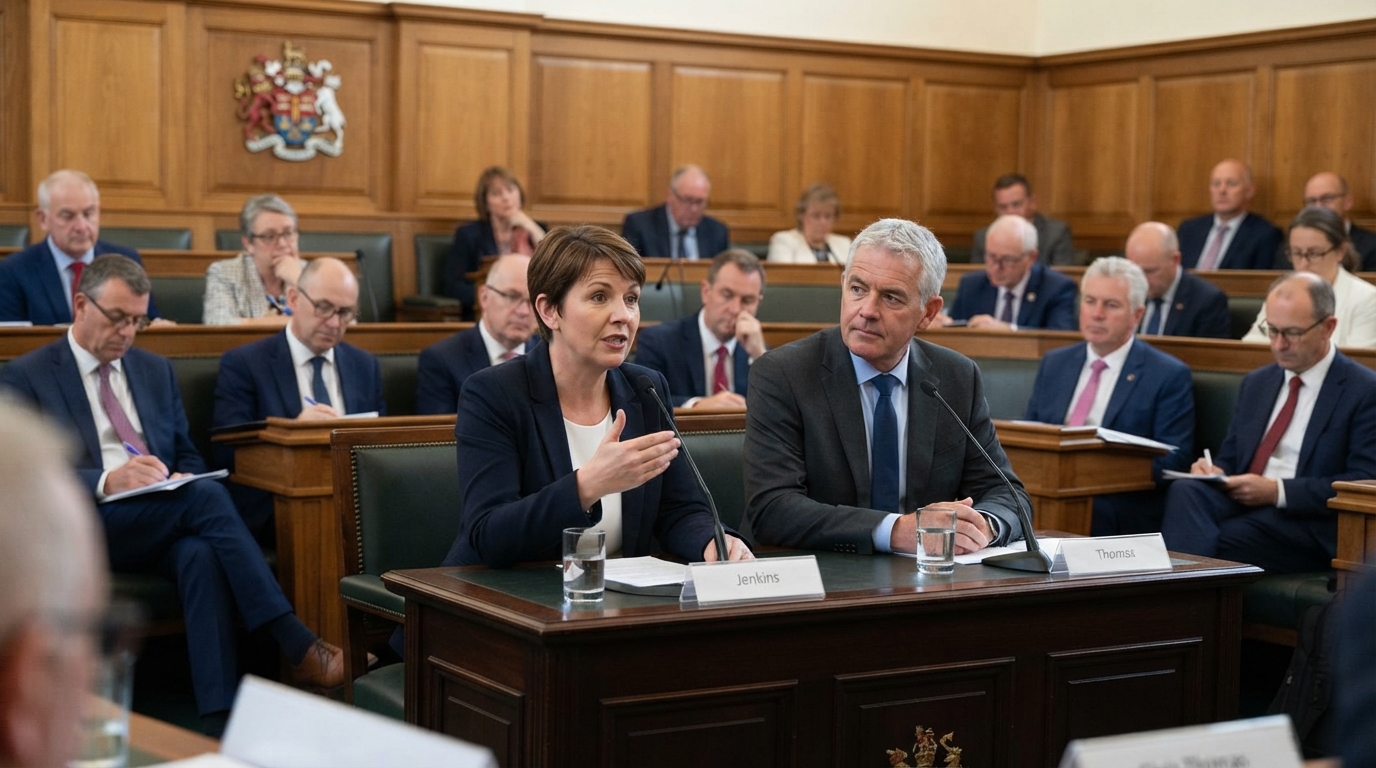
**Chief minister hopefuls quizzed by MHKs**
Housing and the economy have become the key issues in the race between Kirrie Jenkins and Chris Thomas to be the Isle of Man’s next chief minister.
At a hustings, the two contenders set out contrasting approaches, with Jenkins urging a new, more “collegiate” style of government and Thomas stressing his experience and his ability to deliver from the start.
Jenkins said the chief minister should be the person who gets “the right people around the table”, while Thomas said the island had voted for change and that politicians now needed to “turn it into action”.
MHKs will choose their preferred candidate in the House of Keys on Tuesday, 13 October.
Fifteen of the 24 MHKs in the House of Keys were newcomers in the island’s general election on 24 September.
During a three-hour debate, Jenkins said the new House of Keys offered a chance for “a different way of working”.
Thomas, meanwhile, highlighted his government record, including his work in the Treasury and on the minimum wage formula, saying he could “work from day one”.
Both candidates said housing was a major economic and social challenge, but they differed on how to address it.
Thomas said he wanted a clear national policy on affordable housing and pointed to existing targets to build 1,000 more affordable homes.
He said government needed to identify where homes were most needed, how much they would cost and who would build them.
He also suggested creating a dedicated housing and planning policy minister.
Jenkins said there was no single answer to the housing issue.
She said government needed to define what “affordable” meant.
She said empty properties and holiday lets also needed to be tackled, and argued that housing had to be viewed alongside the wider economy.
**Candidates faced 40 questions from MHKs**
On keeping young people on the island and attracting them back, Jenkins said government should make it easier for people to start families and advance in their careers and housing, while Thomas supported expanding apprenticeships.
The candidates also outlined different priorities for the island’s finances.
Thomas said government was dealing with a structural deficit and needed a clear pipeline of capital projects, with spending ranked by need. He said decisions had to be taken faster and that the next administration should move quickly on its economic programme.
Jenkins said government needed to depend less on reserves and raise more income. She said health spending was the biggest financial risk and called for an “honest conversation” about government priorities.
Both candidates said people needed support with the rising cost of living. Jenkins proposed reviewing National Insurance thresholds and said the administration needed to be “bold”.
Connectivity and freight costs were also recurring topics. Jenkins said rising Steam Packet freight charges were being passed on to businesses and described the company as a possible “enabler for business”.
Thomas said the government, which owns the Steam Packet, could use that ownership and the sea services agreement to press for changes.
In their closing remarks, Thomas said his four election wins meant he had “already built trust”, but he rejected a straightforward split between experienced and new politicians.
“This is not about old versus new, it’s about all of us blending together,” he said.
Jenkins said the island had a chance to “do government differently”.
She called for a government “built around people”, with ambition “grounded in what we can afford”.
“I see the chief minister as the conductor of the orchestra,” she said. “Let’s bring the best out of all of us.”
The House of Keys will vote on the next chief minister on Tuesday, with a candidate needing the backing of 13 of the 24 MHKs.