

Call for right to grow food on unused public land
Some London council already allow unused land to be turned into gardens, allotments and flowerbeds.
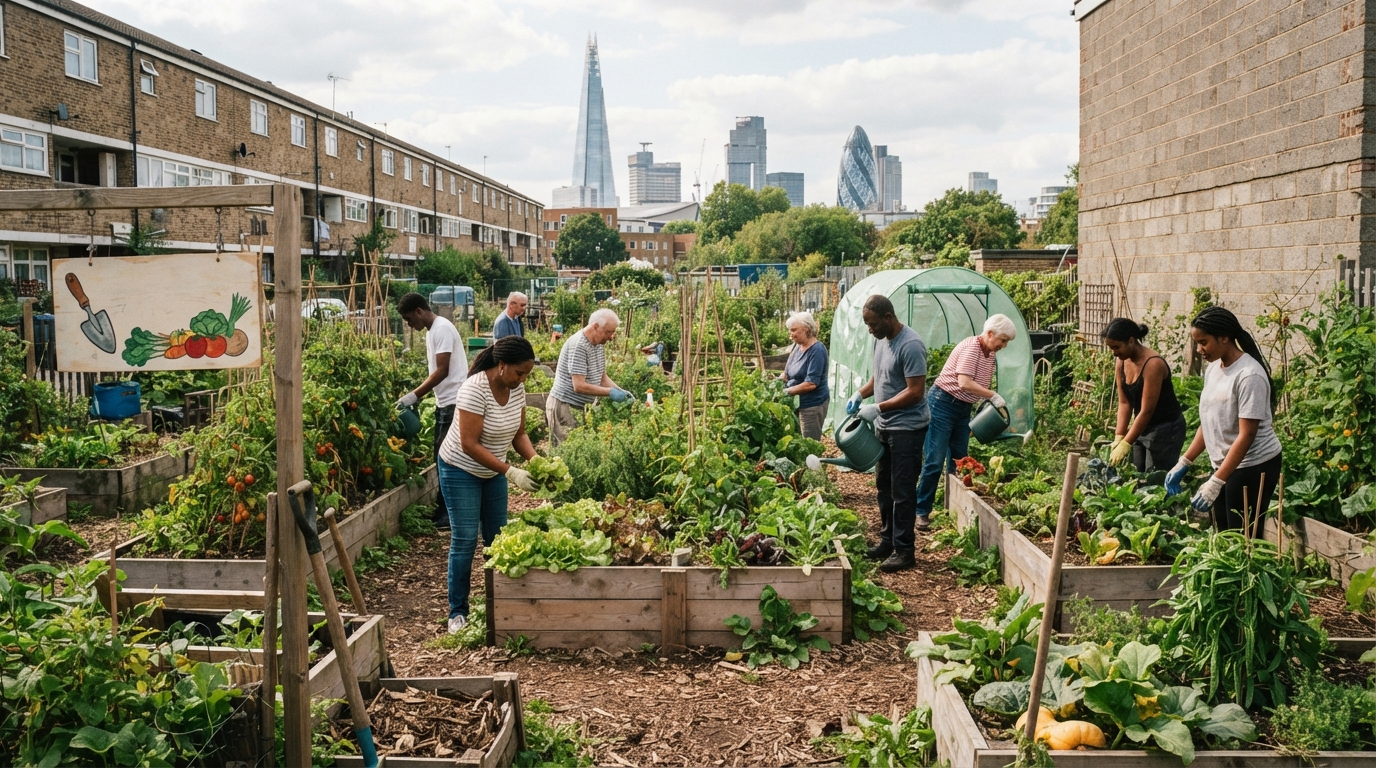
Advocacy for the Right to Cultivate Food on Unused Public Land
Kalpana Arias asserts that a Right to Grow policy would enhance food security
Activists are urging City Hall to establish a citywide "Right to Grow" initiative aimed at enabling communities to convert neglected public land into food gardens.
Several local councils, such as Hounslow, Southwark, and Hackney, have already adopted this policy to transform wasteland into allotments, community gardens, and orchards.
Now, the Greater London Authority (GLA) is being called upon to create a standardized model applicable to all 32 boroughs and the City of London.
A recent report from the London People's Assembly on Food, Nature, and the Right to Grow presents 12 proposals to make the city "greener and more edible" by 2035. City Hall has stated that it is working to enhance access to green spaces.
These proposals include appointing dedicated community growing officers in each borough and integrating food cultivation into future health and planning policies.
Advocates highlight that the demand for growing space far surpasses the available supply.
According to a 2023 Freedom of Information request released by Greenpeace, over 30,500 Londoners are on waiting lists for allotments, with 16 boroughs currently closed to new applicants.
In Camden, waiting periods can extend up to 12 years, while Islington has only 106 allotment plots available for approximately 17,000 households lacking garden access.
A soil border along an alleyway in Isleworth was transformed into a flowerbed as part of Hounslow's Right to Grow initiative.
Kalpana Arias, a key figure in the Right to Grow Campaign, told the Local Democracy Reporting Service (LDRS) that supporting the policy would be an "easy win" for City Hall.
"We want the GLA to incorporate Right to Grow into its food and housing policies to facilitate boroughs' participation in the framework," she stated.
Residents encouraged to cultivate food on 'unloved' public land
Can a nature corridor enhance London's biodiversity?
"We have significant ambitions, but institutions must align with that and eliminate the existing red tape. We need to bolster biodiversity and enhance food security in London.
"We will never achieve complete food independence for London, but we aim to highlight that the capital imports 94% of its food."
The deputy mayor for the environment spoke at a People's Assembly meeting.
Deputy Mayor for Environment Mete Coban emphasized that improving access to green spaces is "a matter of social and environmental justice."
He noted that City Hall has planted 640,000 trees and is empowering communities to revitalize areas through the mayor's £12 million Green Roots Fund.
"The advantages of nature should be accessible to everyone, and we are dedicated to making this a reality as we work towards a greener, healthier, and more resilient London for all," he added.
City Hall has not confirmed whether it will develop a Right to Grow framework.
Listen to the best of BBC Radio London on Sounds and follow BBC London on Facebook, X, and Instagram. Send your story ideas to [email protected].