

Budget 2026: No more fat to trim for 'squeezed middle'
As the chancellor finalises his first Budget, how are the "squeezed middle" feeling about costs?
**Budget 2026: No more fat to trim for 'squeezed middle'**
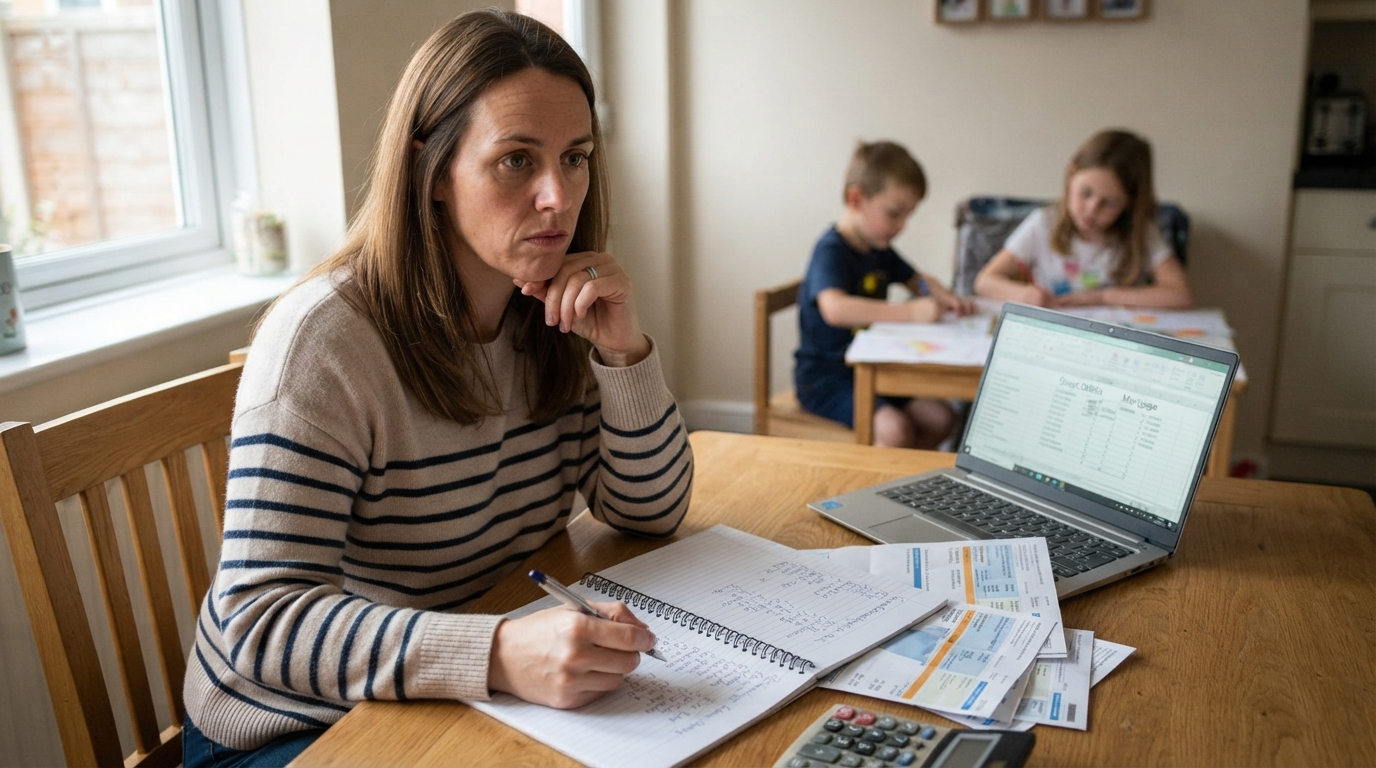
Dawn Fazackerley-King says there is "nothing fancy" in her regular outgoings
As Chancellor John Healey puts the finishing touches to his first Budget, how are the "squeezed middle" coping after years of pressure from the cost of living?
Dawn Fazackerley-King is trying to figure out how she and her family will cover higher mortgage payments expected in a few months.
"There's just no more fat to trim," says the mother-of-two.
The interest rate on their Ipswich home loan could increase from 1.4% to around 5.3%, which, Dawn says, could mean "about £250 extra a month just for living in the same property".
"We just have to find that money from somewhere, but when you look at the direct debits every month, there's nothing fancy in there," she adds.
Dawn lists the standard monthly bills, including their mortgage, council tax and energy costs, and says "there's no regular meals out or anything like that".
Over the past few years of rising costs, Dawn says her family – which includes two children aged six and eight – have been "trimming the fat accordingly".
"It's quite worrying... where that money is going to come from when we're already feeling that squeeze," she says.
Dawn, 42, works full-time as a self-employed Pilates instructor in Ipswich, while her husband works in an office and the couple have a household income of about £70,000 a year.
"Yes. Life is definitely getting more expensive," she says.
In August, 55% of adults who responded to an Office for National Statistics survey, external said their cost of living had risen compared with the previous month.
That figure was lower than the 62% recorded in August 2025 and lower than the 79% who said the same in April this year.
But with more than half of adults facing higher expenses, the rising cost of living appears to be more persistent – a long-term problem rather than a short-term crisis.
For those who said costs were up, the most common reasons were the price of food shopping, fuel and energy bills.
"I think we've come to accept that is just the way it is at the moment – and we're lucky that we're able to keep our heads above water," Dawn says.
"Please start listening. The cost of living is becoming unbearable and I don't feel that the government are always hearing that message."
While welcoming the move on standing charges, Dawn says ministers had been "trying to put sticking plasters over gaping wounds", which were "not fixing the problems".
The same rate – which balances income, taxes and benefits, and costs – grew by an average of 3% a year between 2000 and 2007.
Jessica Taylor says she was raised to "always think about money"
Jessica Taylor, 41, a single mum in Clacton-on-Sea, Essex, says her income is about £26,000 a year.
She receives Universal Credit and says she too is "definitely" feeling the squeeze.
Jessica recalls telling her 11-year-old son that – while they have a good life – they're "poor in the sense that on paper we live month to month".
"If I lost my job, we've got one month – maybe two – and then we are the real poor," she adds.
She says she does "the really small things" to stretch her money further.
These include checking maps and satellite images to find streets where parking is unrestricted.
Before going out, she says she spends "10 minutes in the bath on Google Earth going 'that road!'."
Jessica says she is "happy… content… grateful" for the life she and her son have, but adds: "I wish I could do more – I wish I could not panic if a car bill comes in, maybe not ask mum for help sometimes, which is rare.
"I wish that I could go on a few more holidays a year.
"But I sacrificed the holidays so that my son – throughout the year – can do regular days out, [have] regular experiences."
Jessica and her 62-year-old mum Karen Badenoch run Trusted Money Confidence, a community interest company that holds free sessions for people to share money management advice and strategies.
Karen, who used to work in admin for an architecture practice, says they often see "people in work, racking up debts on credit cards and buy-now-pay-later just to be able to get to the end of the month".
"The biggest thing that anyone can do is be open... and look at what your issues are – and that way you can resolve them.
"It is a huge lift off your mind if you actually start dealing with things and facing up to them, and believe me – you're not alone."
Healey has promised the Budget will stick to Labour's commitment not to raise the three main taxes – income tax, National Insurance and VAT – while following the party's fiscal rules.
He recently also said it would deliver "growth in every postcode, while giving businesses and families some breathing space".
Healey will deliver his first Budget on Wednesday, when Dawn, Jessica and the rest of us will hear what he may do to ease the squeeze.