

Botswana condemned for slaughtering elephants for independence celebrations
The government authorises the hunting of 23 elephants and dozens of other wild animals for independence day feasts.
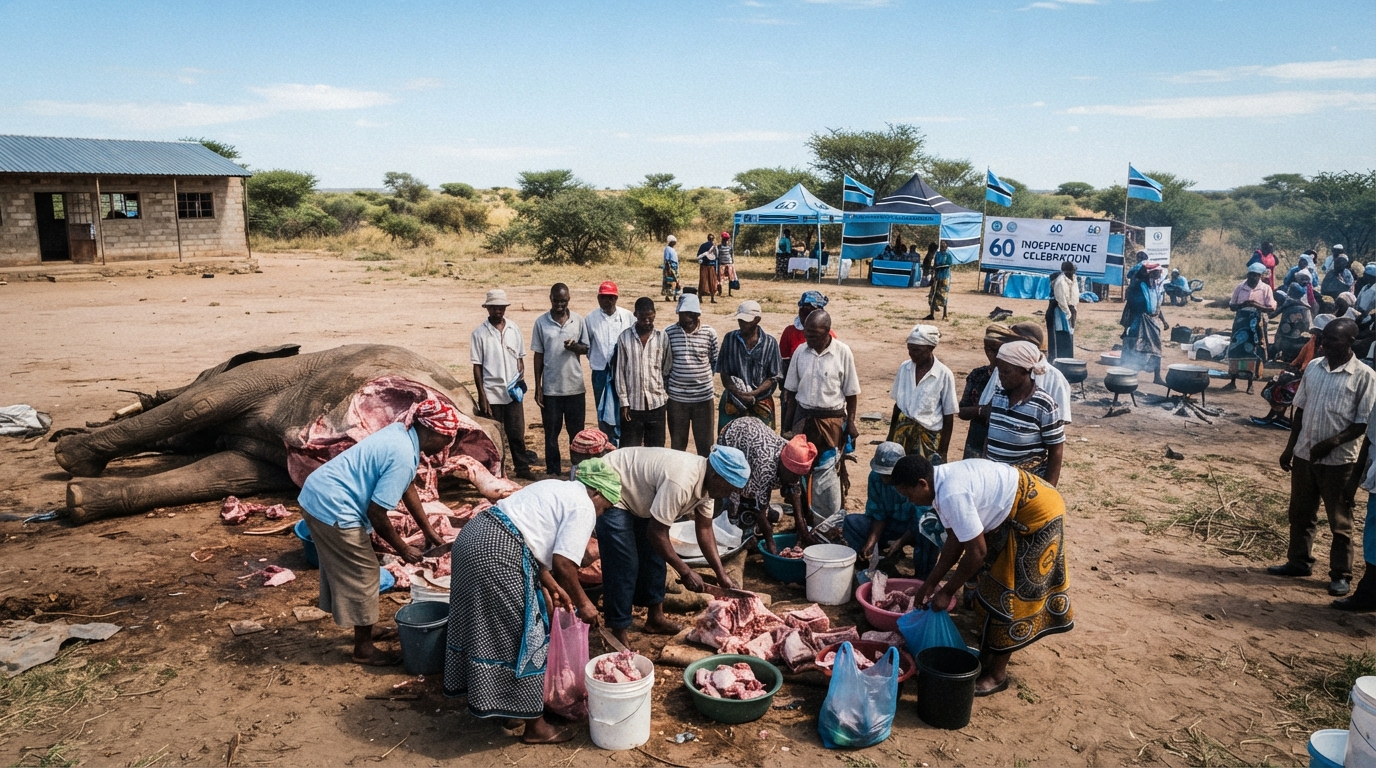
Botswana criticised for killing elephants for independence festivities
Botswana, which has the world’s largest elephant population at more than 130,000 elephants, has faced backlash over its decision to permit the killing of 23 elephants to supply meat for independence celebrations.
Animal rights campaigners have condemned the southern African nation’s move as it prepares nationwide events on Wednesday to commemorate 60 years of independence from Britain.
A licence issued by the Ministry of Environment and Tourism and seen by local media allows the hunting of 23 elephants and other wild animals for "complimentary purposes".
The Botswana-based Elephant Protection Society says the decision could harm conservation efforts, with chairman Oaitse Nawa telling the BBC that elephants require stronger protection.
He said killing elephants for celebratory feasting could also encourage poaching by sending the message that it is acceptable to kill elephants when the government approves it.
"Elephants have lost their social structures because they are always being pushed from one place to another by gunshots," Nawa said.
Some social media users in Botswana have also raised concerns about eating the game meat during an outbreak of foot-and-mouth disease, which has led authorities to introduce measures to stop its spread.
Tshenatshe Monwela, an elder in Maun, a tourism town in north-western Botswana, told local media that his community should have been given buffalo instead.
He said elephants had special cultural and ecological importance and that Botswana’s historic role in protecting the country’s wildlife and livestock should have been reflected in the government’s meat allocation for the anniversary events.
Botswana’s government has arranged a range of events to celebrate the country’s diamond jubilee, including a carnival in the capital, Gaborone, along with cultural performances, concerts and sporting events.
The game meat is expected to be served as part of the traditional feasting linked to Independence Day celebrations.
The 23 elephants were assigned across eight districts nationwide.
By Wednesday morning, it was not immediately clear how many of the animals had been killed. The BBC has requested comment from the government.
However, local media published pictures from different parts of Botswana showing residents gathered around elephant carcasses, some holding knives and sharing the meat.
In Chobe, a wildlife-rich district in northern Botswana near the borders with Namibia, Zambia and Zimbabwe, a local MP voiced concern after residents reportedly collected portions directly from a carcass at a school.
He said the arrangement risked causing congestion and disadvantaging elderly people, pregnant women and people with disabilities, and suggested the meat should instead be divided into 5kg or 10kg packages to improve hygiene and make distribution fairer.
"For the sake of dignity, fairness and public hygiene, we respectfully call on the hunter and the relevant leadership to ensure that future distributions are properly organised," MP Simasiku Mapulanga posted on Facebook, alongside photos of people scrambling for meat around an elephant carcass.
People across Botswana are gathering to mark the country’s 60th Independence Day.
Elephant meat is common in some wildlife-rich communities, especially when meat from legal hunts is distributed locally, but it is not eaten every day.
Botswana also strictly controls game meat, and legal possession generally depends on showing that it came from a lawful hunt.
The decision has revived a long-running and often heated debate in Botswana over how the country manages its vast elephant population.
Botswana has more than 130,000 elephants, and communities living alongside them have long complained that the animals destroy crops, damage property and sometimes kill people.
The government has defended regulated hunting as one way to manage the elephant population and human-wildlife conflict while also generating income for communities.
The country banned trophy hunting in 2014 under former President Ian Khama, but lifted the ban five years later under his successor, Mokgweetsi Masisi.
Hunting has continued under President Duma Boko, who defeated Masisi in the 2024 elections.
The government says revenue from hunting supports conservation and local development.
Minister of Environment and Tourism Wynter Mmolotsi told parliament last year that special elephant quotas raised 15.6m pula ($1.1m; £820,000) in 2025 for projects in areas where elephants are found.
But conservation groups have questioned whether hunting at that level can be sustained.
Supporters of Botswana’s hunting policy, however, say international criticism often ignores the burden carried by rural communities living alongside one of the world’s largest elephant concentrations.
They say elephants destroy crops and infrastructure and threaten people, especially as their range increasingly overlaps with farms and settlements.