

Bombs preventing rescue of kidnapped youths, Nigerian police say
The father of one of the 19 young abductees tells the BBC he hasn't eaten in three days out of worry.
Bombs blocking rescue of kidnapped youths, Nigerian police say
Omotosho Adewale, the father of one of the abducted youths, says he has had no peace and has not eaten for three days
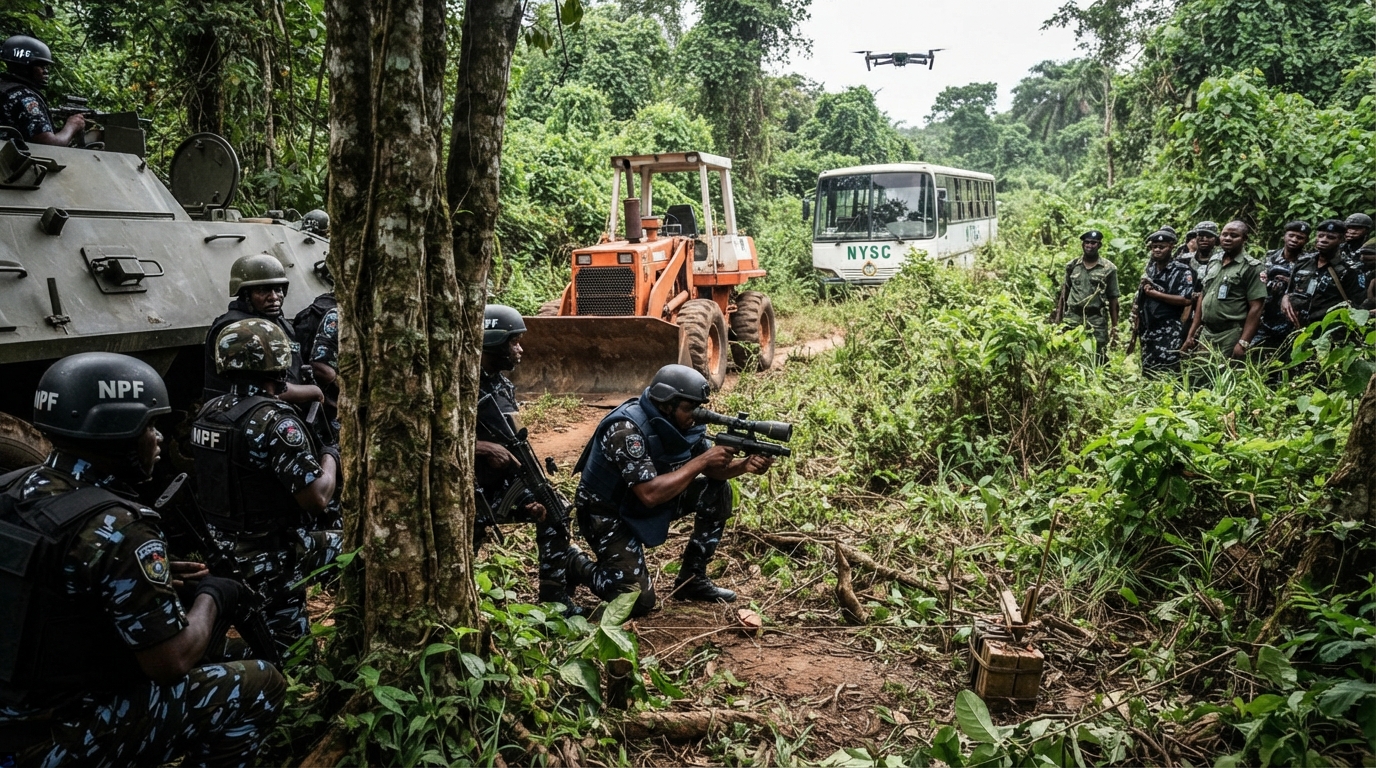
Nigerian police say they have found a camp where 19 national youth service recruits are being held by gunmen, but they cannot advance because they believe the area is planted with explosives.
Police Commissioner Audu Bosso said drones helped identify the camp where the prospective National Youth Service Corps (NYSC) members were taken after being kidnapped last week in south-eastern Imo state.
The camp’s exact location has not been revealed, and police have not named those behind the abduction.
Omotosho Adewale, whose child is among those taken, told the BBC that the kidnappers had asked for a ransom of 50m naira ($37,680; £28,440), which he said he could not pay.
"There's no peace of mind. I've not eaten in three days."
Adewale urged the government to intervene.
The abducted group was travelling from Ibadan in the south-west to NYSC orientation camps in Abia and Akwa Ibom states on Thursday when gunmen attacked their buses near Umunoha in Imo state.
The NYSC is a compulsory one-year scheme for most Nigerian university and polytechnic graduates. Those who take part, known as corps members, are sent to different parts of the country to work and carry out community service, as well as to promote national unity.
Speaking to journalists, Bosso said the kidnappers had been tracked.
"The drone actually showed us exactly their location. But our predicament is that with the intel we have... the camp is mined with IEDs [homemade bombs]," he said.
Bulldozers and armoured vehicles are being brought in as police prepare a rescue operation.
Kidnapping for ransom is a major security issue in Nigeria, involving both criminal gangs and armed groups.
The abduction in Imo state has sparked broad concern, as mass kidnappings are less common in southern Nigeria than in some northern areas.
Paying ransom is illegal, and authorities have repeatedly warned families not to do so, though relatives of abducted people are often pressured into paying to secure their release.
The latest abduction underscores the dangers faced by young people travelling across Nigeria for national youth service and has renewed calls for reform.
The NYSC has previously said it would not post members to areas deemed high-risk because of violence or the threat of abduction. Most of south-eastern Nigeria has not previously been classified as high-risk.
In the south-east, some earlier abductions have been linked to separatist groups, including the Indigenous People of Biafra (Ipob).
Authorities have not linked the current abduction to any group.