

Bomb threats made to 7 aircraft in one day in Europe
On November 3, reports were received about explosive devices aboard at least seven passenger aircraft in Europe. As a result of inspections, all of them were found to be false. Due to one of the incidents, an airport near Warsaw was temporarily closed.
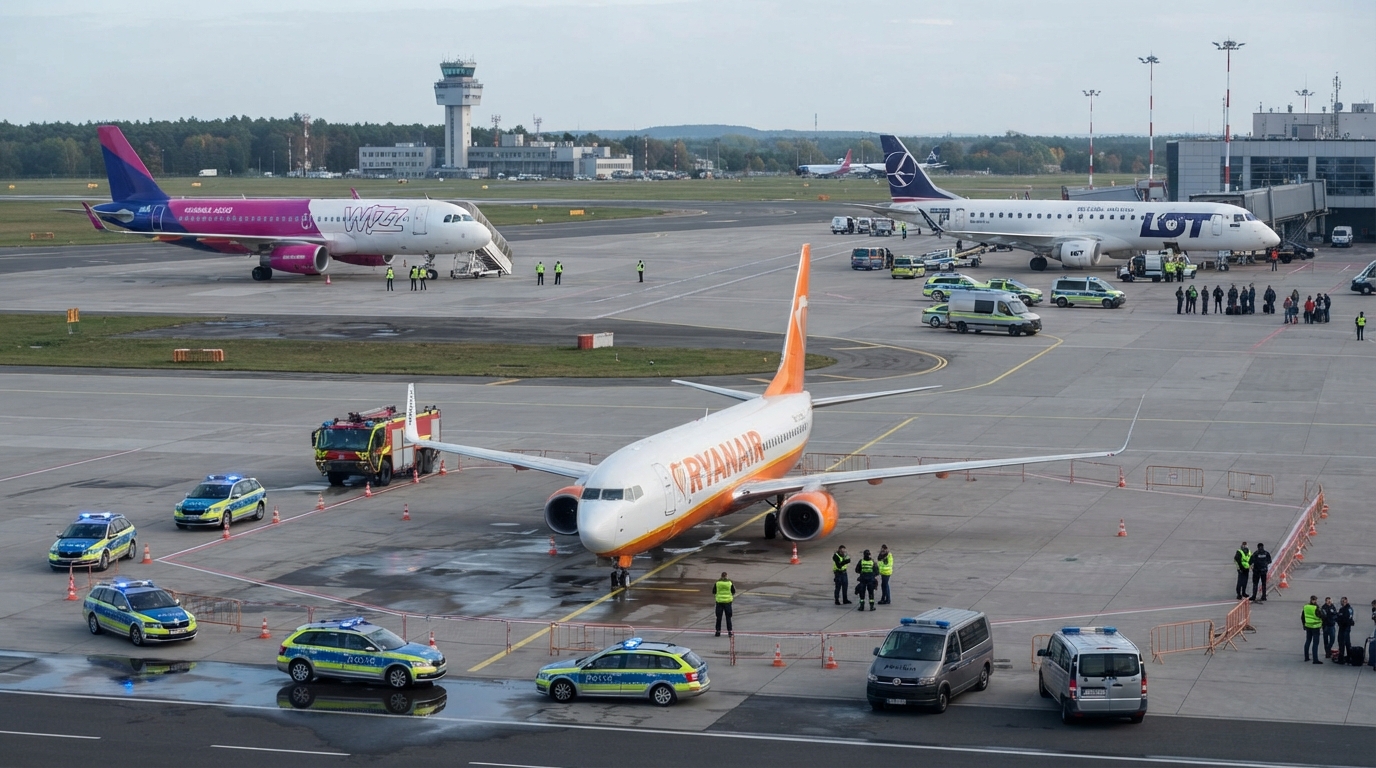
7 aircraft in Europe receive bomb threats in a single day
DW reports, citing Reuters, that all the aircraft were operating flights between European cities. Four of them belong to the Irish airline Ryanair.
Two of the aircraft were flying to Warsaw, two more to Sofia, two to Rome, and one to the Spanish city of Murcia.
A Polish LOT airline plane flying from London to Warsaw was diverted to the Warsaw-Modlin airport near the city instead of the main Chopin airport. Following the airliner's landing, the airport was temporarily closed during its inspection.
A Scandinavian Airlines (SAS) plane arriving in Warsaw from Copenhagen landed at Chopin airport. When the board was inspected, no dangerous items were found.
Bomb threats were also received regarding two other planes flying to Sofia. One of them was a Ryanair flight from Dublin, and the other was an aircraft belonging to Hungary's Wizz Air, which had departed from Milan-Bergamo airport.
In addition, one Ryanair plane that landed in Murcia and two that arrived in Rome from Lisbon and Dublin were also inspected due to threats.
A similar incident occurred the day before, on November 2. A Wizz Air plane flying from London to Sofia made an emergency landing at Budapest airport following a report of a bomb on board. It was escorted by Hungarian fighter jets. No traces of explosives were found during the inspection.
Rhys Jones, head of the analytical department at Osprey Flight Solutions, an aviation risk analysis consulting firm, believes the purpose of such reports was to disrupt air traffic in general.
"The absence of a specific target — a particular country, airline, or route — indicates that the goal was to disrupt air traffic as a whole," he told Reuters.
It is currently unknown who is behind the false reports.