

Blue Planet and Gandhi composer George Fenton dies aged 76
The musician received five Oscar nominations, and soundtracked dozens of memorable nature films.
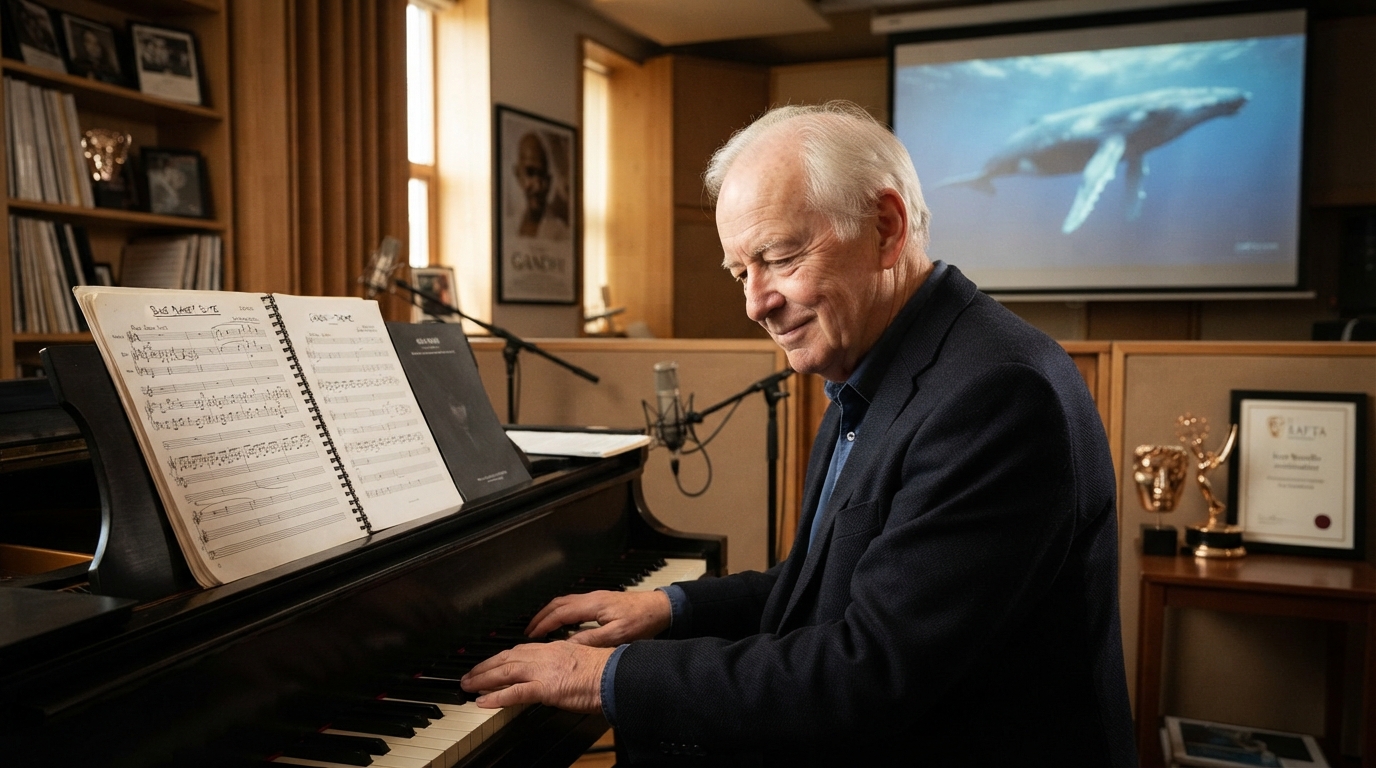
Blue Planet and Gandhi composer George Fenton dies aged 76
George Fenton was among the UK’s most prolific and successful composers
George Fenton, whose credits included the scores for films such as Gandhi, Groundhog Day and The Fisher King, along with TV series including Planet Earth and Bergerac, has died aged 76.
The highly productive composer earned five Oscar nominations for his film work, among them The Remains of the Day and Cry Freedom.
His music for the BBC series Blue Planet also won Bafta, Emmy and Ivor Novello awards, and he wrote theme music for BBC News programmes including Newsnight and Breakfast Time.
In a statement, Fenton’s family said: "We are very sad to announce that George Fenton passed away unexpectedly today."
They added: "He is survived by his loving wife Amanda, ex-wife Jane, children Gemma, Grace and Bridget, and grandchildren Lola, Audrey, Alfred, George, Frank and Beatrice, and a life of music."
Fenton was born George Howe in Bromley, Kent, in 1949. A biography on his official website says his father was a mechanical engineer, while his mother had been a dancer before training as a nurse during the war.
Both parents were musical — his father played drums and his mother piano — but Fenton chose the electric guitar as his instrument at the age of seven.
That was "when music became more important than football," he later told The Express newspaper. "The Beatles had a huge influence on me."
His first lessons came from a musician named Brian Rudd.
"He came into our lives as a chimney sweep, which he clearly wasn't," Fenton later recalled.
"My mother went mad at him because he filled the house with soot.
"As he left he said, 'I'm really sorry – but I tuned the boy's guitar for you.' She suggested that as compensation for the mess he could give me a lesson, which he did and then carried on doing."
Later, Fenton studied the church organ, but turned down the chance to go to university and music college so he could pursue a career as a performer.
In 1968, he appeared in Alan Bennett's first West End play Forty Years On and had to use his mother's maiden name, because union rules stopped two actors from sharing the same name.
In that production, he also understudied the show’s musical director, Carl Davis, who likewise went on to become a major film and television composer.
Although he spent most of his career writing alone, he never completely lost his love of performing. "I love live audiences," he told Radio 4's Sue Lawley in 2003
A year later, he signed a record deal and had a top 10 hit in Sweden with a cover of The Beatles' Maxwell's Silver Hammer, but his solo career was brief.
In the mid-1970s, he had a recurring role as soldier Martin Gimbel in the ITV soap opera Emmerdale Farm.
But over time, he found directors were always casting him in parts that required him to play an instrument, so he decided to make music his main focus.
Fenton’s first job as composer and musical director came with a production of Twelfth Night at the Royal Shakespeare Company in Stratford-upon-Avon in 1974.
Eight years later, he was nominated for an Oscar for his score for Richard Attenborough's Gandhi, working with Indian composer and instrumentalist Ravi Shankar to create music that reflected the country’s musical traditions.
It was only his fourth attempt at film music, and he was still almost entirely self-taught.
During the 1980s, he wrote the music for several TV series, including the Bafta-winning The Jewel in the Crown, The Monocled Mutineer, and Alan Bennett's Talking Heads.
He also composed many familiar theme tunes, including those for the BBC's One O'Clock News, Six O'Clock News, Nine O'Clock News, Newsnight, The Money Programme, and Radio 4's PM Programme.
For 1987's Cry Freedom - the story of South African campaigner Steve Biko, who was brutally killed by police - he collaborated with South African jazz musician Jonas Gwangwa, earning two Oscar nominations for best original score and song.
By chance, the title track included Fenton singing a list of anti-apartheid activists imprisoned or killed by the South African government.
He had originally recorded the lyrics as a guide for Gwangwa, but the musician chose to keep some of them "as a gesture of brotherhood".
"Then it got nominated for an Oscar, so I then found myself singing it on live television to about a billion people, which was not what I intended at all," Fenton later told Radio 4's Desert Island Discs.
Fenton's scores for David Attenborough's natural history programmes became an international phenomenon
After writing the score for the BBC's Trials of Life in 1990, Fenton went on to compose the music for what became known as David Attenborough's Earth Trilogy: The Blue Planet, Planet Earth and Frozen Planet.
His music matched the striking images of the ocean depths and polar ice caps, giving the storytelling emotional force and using the full power of the orchestra to convey wonder, awe, tension and suspense.
After the documentaries' success, Fenton created The Blue Planet in Concert, which has been performed by leading orchestras in venues around the world.
Other well-known scores included The Long Walk Home, You've Got Mail, Sweet Home Alabama, The Lady In The Van and Mrs Henderson Presents.
Fenton also scored more films for British director Ken Loach than any other composer.
Their 18 collaborations included Ladybird, Ladybird; I, Daniel Blake and The Wind That Shakes the Barley, which won the Palme d'Or at the 2006 Cannes Film Festival.
He also founded the Association of Professional Composers, which later merged with The Ivors Academy, and he is one of only a handful of musicians to receive the Academy's fellowship, alongside Sir Andrew Lloyd Webber, Sir Elton John, Kate Bush, Bruce Springsteen and George Michael.
In addition, Fenton was a visiting professor at the Royal College of Music and the University of Nottingham. He was made a CBE for services to music in 2023.
The composer often said his musical career had been an accident, but nothing gave him more pleasure than seeing his work brought to life.
On his Desert Island Discs episode, Fenton chose one of his own pieces - Reunion, from the soundtrack to the movie Accidental Hero - because it reminded him of watching pianist John Lowe play the melody in the studio.
"If I was sitting on a desert island and thinking about what a good time I'd had writing music, which I have, I want just one thing to remind me about the best part - which is the fact that you write something and then you're so surprised and thrilled at the way it's played," he told Sue Lawley.
"For a composer, that's the biggest kick you can get."