

Best thing we can offer young people is a job, not benefits, says chancellor
John Healey's speech comes ahead of next month's Budget, as he faces pressure to bring down government borrowing costs.
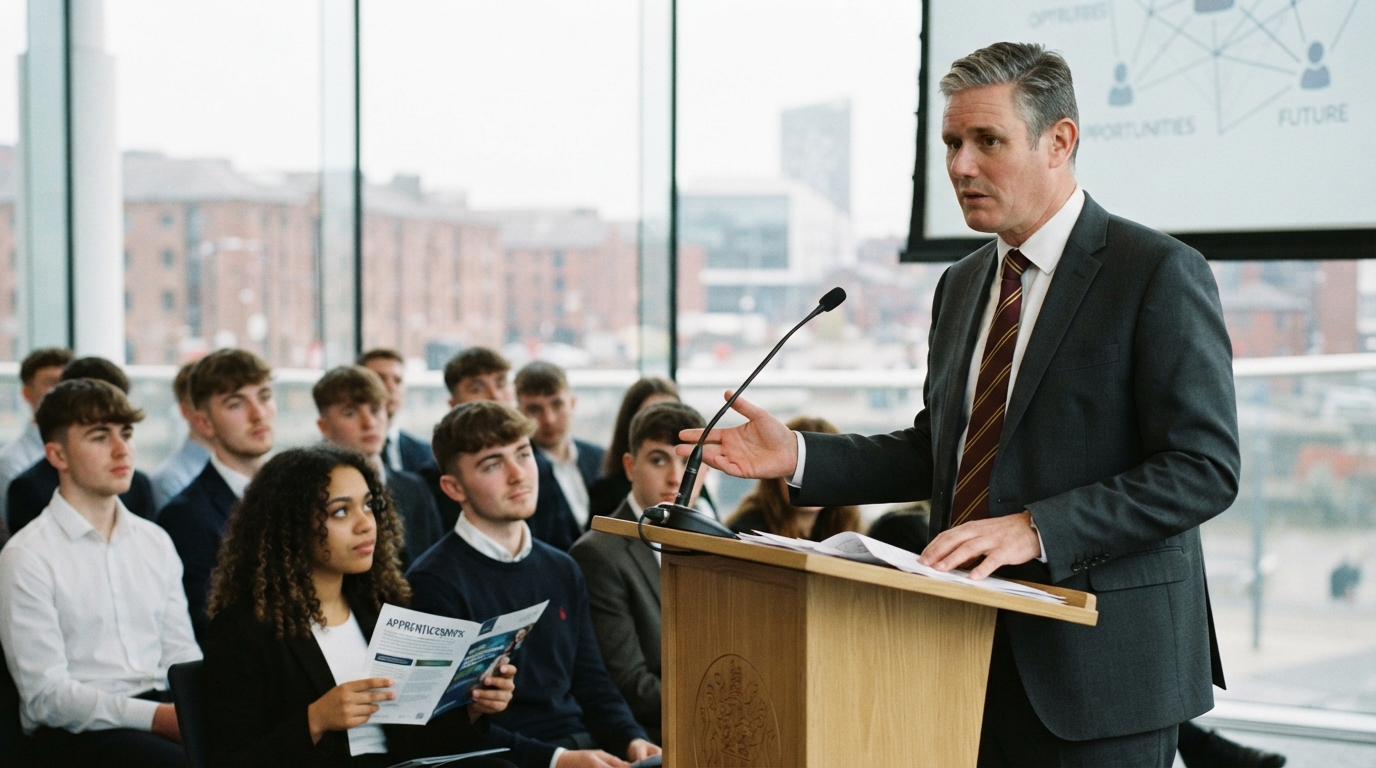
**Best thing we can offer young people is a job, not benefits, says chancellor**
The chancellor has cautioned against letting Britain’s benefits bill keep rising while failing to give young people opportunities.
John Healey told Labour’s annual conference in Liverpool that reducing welfare spending was “more than an economic must - it’s a moral duty”.
“The best thing we can offer a young person is not a benefit payment - it’s a first job with training and a wage,” he said.
He announced an expansion of a Local Apprenticeships Service for mayors in England, saying it would create thousands more apprenticeships for young people.
Healey’s speech comes as he comes under pressure to cut public spending or increase taxes ahead of next month’s Budget in order to reduce government borrowing costs.
To calm the markets, he said all the government’s promises would be “built on the rock of fiscal discipline” and that he and Prime Minister Andy Burnham were “united on meeting the fiscal rules”.
Fiscal rules are the government’s self-imposed limits for managing spending and tax decisions.
The Budget would “give families and businesses a bit of breathing space”, the chancellor said.
He also acknowledged that “the money New Labour had in the '90s is simply not there now”.
Healey blamed the Conservative Party’s years in office for leaving Britain spending more on debt than on the Home Office, Ministry of Defence and Ministry of Justice combined.
In response, Tory shadow chancellor Andrew Griffith said “Labour MPs will never support cutting the out-of-control welfare bill” and “with Labour, it’s always more taxes if you work and more benefits if you don’t”.
Healey described young people as “digital natives, whip-smart, questioning, ambitious, brave” who could move from “generation jeopardy to generation hope”.
But he highlighted the million young people not in education, employment or training - known as Neets - saying this made it necessary to ensure benefits act as a bridge into work rather than a “trap”.
“It is not progressive to allow a bigger and bigger benefits bill, and a system which offers an income but doesn’t offer a future,” he said.
The Local Apprenticeships Service was first intended as a pilot in a small number of areas, but it will now be open to any English mayor who wants it, he said.
Under the scheme, which the Treasury says will be introduced across England from March 2027, local teams will match young people with employers, including small businesses that have never taken on a trainee.
The department said an extra £100m was being put into the scheme, “fully funded” through savings from the Department for Work and Pensions.
Healey said mayors would have the powers to carry out the scheme because “they know which firms are hiring, which colleges are delivering, which estates have been left behind,”
The announcement comes as the final part of a major report by former minister Alan Milburn is expected in the coming weeks, setting out recommendations for dealing with the one in eight people aged 16 to 24 in the UK who are Neets.
Healey said these young people had been “signed off, written off” and that the Labour government would tackle that.
Helen Miller, director of the Institute for fiscal studies think tank, told the BBC that sticking to fiscal rules alone would not be enough to bring down debt because it is “basically a promise to get down debt tomorrow”.
She said cutting the benefits bill, including withdrawing support from some people, could be one way to reduce the national debt sooner.
Elsewhere in his speech, Healey repeated his pledge to re-industrialise the country and said Rolls Royce would invest £300m more in its British factories in Derby, Bristol, Glasgow and Rotherham.
He also said he was restoring the Union Learning Fund in England, which was created in 1998 and scrapped by the Tories, to help working people build more skills in the age of artificial intelligence. It was initially unclear how this would be funded.