

"Benefiting mostly large enterprises" – Fiscal Analysis Institute proposes revising 1% social tax incentive
The Institute for Reducing the Share of the Shadow Economy, Improving Tax and Customs Administration, and Fiscal Analysis under the Ministry of Economy and Finance has proposed revising the country's 1% social tax incentive, arguing that the measure has failed to achieve its original objectives of boosting employment and reducing the informal economy.
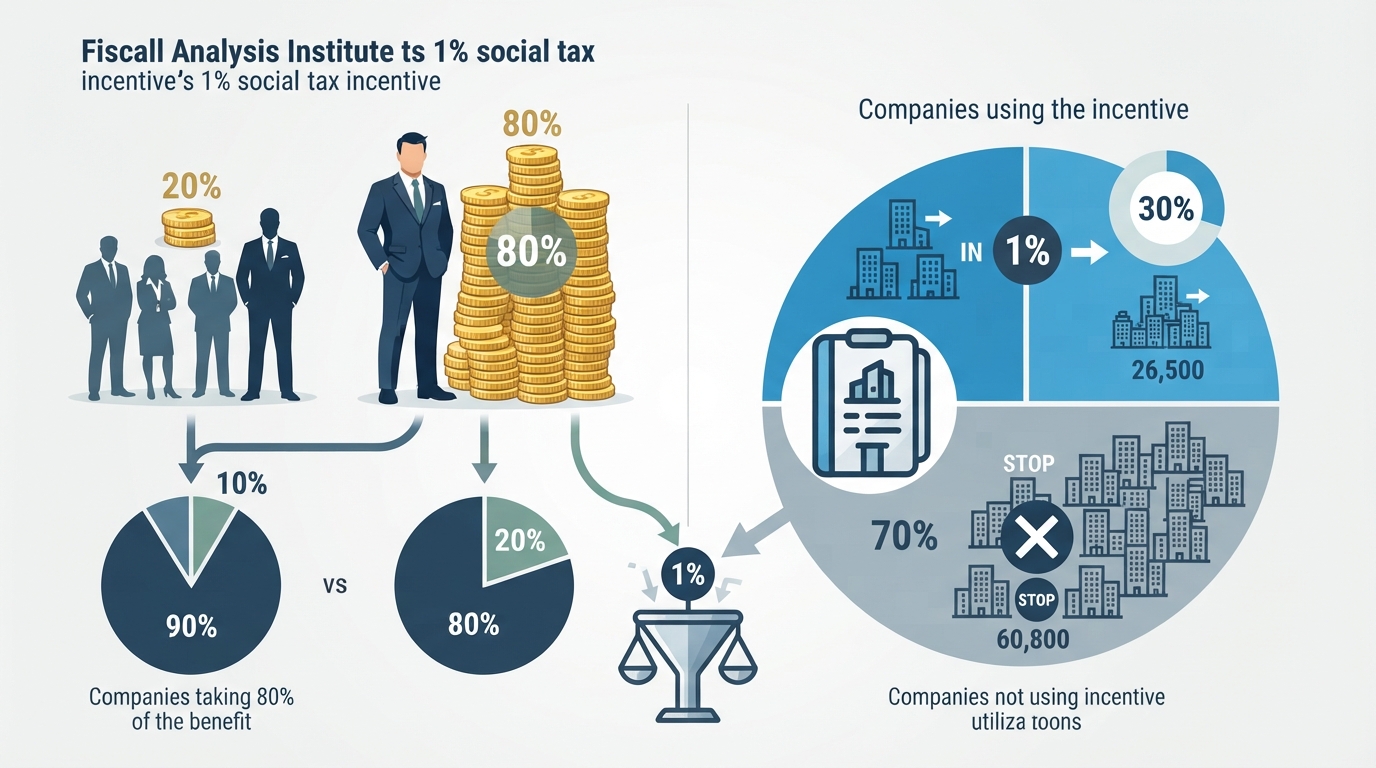
"Primarily benefiting large businesses," the Fiscal Analysis Institute suggests an overhaul of the 1% social tax incentive.
This proposition was put forth during a fiscal discussion held on July 30.
An analysis by the institute revealed that roughly 80% of the total tax advantage was claimed by the top 10% of qualifying companies. In contrast, the remaining 90% of businesses collectively received only 20% of the available support.
The study further indicated that from 2022 to 2024, only about 30% of companies, approximately 26,500 businesses, utilized the incentive. A significant 70% of eligible enterprises, or 60,800 companies, did not benefit from the measure whatsoever.
Based on these observations, the institute concluded that the preferential tax rate failed to achieve its stated goals of stimulating job growth and curbing the informal economy. Instead, researchers noted, the most substantial advantages were reaped by large corporations already operating within the formal sector.
The reduced 1% social tax rate is presently applicable to various sectors. For businesses in the service industry, the incentive has been prolonged until January 1, 2028, contingent on employees earning an average monthly salary of at least 2.5 times the minimum wage.
The identical preferential rate is also accessible to companies within the textile and knitwear, footwear, and leather goods industries, provided they satisfy established criteria concerning wage levels and revenue composition.
In mid-July, the Ministry of Economy and Finance declared in its fiscal strategy its intention to restrict the introduction of new social tax incentives and progressively eliminate existing ones.