

Beavers are helping to restore Europe's drying rivers
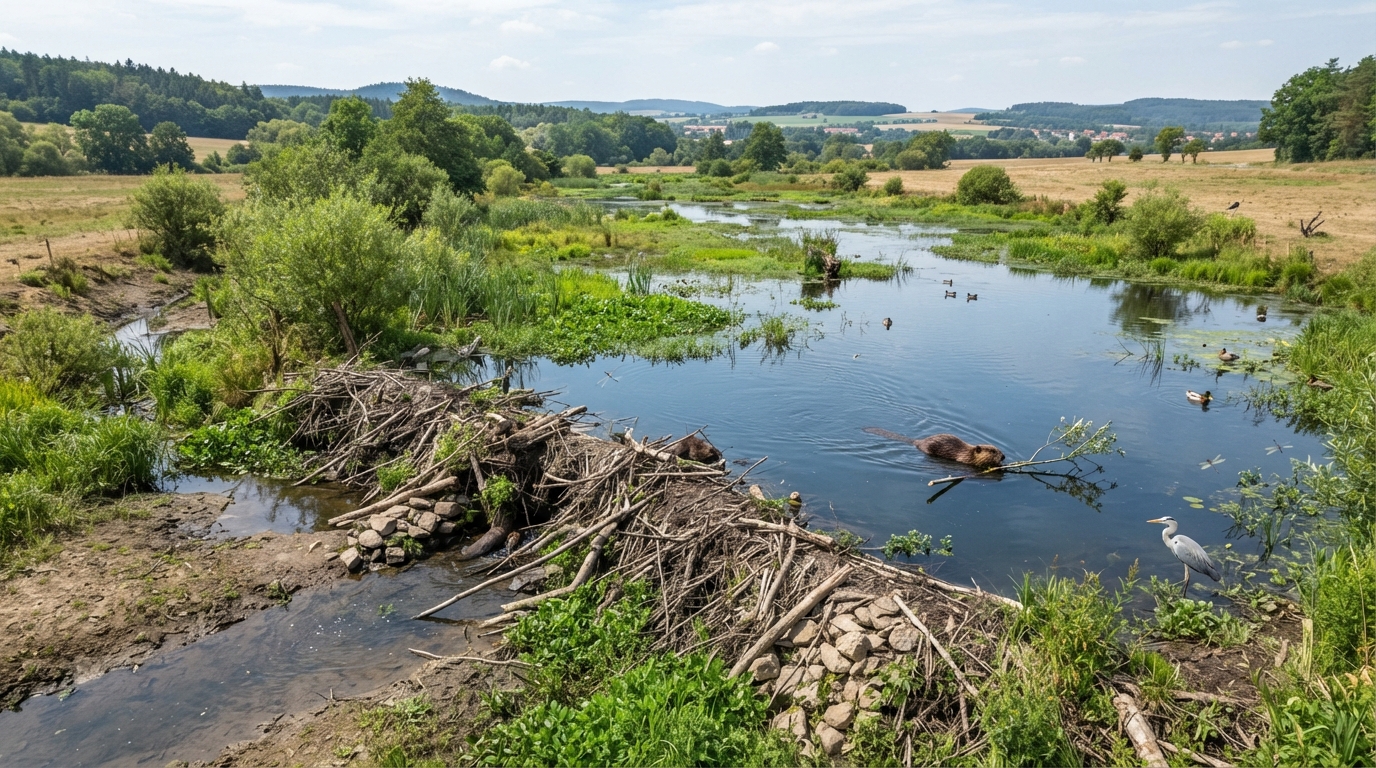
Beavers help restore Europe's drying rivers
According to Deutsche Welle, the growing number of beavers in Europe is helping to conserve water in rivers and restore dry areas.
According to reports, the number of beavers, which were once almost extinct in Europe, is now close to 1.5 million. Experts say that the dams they build help to retain water in rivers, reduce the impact of droughts and floods, and also help to replenish groundwater.
"At the beginning of the 20th century, Eurasian beavers were heavily hunted for their fur, meat and substances extracted from their glands, which led to their number in the wild decreasing to about 1,500. Today, thanks to long-term restoration programs, they are widely distributed in areas from Spain to Russia," experts say.
Beavers build dams of branches, wood, mud and stones along rivers and streams. This slows down the flow of water, creating ponds and swamps around it. As a result, during periods of heavy rain, water is prevented from flowing to lower areas, and during periods of drought, it allows moisture to be retained longer.
According to DW, beaver dams can help trap some pollutants in water, reduce the saturation of groundwater, and also serve to mitigate the effects of floods, droughts and forest fires. For this reason, beavers are often called nature's "engineers".
The practical results of such an experiment are also observed in the UK. On one farm in Cornwall, beaver dams have retained millions of liters of water in the landscape and helped to irrigate pastures during droughts.
In England, beavers released into the wild have built a 35-meter dam in a short time. As a result, new wetlands have been formed, expanding the habitat for plants, amphibians, birds and other animals.
Experts do not consider beavers a universal solution to all water problems. However, nature-based methods such as restoring the natural bed of rivers, retaining water in the landscape for longer and restoring wetlands are becoming increasingly important in regions experiencing increasing drought.
**Rivers are drying up in Europe**
Against the backdrop of the ongoing drought in Europe, water levels in major rivers such as the Danube and Rhine have dropped, and in some areas their beds have significantly narrowed.
The situation is also more complicated in France. Some small rivers and streams have stopped flowing, and some have completely dried up.
The drying up and shallowing of rivers is already having serious consequences. For example, the water level of the Danube River in Romania was reduced by blasting a rock to divert additional water from the river to cool a nuclear power plant. The Cernavoda nuclear power plant was subsequently shut down.
Elsewhere on the Danube, the receding water has revealed the remains of a nearly 1,700-year-old Roman bridge and a German warship sunk during World War II. In Kaub, Germany, the Rhine River has dropped below 20 centimeters for the first time in history.