

Balzac's famous letter
I have read Honoré de Balzac's "Letter to French Writers of the 19th Century" ten or fifteen times so far,
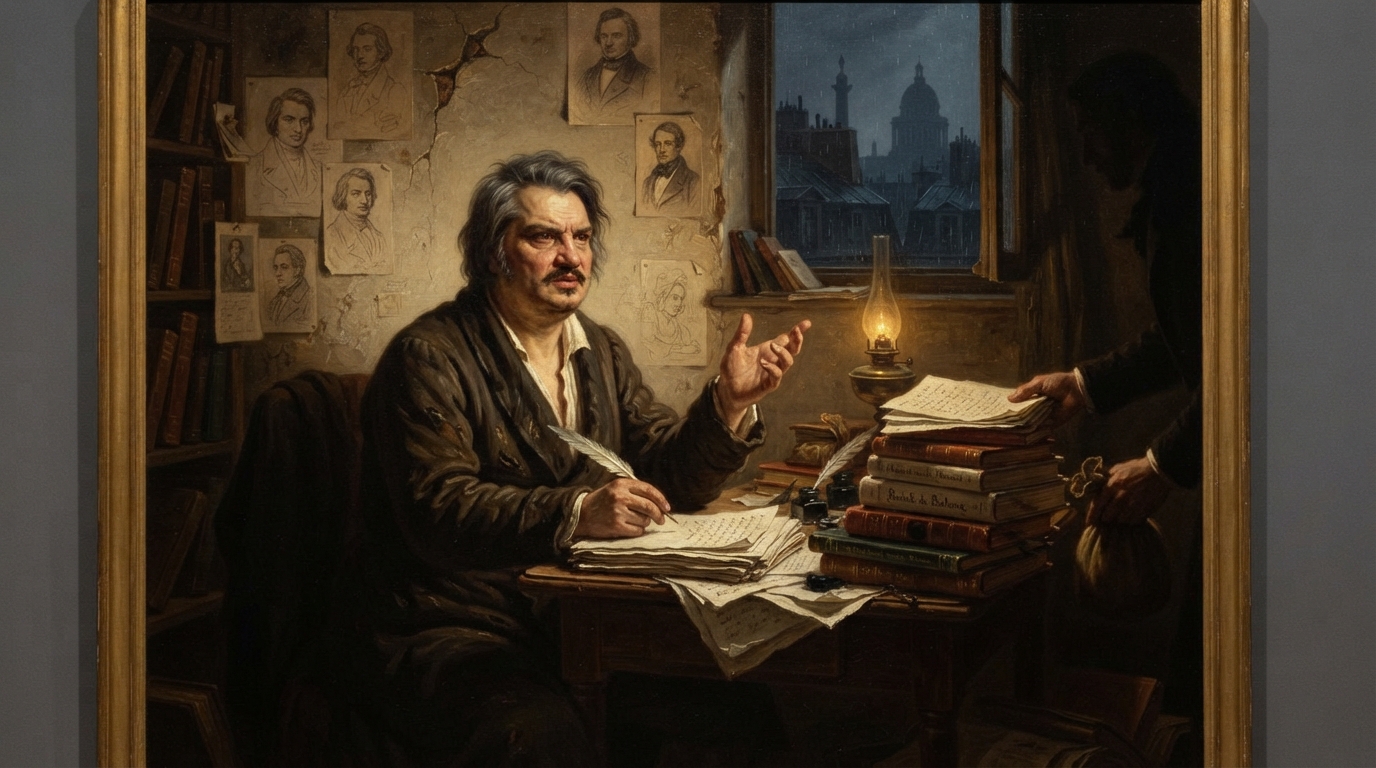
Balzac's famous letter
It would not be an exaggeration to say that I have read Honore de Balzac's "Letter to French Writers of the 19th Century" ten to fifteen times. Each time I discover new meanings in it.
What does the letter mean? Balzac expresses concern about the sharp decline in attention to literature, writers, and artistic thought in the country after the French Revolution, which was recognized as a literary republic in its time and sought to protect many rights of citizens that were not recognized in other countries. According to him, creative work was "surrendered to the barbaric legal complex" adopted as a result of the revolution, and the works of writers were declared public property. "So, gentlemen - you poets, you musicians, you playwrights, you prose writers, you who live with the idea that you are working for the glory of the country... all of you can no longer be heirs to yourselves. The law respects the property of the merchant, the money earned through hard work, sometimes through open disgrace, protects the land, but confiscates the fruits of the labor of the poet, who makes a living with his inspired thought, creative thinking." According to Balzac, poets-writers are the glory and pride of the country, that is, the wealth of thought. They reflect the spirit of the century, the spiritual and moral landscape of the era in their works, thereby creating the history of the country and the nation. The writer, having taken up the pen, flies high from the depths of "poverty" thanks to his lifelong search, but such a flight is not destined for all creators. Many remain under the wings of imaginary dreams, and their will and beliefs become their support, not wealth, fame or any other patron. Balzac urges his colleagues not to be indifferent to this situation, concerned about the plundering of the sacred property of the creator: "So, gentlemen, from now on, our society will steal with one hand from the homes of thinkers, poets, playwrights, whose lives are fading in poverty, their books, poems, comedies, dramas, and with the other hand it will give them to others. Who will you tell? Even savages would laugh at this. Shall I tell you? Yes, I will tell you, this cannot remain a secret. Know that the law will hand them over to the publishers."
Balzac puts the problem very sharply: "If someone takes your wife, do not be upset, because he may have done it with her consent, but if they take away the work you have worked for fifteen years, suffering, night after night, overcoming the hardships of poverty, this is absolutely intolerable," he says, and he gives his last word on this problem: "In conclusion, we would like to emphasize one thing: what we have said above is not a call to rebellion, nor are we calling for the stirring of passions: it is simply the cry of poverty. It is the cry of people who are outlawed and who have not found justice.
Let this cry resonate, arouse sympathy, and revive the fading feelings of patriotism. We raise our voices and If we cry out, we do it for the sake of those who are awake, who are suffering, who are striving to contribute as much as possible to enrich the treasury of language...
Gentlemen legislators, Italy has acquired its wonderful geniuses by spending two-thirds of the gold that comes from England. Take care of art and language, because after you have eliminated your material interests, you will continue to live in our works. And our works will never die, and even when our country disappears (from the stage of history), they will continue to shout to the world: "Once upon a time there was France!"
I read this letter many times and each time I find new meanings in it. This time it was the same.
Ahmadjon Meliboev