

August became the hottest month in world history
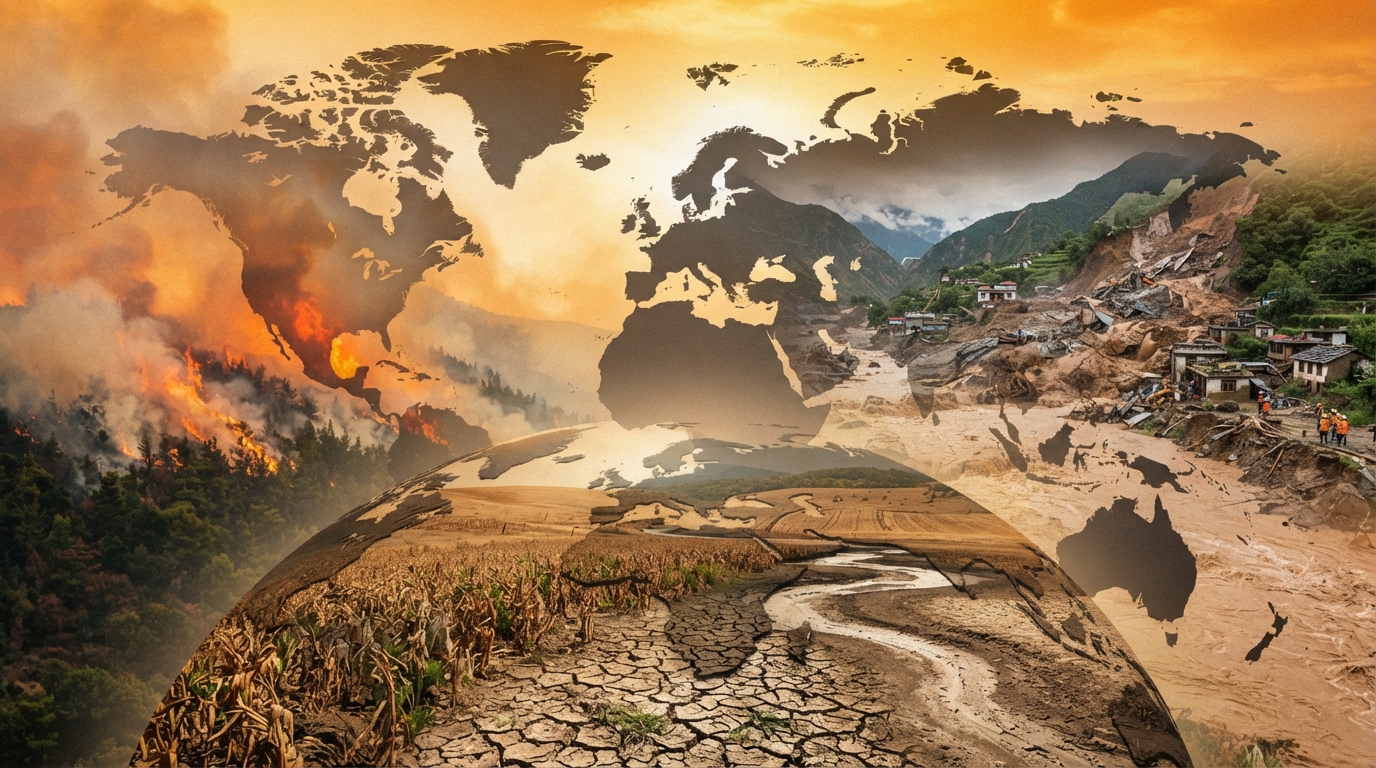
August recorded as the hottest month in world history
The hottest month since observations began has been recorded in the world. The European Union's Copernicus Climate Change Service (C3S) announced on September 10 that the average temperature on planet Earth in August rose by more than 1.5 degrees compared to the pre-industrial period.
Throughout August, extreme weather and climate-related disasters occurred around the world. Scientists note that climate change played a role in the landslides and floods that claimed hundreds of lives in Nepal and China's Tibet region. Specific research in this regard is currently ongoing. Forest fires intensified from Indonesia to Belgium and in Greece, while severe drought was observed in Hungary and Romania.
The temperature rise of more than 1.5 degrees from the industrial era is crucial. This is because nearly 200 countries promised under the 2015 Paris Climate Agreement to keep the temperature increase at exactly this level to avoid the worst consequences of climate change. This indicator is calculated as a decadal average.
The month of August became the first month since November 2025 in which the average temperature exceeded the industrial era by 1.5 degrees. Globally, the average surface air temperature was 16.96 degrees.
According to C3S, this figure is 1.65 degrees higher than the average temperature in the 19th century, when humanity began burning oil, coal, and gas on an industrial scale. Emissions from burning fossil fuels are the main cause of climate change.
"We saw the consequences of how unadapted we are to the weather in Europe: roads melted, railways buckled, schools closed, hospitals filled up, and record-breaking fires for this time of year occurred," said Samantha Burgess, strategic lead at the European Centre for Medium-Range Weather Forecasts.
"Talk about climate change has turned from an abstract concept happening in far-off lands into an event that disrupts our daily lives," she added.
The data confirmed the end of the hottest summer on record in Western Europe. Consecutive heatwaves since May have damaged crops. In many areas, declining river water levels and loss of soil moisture have further exacerbated farmers' problems.
The world has not yet officially breached the 1.5-degree limit of the Paris Agreement. This is because this limit refers to the average temperature over decades, not a temporary peak. Currently, the world's long-term warming level is about 1.4 degrees higher than the industrial era.
The UN announced last week that keeping the long-term 1.5-degree target is no longer possible. The organization urged governments to cut CO2 emissions faster to reduce overshoot.
The heatwave observed in the country at the end of June set a record with its high level of intensity. During this period, 2,025 additional heat-related deaths were recorded.