

Archaeologists find an ancient fire temple in Qamashi
A fire temple and an ossuary, estimated to date from the 3rd century BC to the 3rd century AD, have been found at the Odirman monument in the Kamashi district of the Qashqadaryo region. According to archaeologists, the findings could help study the religious beliefs and burial rituals of the ancient population associated with Zoroastrianism.
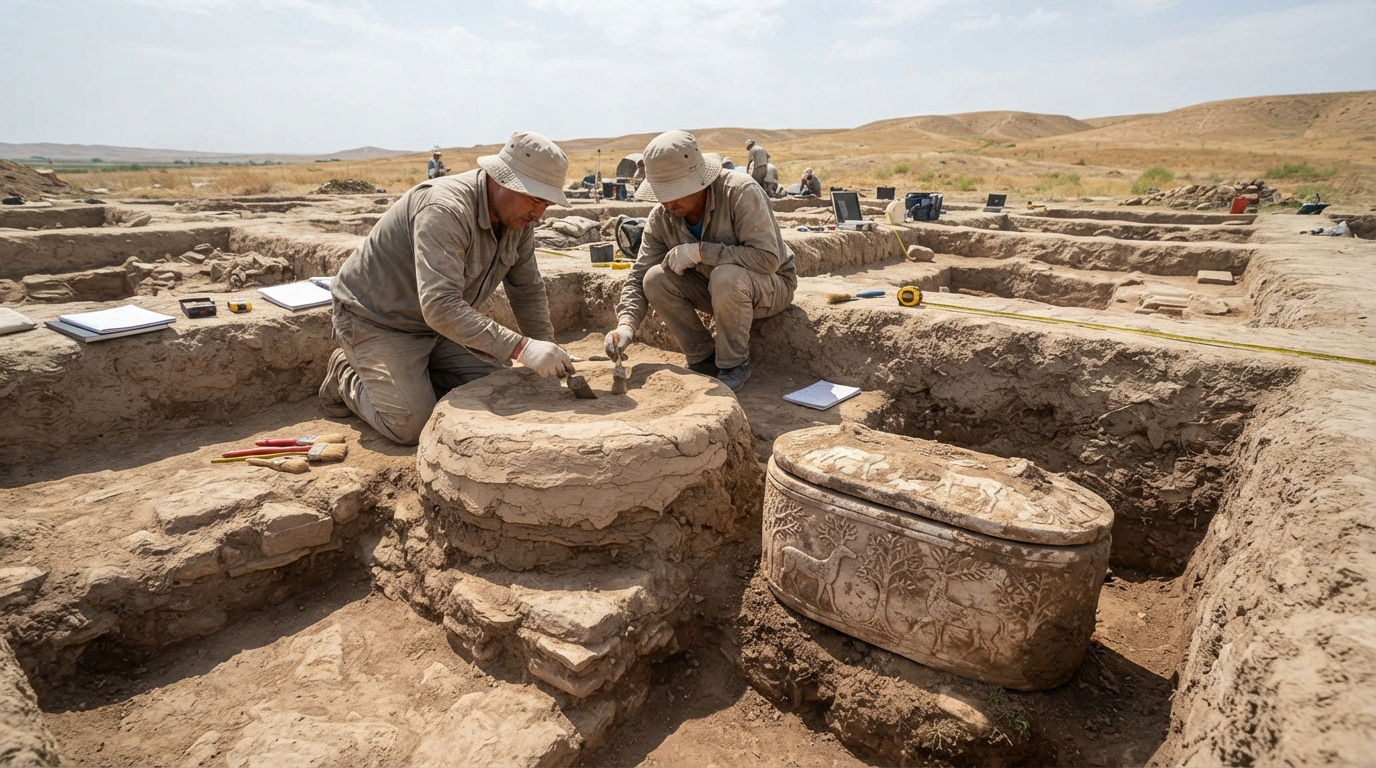
Archaeologists discover ancient fire temple in Kamashi
In the Odirmon monument in the Kamashi district of the Qashqadaryo region, archaeologists have discovered an ancient fire temple and an ossuary — a ceramic vessel designed for preserving human bones.
According to the Spanish digital magazine La Brújula Verde, the finds may date back to the period from the 3rd century BC to the 3rd century AD. Accordingly, their age is estimated to be between 1,700 and 2,300 years.
Regular archaeological research at the Odirmon monument began in 2026 under the leadership of Sanjar Abdurahimov, a researcher at the Samarkand Institute of Archaeology.
During the excavations, a fire temple with a height of nearly 70 centimeters and a width of 90 centimeters was discovered in the northeastern part of the complex. Traces of multiple layers of clay plaster applied to its surface have been preserved.
Experts suggest that this structure may have served for lighting and keeping the sacred fire. However, the exact function of the fire temple will be determined after further research.
An ossuary — a special ceramic vessel used for storing the cleaned bones of the deceased — was also found near the fire temple.
In ancient burial traditions, ossuaries were viewed not as simple vessels, but as objects of religious and ceremonial significance. They were often decorated with various symbolic patterns, images of plants and animals.
The surface of the ossuary found in Odirmon is decorated with images of a deer and a Turkestan juniper. The meaning of these patterns is currently unknown.
After the cleaning and restoration of the vessel are completed, archaeologists will study the meaning of the images and their connection to religious symbols.
The discovery of the fire temple and the ossuary in the same location indicates that the complex may be associated with Zoroastrian traditions.
In Zoroastrian teachings, earth, water, and fire are considered sacred. Therefore, burying or burning the body of the deceased was perceived as defiling the elements of nature.