

AI cancer cures slowed by chip shortage, says UK's biggest tech boss
The head of chip designer Arm says modelling how a DNA marker is impacted by cancer cannot be done now, but computers are "going to solve it".
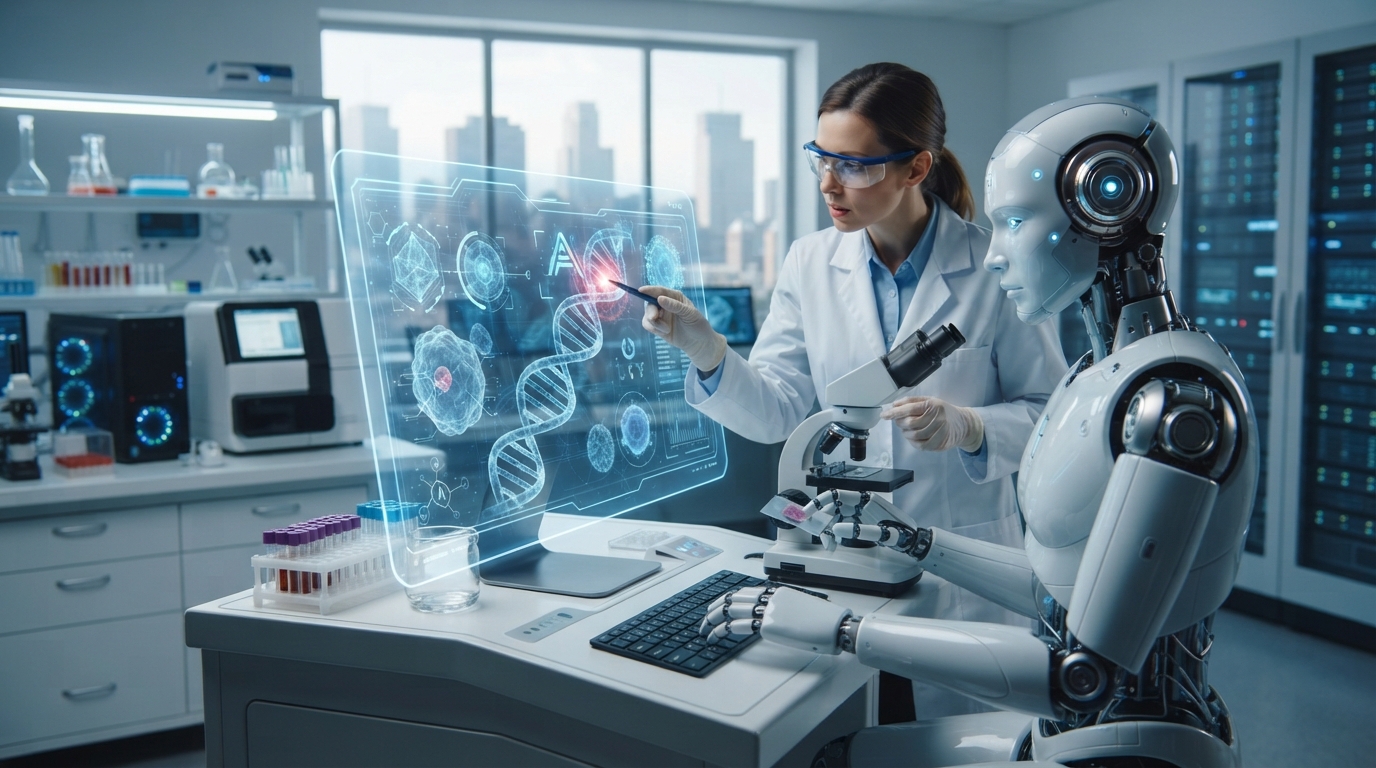
AI cancer cures slowed by chip shortage, says UK's biggest tech boss
Rene Haas was previously on the board of British pharmaceutical giant AstraZeneca
The head of the largest tech company headquartered in the UK has said artificial intelligence will discover a cure for cancer that humans cannot achieve in our lifetimes.
Rene Haas, chief executive of Cambridge-based chip designer Arm Holdings, said that modelling how a DNA marker is affected by cancer is currently "too complex" a problem, but computers are "going to solve it" in the future.
Haas also told the BBC that AI would bring about widespread humanoid robots within the next five years, but said its current fast expansion was being slowed by a shortage of chips needed to build data centres.
He was, however, doubtful that chips could be made in the UK in future.
Arm designs the brains, or CPUs, of microchips already used in hundreds of billions of phones, cars, smartwatches and gadgets around the world.
Earlier this summer, the company's highest share price during the AI boom made it, in cash terms, the most valuable UK-based company in history.
Haas, who left the board of British pharmaceutical giant AstraZeneca in April, told the BBC's Big Boss Interview podcast: "AI is going to... find a cure for cancer that today you and I, other humans [could] not in our lifetimes. I believe in our lifetime, AI will help cure cancer.
"Modelling a cell, modelling a human, modelling how a DNA marker is impacted by cancer - it's too complex a problem, not only for humans today, but the computers that run AI.
"However, going forward, as we feed more and more of the models into these computers, and the computers get more sophisticated to run the models, they're going to solve it," said Haas, who also has a key position in Arm's main owner, Japan-based Softbank, which has a range of tech investments including OpenAI.
Prof Chris Bakal, from the Institute of Cancer Research, London, and CEO of Sentinal4D, said the real issue was no longer whether AI is used, but what is fed into it.
He said that in labs like his, AI is trained on data they generate themselves from patient samples.
"It is not scraped from the internet. It does not need a giant data centre to run. The future of medical AI will not belong to whoever builds the biggest computer. It will belong to whoever has the right measurements.
"That kind of prediction could cut years from the time it takes to develop new treatments. This is where AI delivers real benefit to patients."
In a wide-ranging interview, Haas said the chips Arm designs would power self-learning AI robots "in a very large way" in manufacturing, cleaning, security, bridge building, and repairs within a decade.
"With artificial intelligence, these robots can see, learn, and essentially be reprogrammed for new tasks. So, in the service industry, the robot that was programmed to make a bed can also learn how to arrange the towels in a room, or clean the dustbins, or whatever you want to go off and do."
On concerns that AI would cause mass job losses, Haas said there would be some change for workers, but "the estimates of jobs going away and being completely replaced by machines is a bit overstated" and would be outweighed by new opportunities.
He also said worries about a correction in the remarkable rise in the stock market value of AI companies were overstated, because of long-term demand for AI.
Arm's power-efficient technology is now being used in half of AI data centres worldwide, he said.
That has driven a major shift in its business in recent months, including selling its own microchips. Facebook-owner Meta asked Arm to develop the Arm AGI chip and "demand has been off the charts", according to Haas, with more than $2bn worth of demand since it launched in March.
There have, however, been problems in the supply of many kinds of chips, which Haas believes is slowing the rollout of AI and data centres.
He pointed to plans for huge "multi-gigawatt" data centres in France and the US, as well as plans to place them in space.
"We are absolutely in a supply-constrained environment. Can you get enough chips? We need more fabs [chip factories] before we can put a data centre in space."
But he does not think manufacturing, which is currently centred around Taiwanese giant TSMC, could eventually take place in the UK, despite the government holding talks with the industry about the possibility of bringing parts of the physical chip supply chain here.
"I don't think it's necessary for the UK to [build] fabs. Fabs are very expensive. They take a lot of specialised workers. They take a lot of natural resources, and there's a pretty broad ecosystem for those."
As the great hope of UK tech for decades, some government ministers have regretted Arm's sale to Japanese investors in 2016 and its later partial flotation on New York's Nasdaq rather than in London.
But Haas said half of Arm's employees are still in the UK and said the company was "by far and away the largest employer in Cambridge".