

Abnormally hot car tires are the enemy - what should drivers know?
Extreme hot weather conditions put extra strain on car tires, and experts are advising drivers to check their condition carefully before long trips.
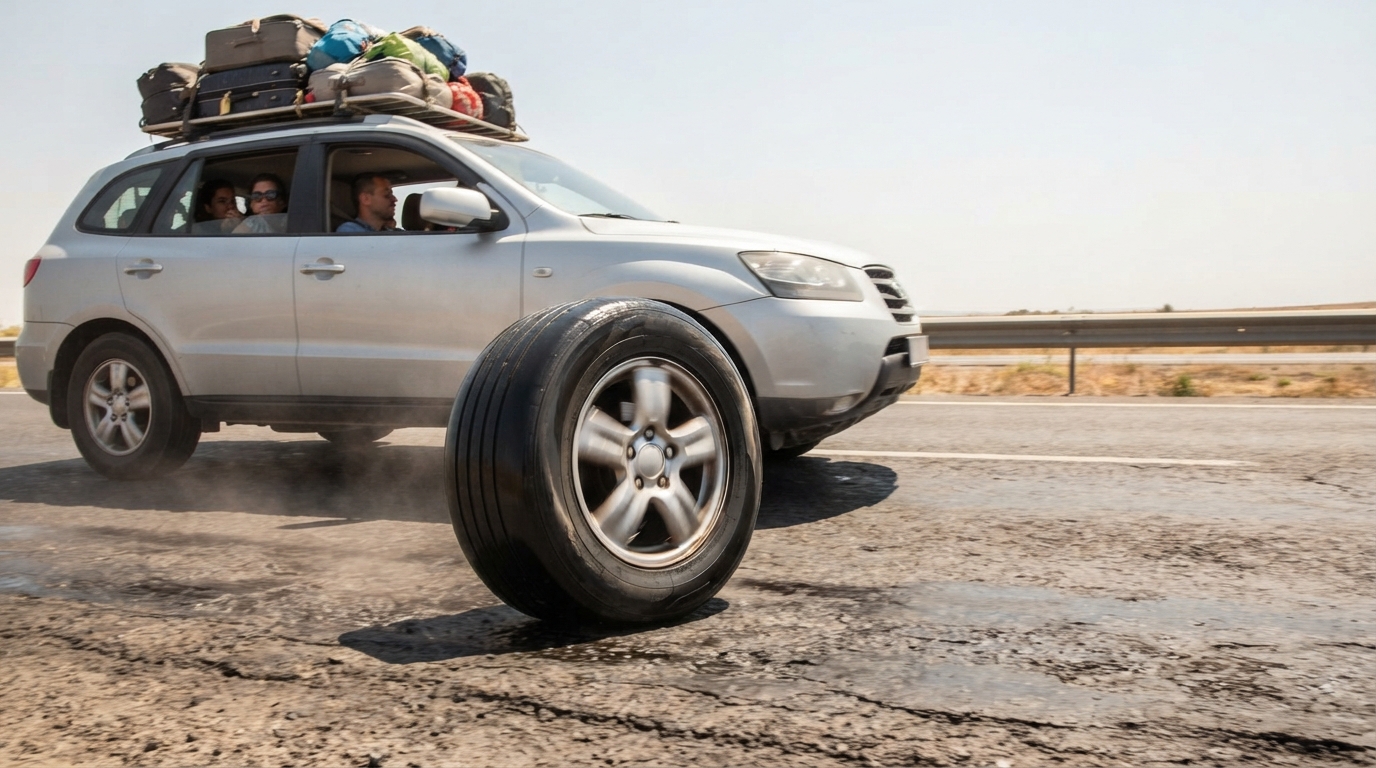
Abnormally hot car tires are the enemy: what drivers need to know?
The heat wave that has swept through the UK has caused a not so noticeable problem for car owners. When the air temperature exceeds 30°C, the surface of the road surface under the sun can heat up to about 50-60°C.
This combination of high temperatures and long-term driving puts additional stress on tires. During movement, they are constantly deformed, heated and affected by the weight of the car. The situation is even more serious if the car is full of passengers and cargo.
**Why are hot tires dangerous?**
During movement, the temperature inside the tire rises, and at the same time the air pressure increases. In this case, a tire that has not been properly rested can deform more strongly, which leads to its further heating.
Damaged, cracked, unevenly worn or with insufficient tread depth can be especially vulnerable.
Experts say that the summer heat alone does not mean that the tire is working beyond its capabilities. Summer tires are designed for use in hot weather. The main danger arises when excessive heat, heavy loads, long trips and poor tire condition combine.
**Should you lower tire pressure in the summer?**
No. This is a common misconception. When heated, the air inside the tire expands, which is why the pressure actually increases. However, you should not deliberately lower the pressure before a trip. Insufficient pressure can increase tire deformation and cause it to overheat.
It is recommended to check the pressure when the tires are cold and adjust it to the value specified by the car manufacturer. When the car is fully loaded, the values recommended for the corresponding load should be used.
**What to check before a long trip?**
Before a long summer trip, experts recommend the following:
* Check the pressure in all four tires and the spare wheel.
* Inspect the sidewalls for cuts, cracks, and swelling.
* Check the tread depth.
* Make sure the tires are not worn unevenly.
* Use the manufacturer's recommended pressure when the vehicle is fully loaded.
* Once you start driving, pay attention to vibrations, changes in steering, or other unusual signs.
You should be especially careful with your tires when driving long distances on highways: high speeds, prolonged driving, and heavy loads on the vehicle increase the heat load.
**Heat is not just an enemy of cars**
Excessive heat can also directly affect the road surface itself. When heated, bitumen softens, and deformations may occur in some sections of the road.
So, during extreme heat, motorists have to consider several factors at once: tire condition, pressure, vehicle load, road surface temperature, and trip duration.
A simple tire check before a long trip only takes a few minutes. But in extremely hot conditions, it can be very important for safety.