

A summer of foodborne illness is already testing Trump's pick for top regulator
Heidi Overton has been tapped to lead the Food and Drug Administration. But some worry she will pick loyalty to Trump over science.
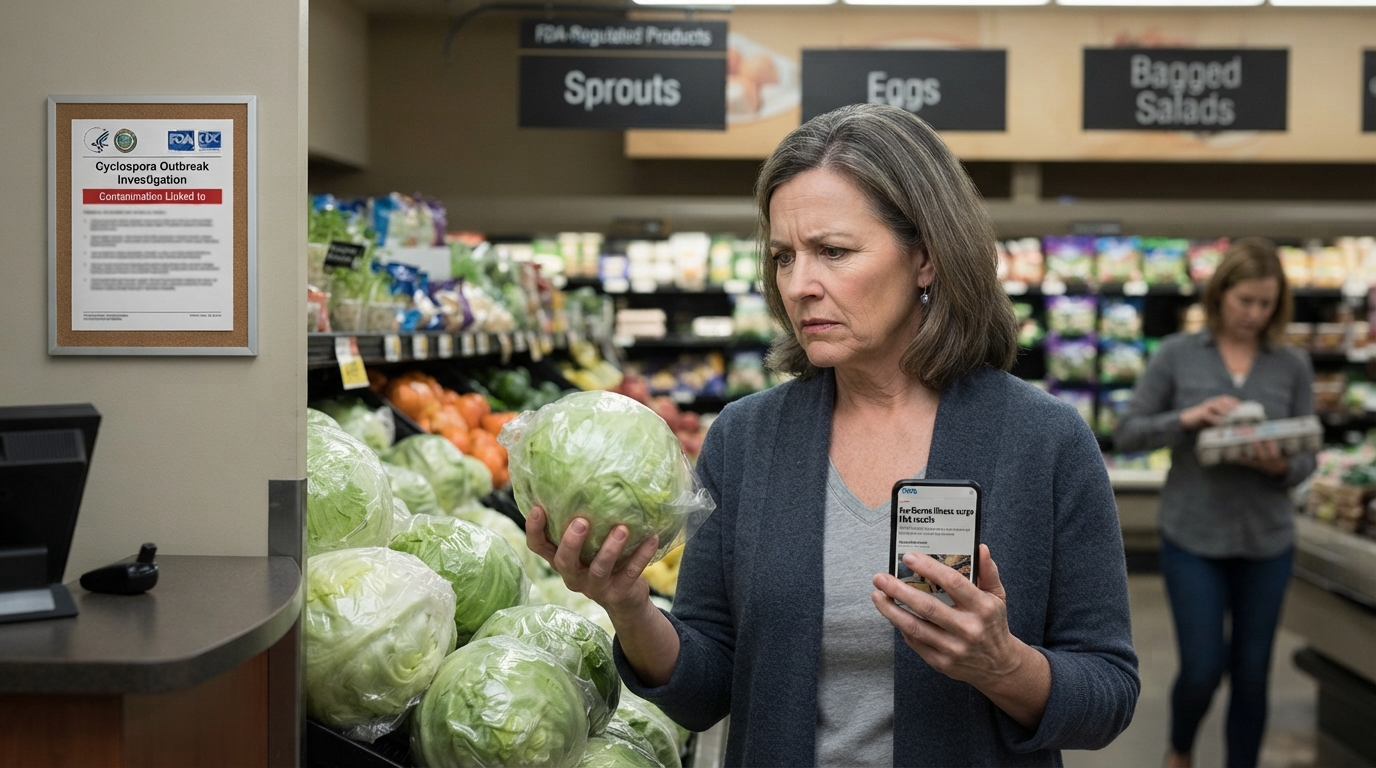
The summer's surge in foodborne illnesses is posing an immediate challenge for President Donald Trump's nominee to lead the US Food and Drug Administration (FDA), Dr. Heidi Overton. The numerous outbreaks have left many Americans ill and critical of the government's response.
Trump has selected Overton, a White House aide and physician, to head the agency. However, both current and former FDA officials are concerned that this Trump loyalist might prioritize allegiance to the president over the crucial task of rebuilding an agency that has experienced significant losses in leadership and staff.
John Swartzberg, a professor emeritus of infectious diseases at UC Berkeley's School of Public Health, commented, "She's taking over an agency where the morale is low. This is going to be very difficult for her to improve."
Her nomination follows a particularly severe summer for foodborne illnesses. While such outbreaks are an annual occurrence, exacerbated by warmer conditions that promote bacterial growth, experts have described the cyclospora infections as unprecedented. Health officials have also appeared slower in identifying contamination sources.
Overton's appointment requires Senate confirmation, though a hearing date has not yet been scheduled.
This summer, the US recorded over 17,000 confirmed cases of cyclospora-induced explosive diarrhea, linked to lettuce from Taylor Farms. This marks a significant increase from 1,180 cases last summer. Additionally, there have been outbreaks of E. coli and salmonella associated with alfalfa sprouts, eggs, jalapeños, frozen blueberries, and various other products.
These recalls have left the public confused about food safety. Public health experts suggest that the delayed response to these outbreaks is a symptom of a weakened FDA.
Sarah Sorscher, a food safety advocate with the nonprofit Center for Science in the Public Interest, stated, "People are definitely upset about the outbreaks this summer, and they have a reason to be. This is already a system that was teetering on the brink, and the cuts from the past year and the disruptions from the past year are pushing it over the edge."
The Health and Human Services department disputes this assessment. A spokesperson asserted, "The Trump Administration has mounted a robust response to each outbreak. FDA has the staff needed to continue investigating outbreaks, as no FDA investigators were affected by staffing changes or reductions in force."
While some Americans are willing to give Trump's new FDA leader an opportunity, others are concerned that the administration's policies at the FDA have jeopardized public health this summer.
David Hargrave, a 59-year-old Texas resident, has been experiencing daily diarrhea for the past month and a half after contracting cyclospora around the Fourth of July. He expressed his apprehension about food choices, saying, "It puts the scare into you."
Food regulation experts attribute a major factor in these outbreaks to significant cuts at the FDA, which they believe have resulted in fewer food inspections and inadequate communication regarding outbreaks.
Sorscher remarked, "If we had had better boots on the ground in that [cyclospora] outbreak, we could have potentially solved it."
In the cyclospora outbreak, the US Centers for Disease Control and Prevention (CDC) issued its initial health alert on July 14, ten weeks after the first cases emerged in early May.
Jerold Mande, a former FDA and USDA official and a professor of nutrition at Harvard TH Chan School of Public Health, noted, "It's resulted in a public that's a little more on edge and panic about what's going on because of the poor communication."
Toby Davis also contracted the parasite after eating at Taco Bell, which led to an emergency room visit. Davis acknowledged that foodborne outbreaks occur every summer but believes that the dismissal of experienced agency workers slowed the response to the parasite that sickened him and thousands of others.
The independent voter stated, "This is the result of those bad mistakes. Do I believe we'll contract more things from their negligence? Absolutely."
Even some supporters of the current health agenda are questioning the helpfulness of the Trump administration's cuts. Jacqueline Capriotti, who identifies with the "Make America Healthy Again" (MAHA) movement initiated by Health Secretary Robert F Kennedy Jr, emphasized that food safety must be a priority for the FDA.
Capriotti, referencing Kennedy's nutritional message, said, "We're encouraging - 'eat real food' - well we have to make sure that that food is safe."
The FDA has been without a commissioner for nearly three and a half months since former leader Marty Makary resigned due to a reported conflict with the White House. Makary reportedly refused to endorse Trump's plan to lift a ban on flavored vapes, citing concerns about encouraging youth addiction. Shortly after his departure, several other senior leaders also left the agency.
This wave of resignations follows substantial staffing cuts the previous year, when Health Secretary Robert F Kennedy dismissed 20% of FDA employees as part of the administration's broader efforts to reduce the civil service.
For years, many food scientists and health activists have advocated for increased FDA funding, not less. The cuts and leadership instability have not fostered public trust in the organization responsible for regulating 80% of America's food supply.
Cases in nine states have been linked to iceberg lettuce.
Trump has lauded Overton, a former general surgery resident at Johns Hopkins University School of Medicine and chief policy officer at the conservative think tank America First Policy Institute, as a "rockstar" future leader of the FDA.
However, her nomination for the top position comes as Trump officials are attempting to address several contentious issues regulated by the agency, including vaccines and abortion medication.
As an insider within Trump's circle, some public health experts, including Swartzberg, fear she will prioritize the president's agenda over scientific considerations.
In a statement to the BBC, White House spokesperson Kush Desai said Overton "has been integral to ensuring that the Administration's policies are correct, consistent, and grounded in Gold Standard Science. The White House looks forward to her swift confirmation by the Senate."
To be confirmed, Overton must first secure the support of the Senate's health committee, chaired by Republican Senator and doctor Bill Cassidy. It remains uncertain whether Cassidy will endorse the president's choice, as he previously expressed "strong concerns" about Overton due to her support for Trump's orders to overhaul the childhood vaccine schedule.
Her nomination is also viewed skeptically by some within the MAHA movement because of Trump's order to increase domestic production of glyphosate, which they argue causes cancer.
Last week, Alex Clark, a prominent MAHA influencer, used social media to accuse Overton of significant involvement in the executive order, an allegation the White House denies.
Yet, Capriotti suggested that some within the movement were too quick to voice concerns. "She's a well-respected doctor," Capriotti said. "I would like to give her a chance."