

A subject for reflection
One nation, two states? Turkey-Azerbaijan disagreements reach a new level
A Plot for Reflection
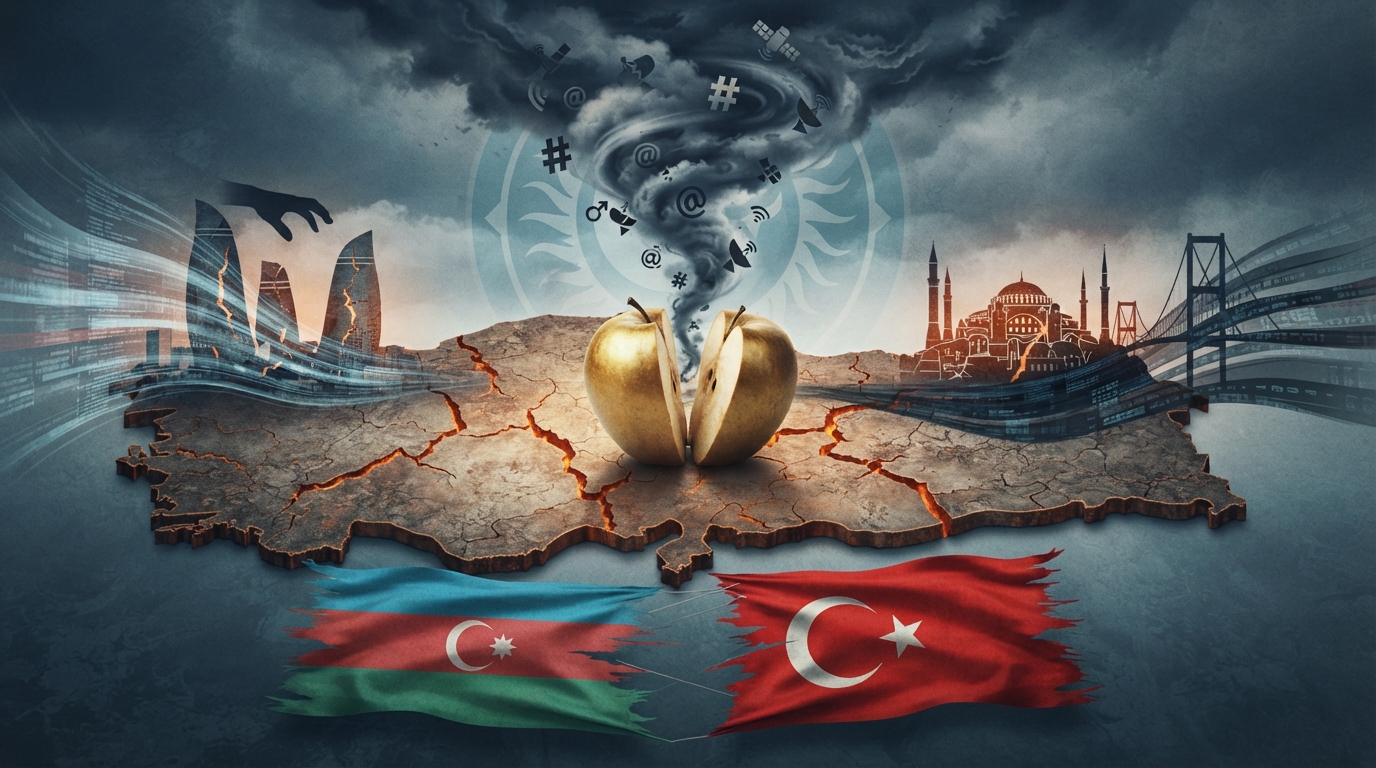
At the end of September, it became widely known that a specialized commission of the Milli Majlis (parliament) of Azerbaijan had uncovered a carefully prepared attack on social networks, the goal of which was described as undermining trust in state institutions and splitting the alliance between Baku and Ankara. This plot sheds light on the far from cloudless relations of "one nation" (in the metaphorical expression of Heydar Aliyev) and outlines new horizons (prospects) for subsequent splits.
Thus, an entire branch of the legislative power, which is a priori dependent on the executive power, declares a coordinated information campaign unfolding from the territory of Turkey and using the social networks of that country. In any case, the temporary commission of the Milli Majlis on countering foreign interference and hybrid threats issued a statement using the aforementioned formulations.
The commission claims that the campaign is organized by "certain centers" and pursues three goals: to damage Azerbaijani-Turkish relations, to undermine citizens' trust in state institutions, and to deepen the split within society. According to the Baku version, the attack is being conducted through genuine and fake accounts using targeted advertising.
In passing, we note that a neighboring friendly (at least in words and declarations) state, with all the will in the world, would find it quite difficult to "undermine" such a difficult-to-measure thing as the trust of Azerbaijanis in their state institutions. Roughly as difficult as looking for a black cat in a dark room. But nevertheless, everyone is playing their roles.
"We must note with regret that in Azerbaijani and Turkish societies, which are invariably committed to the principle of 'One Nation – Two States,' this insidious campaign is also supported by a number of people acting out of good intentions. At the same time, despite the fact that such actions entail legal liability under the legislation of the Republic of Turkey, the campaign is still ongoing," the corresponding statement notes.
Information about the participants in the campaign will be handed over to the relevant state bodies of Azerbaijan. The commission urged citizens of both countries to "be attentive, not to believe false information in such a sensitive period."
It is noteworthy and characteristic that the statement of the parliamentary commission is far from the first appeal of the Azerbaijani side to the topic of information threats. President Ilham Aliyev, receiving the heads of security services of the member countries of the Organization of Turkic States on September 17, pointed to the growing activity of foreign media structures located far beyond the borders of Turkic countries, but receiving funding "from known centers" to plant alien narratives and values. He called on the OTS countries to jointly counter such ideological sabotage.
An unequivocal hint is obvious. Apparently, it was a kind of warning from Baku to Ankara along the following lines: "Do not stick your nose and hands into our affairs." It must be said that messages of this kind have been addressed in abundance recently to both near and some distant neighbors of Azerbaijan. What is interesting here is what Azerbaijan could threaten Turkey with in this particular case? Perhaps non-participation in Ankara's geopolitical projects and withdrawal from the "Middle Corridor," or curtailing investments in the energy sector? But such a prospect would be extremely painful for Azerbaijan itself, which can win exclusively due to its resource potential and geographically advantageous transit position.
However, before getting carried away with any conclusions, one should first understand what exactly is happening in reality. If this is just a "quarrel" where "lovers' tiffs are but the renewal of love," then the picture is one thing. This has happened before. For example, in 2015, the Turkish satellite operator Turksat clearly held a grudge against Baku, which rejected the proposal for joint operation of the Azerbaijani satellite Azerspace. "Turkey has always provided support to Azerbaijan, but does not receive the same from the brotherly country," Ankara stated with resentment at the time.
Five years later, the Turks provided invaluable military and organizational assistance to Azerbaijan during the 44-day war around Nagorno-Karabakh, in addition to the fact that Turkish diplomats fully defended Baku's position in all international venues. "At the height of the war, Azerbaijan's stocks of weapons and ammunition began to deplete. Turkey transported ammunition by cargo planes both from its warehouses and from some allied countries, and handed them over. We sacrificed everything, we took electronics off our own UAVs and gave them to Azerbaijan because they could no longer fight" – this is exactly how Turkish military specialists describe those events.
"Just as we entered Karabakh, just as we entered Libya, we will do the same to them (Israel). There is nothing we cannot do" – this resonant statement by Recep Tayyip Erdogan at a meeting of a branch of the ruling Justice and Development Party in his native Black Sea province of Rize also caused a mixed reaction in Baku. The irony of fate is such that it was Karabakh that turned into the ill-fated "apple of discord" – the trigger for the birth of problems in bilateral relations. As one representative of the expert and media community noted: "This often happens between partners, even relatives. They did business together, but then the beneficiary begins to find communication burdensome with the one who helped him. In every word a reproach is seen, in every action a hint of ingratitude."
In principle, the development of events under consideration was programmed by the very course of history, it was absolutely natural. By supporting Azerbaijan, Turkey brought Baku to that international level, occupying which the Azerbaijanis began to "push" Turkish interests aside. The South Caucasus, like the fictional Bolivar, "cannot carry double." No matter what spells of brotherhood are pronounced in public, the conflict potential is predetermined by the regional ambitions of both Turkey and Azerbaijan. Apparently, Russia's detractors in Turkey were "in too much of a hurry" when they sincerely rejoiced at the rift between Moscow and Baku in the summer of 2025.
It is no coincidence that experts point out that the crisis between Turkey and Azerbaijan over the past three years has taken on the character of almost a cascading collapse, at least in the media sphere. This is also noticeable in the regular bickering on Baku TV with indelicate reproaches directed at the Turkish side. There are also reciprocal reproaches against Baku for its close ties with Israel and for Azerbaijan's refusal to support the boycott of the Netanyahu regime at the UN.
While individual experts continue to trumpet "unbreakable brotherhood," the bickering and disputes in the media space pale in comparison to the aforementioned statement by Azerbaijani lawmakers about a coordinated information attack coming to the shores of the Caspian from Turkish "centers." This has moved the conflict to a qualitatively new level with the attraction and involvement of the security structures of the two republics, designed to look after the information sphere and, if necessary, take appropriate measures. This is about plunging relations to the "level of professional total distrust," as the author of one of the internet public pages very accurately noted. Only one thing matters – distrust has been "sown," like the wind, which, as is known, is capable of reaping a real whirlwind.
It is noteworthy that all this is happening on the eve of the next meeting of the heads of state of the member countries of the Organization of Turkic States, scheduled for October 29-30. Thus, the interested parties have a small, but still a chance for some softening of pan-Turkic rhetoric, provided there is a competent and balanced approach to the issue.