

A rural woman has a life beyond labor too...
A rural woman can work from morning till night. But how much time during that same day for herself
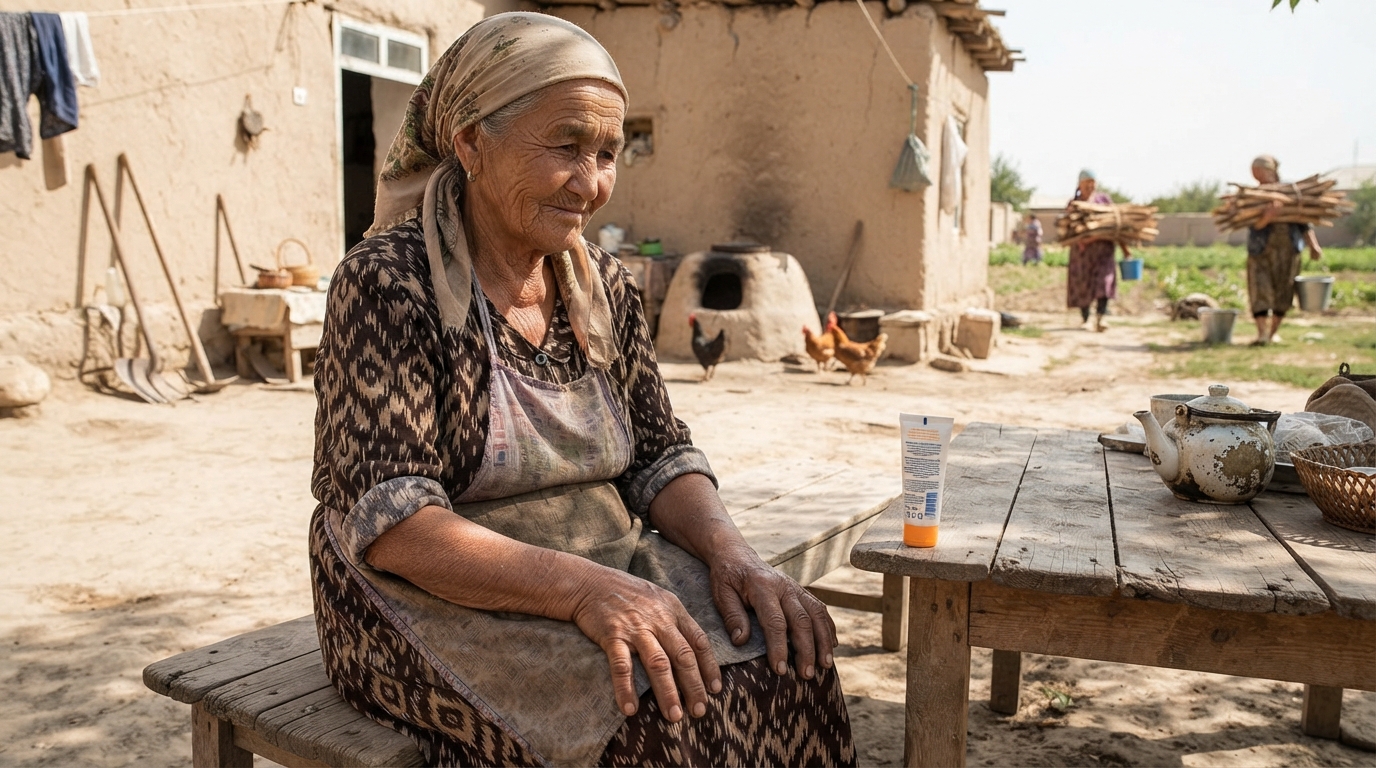
Does a rural woman have a life beyond work...
I grew up in a village. My mother, my grandmother, our female neighbors — all of them are rural women. As usual, I do not intend to talk about their industriousness, how they milk cows at early dawn, carry water from afar, or kindle firewood in the oven to bake bread. No, this time I want to discuss a different matter — the wrinkles on their faces, their health, and the time they reserve for themselves.
In other words, does a rural woman have a life other than labor? If she did not have other worries, what would she do for herself? For instance, let us begin with a woman's face. How does a woman who spends much of her time under the sun care for her skin? Does she apply facial cream, or use sunscreen products? Does she think about styling her hair, applying face masks, or going to a hair salon? Or are such things merely desires that are left after the essential household expenses, to be realized only if possible?
The wrinkles on the faces of rural women cannot be explained solely by hard physical labor and life's worries. Age, genetics, and sunlight also influence this. Medical research shows that ultraviolet rays from the sun accelerate the appearance of early signs of skin aging, wrinkles, and spots. For women who work extensively outdoors, especially during the hottest parts of the day, the issue of sun protection holds a special significance.
However, another question is important to me here: does she think about purchasing sun protection, or must she satisfy other household needs first before doing even that?
These questions might seem trivial, even superfluous, to someone. After all, there are far more important concerns in a village: housing, homestead land, livestock, children, family, husband, parents-in-law... But should a woman's life consist only of these concerns?
A study by the Asian Development Bank dedicated to time use among women in villages of the Khatlon Region, Republic of Tajikistan, compels serious thought on this matter.
It examined the time women spend on unpaid domestic work and other responsibilities. These results cannot be directly applied to rural women in Uzbekistan, but the study highlights an important issue common to the lives of women in the region: household chores and family responsibilities occupy a major portion, 70 percent, of a woman's time.
Internationally, this situation is expressed through the concept of "time poverty." It is not simply about a woman working a lot. It is about her having no time left to rest, receive an education, engage in her interests, or pay attention to her health.
A rural woman might labor from morning till evening. But how much time does she find for herself within that day? Does she have the opportunity to engage in what she herself desires? Or after completing her daily duties, is the time left for her only that period when, out of sheer exhaustion, she desires to do nothing at all?
***
Once, when my mother was younger, I bought her a cream that helps protect against the sun and reduces skin darkening. Taking the small cream container in her hand, my mother turned it this way and that in surprise. Without hiding my concern, I said:
— Mother, do not soft-heartedly give this away as a gift to someone else again; it is an expensive cream. It will protect your face from the sun, use it yourself.
One of the neighbor women sitting beside my mother immediately laughed and joked:
— Oh, if you had bought a kilogram of meat for that money, my dear aunt would have been both happy and delighted.
This small real-life incident forced me to think about many things at that moment. It means that under conditions where food, children's needs, and household expenses come first, spending money on a woman's own health and self-care may seem like an extraneous expense.
Furthermore, a woman who has lived for years prioritizing the needs of others does not always perceive her own needs as a necessity. Before buying something for herself, she thinks of the household. Before going to a doctor, she tries to finish the chores at home. And she postpones rest until after the tasks are done. But when do these tasks ever end?
Of course, sun protection is not merely a matter of appearance. SPF products help protect the skin from the effects of ultraviolet rays. The famous Nambour study conducted in Australia showed that regular use of sunscreen can slow down the process of skin photoaging.
The issue here is not whether a woman has wrinkles on her face. It is about her having the necessary knowledge, time, and funds to pay attention to her health. The ability to buy sun protection and the habit of using it regularly both require certain conditions. If a woman considers self-care an unnecessary expense or lacks the time for it, the issue cannot be resolved simply by explaining the benefits of a cream to her.
In reality, it is not just about skincare either. Years of hard physical labor, carrying water, doing laundry, and working bent over in the fields can also affect a woman's physical health. For example, a Japanese study published in 1999 observed knee pain in 41 percent of rural women aged 60–79, whereas among Japanese women of the same age living in Hawaii, this figure was 20 percent. The study's authors cited lifestyle and environmental factors as one of the probable reasons for the difference. Back pain, joint pain, and chronic fatigue are likely to become an ordinary part of daily life.
Some women even delay getting medical treatment: household chores, children's needs, and the tasks of other family members remain more important to them.
Returning to that same question: how much time does a woman have for herself?
For a woman to be alone with herself, read a book, learn new things, talk with friends, or simply rest is also a need. But sometimes these needs are not even mentioned.
Explaining this situation solely by a woman's lack of self-regard would not be correct. Her time, economic opportunities, and the distribution of duties within the family also influence this. If the main portion of household chores rests on the woman's shoulders, her free time does not appear on its own. If the family's means are limited, spending money on her own needs is not easy either.
Therefore, when talking about improving the lives of rural women, one cannot limit oneself to advising them merely to look after their health, love themselves, or rest. Their working conditions, access to medical services, and the distribution of domestic tasks must also be taken into account. It is important that family members also accept a woman's health and rest as a need no less vital than household chores.
In rural areas, it is necessary to strengthen explanatory efforts among women who labor outdoors regarding sun protection, preserving health under working conditions, and disease prevention. Farms and other employers must also pay attention to the safety and health of female workers. But even this alone is not enough. A woman needs an environment where she can reach an understanding with her family to protect herself, share tasks with others, and take her own needs into account.
Most importantly, we must change our perception of the rural woman. We often praise her industriousness, patience, and self-sacrifice. But when we talk about how much she labors, we must also think about how much time she has left between those labors to live for herself.
A rural woman also has the right to be beautiful, to age healthily, to rest, to read books, to receive an education, and to work on herself. That is, a woman's worth should not be measured by how much work she performs for her family and those around her.
***
My mother merely smiled quietly at the neighbor woman's joke that day. Deep down, I felt that my mother would hide that small box of cream somewhere among the thousand and one worries of the household and still not use it. Because she is a rural woman. She is accustomed to always putting herself last, to trading her own beauty for a kilogram of household meat. Yet whenever I look at the sun-darkened faces of rural women with their visible wrinkles, I see not fortitude or industriousness, but a vulnerable beauty longing for attention, and I think that they, too, have a life beyond labor...