

A "passport" for livestock. Will the new accounting system help the industry or just add to farmers' worries?
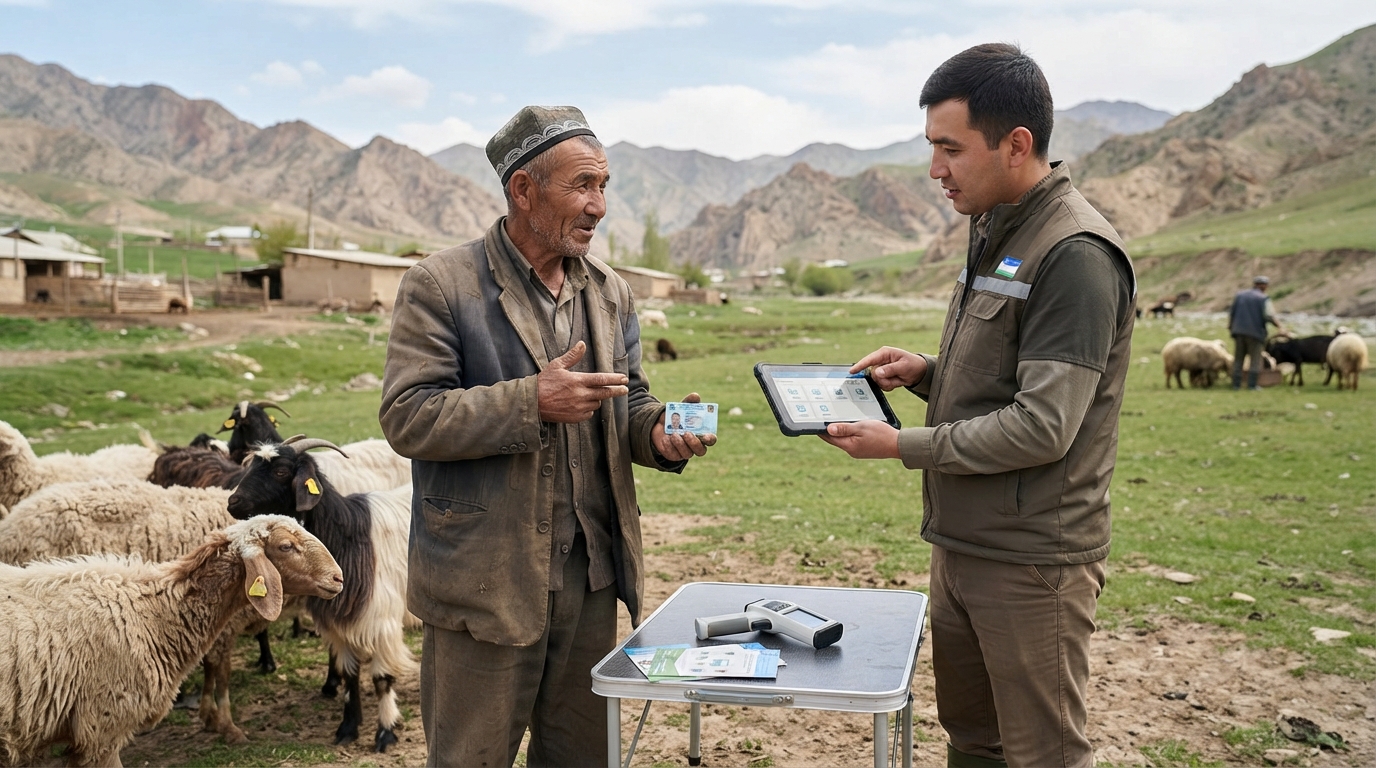
Livestock "Passport": A Blessing or a Burden for Farmers?
Uzbekistan, Tashkent – Podrobno.uz News Agency.
New rules for identifying farm animals are being actively discussed in Uzbekistan. Opinions are divided: some see this as a step toward progress, while others fear increased bureaucracy for livestock farmers. Experts agree that digitalization is necessary, but its implementation must take into account the real working conditions of farmers and shepherds.
Erkin Abdulakhatov, a specialist at Uzhydromet, emphasizes the importance of a modern livestock registration system. It will allow the government to obtain accurate data on livestock numbers, monitor the industry's performance, and effectively plan support measures. However, in his opinion, this should not become an additional bureaucratic burden for livestock farmers.
The industry is already facing serious challenges: climate change, pasture degradation, and water and feed shortages. Instead of stimulating livestock farming, new requirements are emerging that could discourage interest in livestock breeding. Abdulakhatov notes that other countries use electronic databases, veterinary information systems, geoinformation technologies, and remote monitoring to keep track of livestock. This raises the question: why should so much of the work involved in counting and registering animals fall to their owners?
He believes that trust in the system will be enhanced if the government itself uses modern technologies to obtain and verify information. For example, if the system allows for the number of animals in a remote mountain farm to be determined without the constant involvement of a shepherd.
The preparation of the reform raises a separate question. The author questions whether consultations with livestock breeders were held, whether their readiness was assessed, and whether the actual conditions of rural areas were taken into account.
"If the passport system facilitates the development of the industry, this is justified. But if it turns into another obligation and reporting, it could set livestock farming back," Abdulakhatov believes.
At the same time, livestock registration alone is not enough to develop livestock farming. He emphasizes that the main task of relevant agencies is not only to keep records but also to create the conditions for increasing livestock numbers. This includes access to pastures, water, feed, veterinary services, and economic incentives.
According to the expert, the animal identification system could become a useful tool if its data is used not only for control but also for decision-making on supporting the industry.
Otherwise, there is a risk that the new mechanism will be perceived solely as an additional administrative requirement. Therefore, when further implementing the system, it is important to consider the views of livestock farmers and explain to them not only the registration rules but also the practical benefits of the new system.
Previously, the Ministry of Agriculture stated that the main goal of the new animal identification rules is not fines, but rather the protection of human health, the prevention of the spread of dangerous diseases, and the improvement of food safety.