

A historic speech. "Mankind must put an end to war — or war will put an end to mankind" — John F. Kennedy
The newspaper continues its "Historical Speech" column, which presents speeches that have played an important role in human history in the Uzbek language. In this issue, we present the speech of former US President John F. Kennedy, delivered from the UN podium in 1961 as a call to preserve the organization and achieve nuclear disarmament.
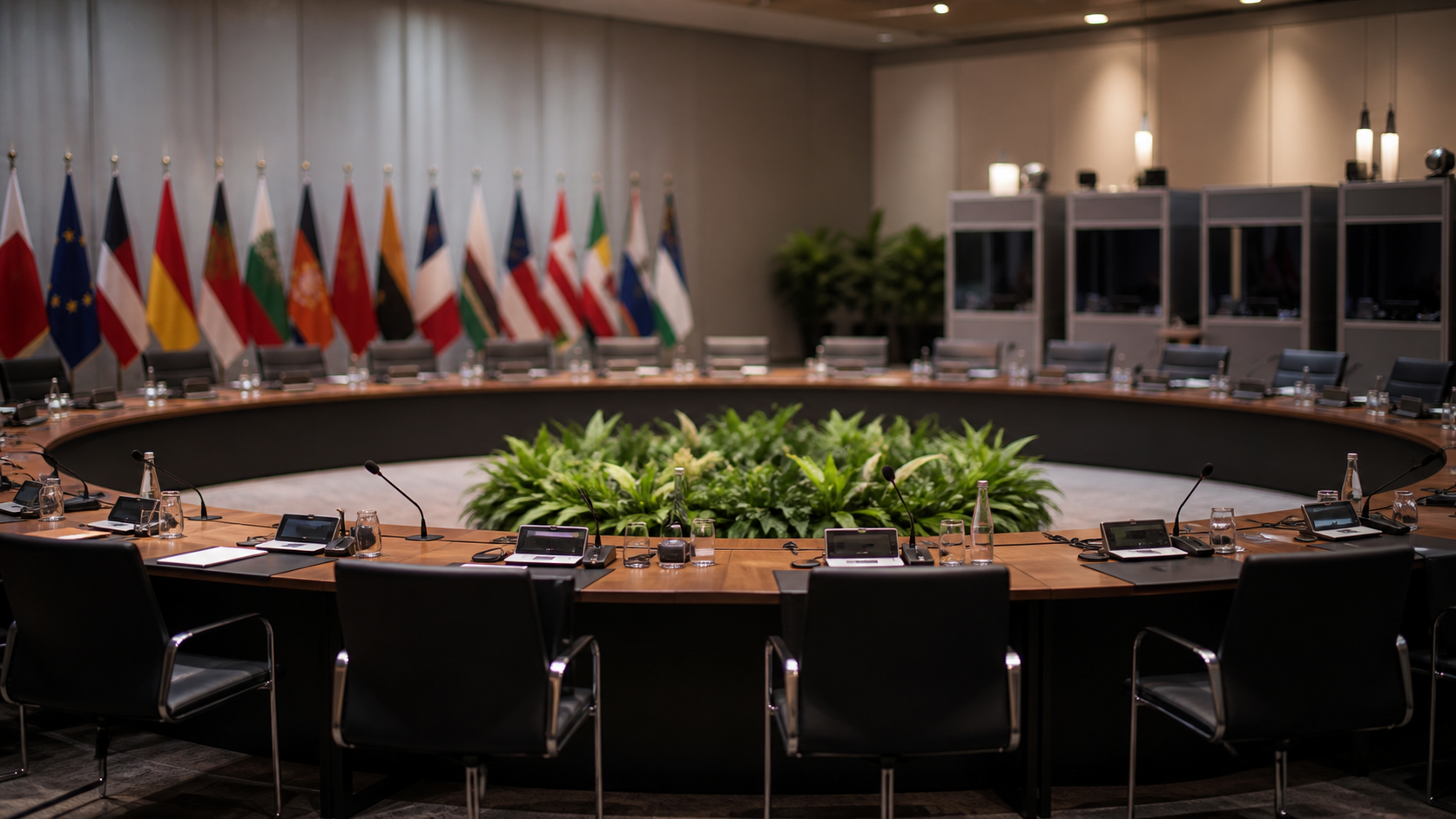
Historic speech. "Mankind must put an end to war — or war will put an end to mankind" — John Kennedy
The youngest elected President of the United States, John Fitzgerald Kennedy (JFK), led the country from January 1961 until his assassination in November 1963.
Reaching an agreement with the Soviet Union during the Cuban Missile Crisis, the Limited Nuclear Test Ban Treaty (Moscow, 1963) — banning tests in the atmosphere, in outer space, and under water — the Moon landing program (Apollo 11), and the Peace Corps are associated with his name in US history.
Kennedy's speech to the UN General Assembly on September 25, 1961, was delivered at a difficult time when the three-year moratorium on nuclear testing had ended, the Berlin Wall had been erected, the Congo crisis had become a serious test for the UN, and the organization itself stood on the brink of crisis.
A year earlier, Moscow had proposed replacing the office of the Secretary-General in the organization with a tripartite council consisting of representatives from the West (NATO countries and their allies), the socialist bloc (the Soviet Union and Warsaw Pact countries), and neutral countries (non-aligned states), with each of them being granted the right of veto. Referencing the Russian carriage, this proposal was named the "troika".
In essence, the proposal would paralyze the UN leadership just like the Security Council. At the same time, it was directed personally against the then-Secretary-General of the organization, Dag Hammarskjöld, whom the Soviet side openly accused and called on to resign for his actions in the Congo.
On September 18, while flying to negotiations on a ceasefire in the Congo, Hammarskjöld died in a plane crash near Ndola in Northern Rhodesia (the cause of the crash remains undetermined). The office of the Secretary-General became vacant precisely at a time when the debate over its future was open.
A week after the tragedy, as John Kennedy took the podium at the UN, he faced two questions: who would lead the organization from now on, and where would the nuclear arms race lead?
In his speech, Kennedy addressed the entire world community, particularly the Soviet Union, calling on them to unite for peace, to preserve the UN, its influence and authority, and to immediately begin disarmament negotiations.
The proposals voiced by the US leader at this meeting, with some exceptions, did not go in vain. The "troika" issue was closed that very autumn, and the institution of the Secretary-General was preserved in its current form.
Over time, there was also significant progress on disarmament. In December of that year, the General Assembly unanimously adopted the principles agreed upon by the US and the USSR and established the Eighteen-Nation Committee on Disarmament. The committee began its work in Geneva in March 1962, and six years later, the Treaty on the Non-Proliferation of Nuclear Weapons was negotiated on this very platform.
It is worth noting that in April 1962, the US also resumed atmospheric testing, and in October, the Cuban Missile Crisis occurred. The new UN Secretary-General, U Thant, mediated in defusing the crisis. The main documents on disarmament were signed after that.
On August 5, 1963, the Limited Nuclear Test Ban Treaty was adopted in Moscow: testing in the atmosphere, in outer space, and under water was stopped. In October of that year, the General Assembly called on states not to place nuclear weapons in Earth orbit — a decision that became the basis for the Outer Space Treaty of 1967.
Kennedy's main proposal — "general and complete disarmament" — was not realized. The principles agreed upon in 1961 remained on paper.
Hammarskjöld was awarded the Nobel Peace Prize in October of that year. This is a rare case in the history of the prize, and Hammarskjöld remains the only person to be awarded the Nobel Peace Prize posthumously.
"We meet in an hour of grief and challenge. Dag Hammarskjold is dead. But the United Nations lives. His tragedy is deep in our hearts, but the tasks for which he died are at the top of our agenda. A noble servant of peace is gone. But the quest for peace lies before us."
The issue is not the death of one man — the issue is the survival of this organization.
It will either rise to meet the challenges of our age, or it will dissolve with no influence, no power, and no respect.
If we allow it to dissolve, if we weaken its capacity, if we undermine its strength, we shall condemn our own future.
For only the development of this organization can serve as the only true alternative to war — and war is no longer a rational alternative. Unconditional war no longer leads to unconditional victory.
War can no longer serve to settle disputes.
It is no longer of concern only to the great powers. For a nuclear catastrophe, spread by wind, water, and fear, can engulf everyone alike — great and small, rich and poor.
"Mankind must put an end to war — or war will put an end to mankind."
So let us resolve here and now: that Dag Hammarskjold did not live, or die, in vain. Let us call a truce to terror. Let us pray for peace. As we build the international capacity to keep the peace, let us join in dismantling the national capacity to wage war.
This will require new strength and new roles for the UN. For uncontrolled disarmament is but a shadow, and a society without law is but a shell. The UN has already become both the measure and the vehicle of man's most generous impulses. It has already provided — in the Middle East, in Asia, in Africa, and this year in the Congo — a means of restraining human violence.
But the great question that faced this organization in 1945 still stands before us: will man's cherished hopes for progress and peace be destroyed by terror and disruption? Is it possible to tame the "ugly winds of war" in time to make way for the cool breezes of reason?
Will the commitments of our Charter to ensure peace, progress, human rights, and international law be fulfilled or violated?
There are not three forces in this hall, but two. One consists of those who seek to build the world described in Articles I and II of the Charter. The other, aiming for a completely different world, seeks to undermine this organization along the way.
It is precisely today that our dedication to the Charter must be maintained more firmly than ever. It must be strengthened, first of all, by choosing a mature public servant to continue the responsibilities of the Secretary-General — a person who has both the wisdom and the power to give meaning to the moral force of the world community. The late Secretary-General elevated and strengthened the UN's obligation to act. But this was not something he invented. It is provided for in the Charter and still exists.
However difficult it may be to fill Mr. Hammarskjold's place, it is better that this place be filled by one man, not three. Even the three horses in the "troika" did not have three drivers pulling the carriage in three directions. It had only one driver, and the UN leadership must be the same. To establish a triumvirate, any committee, or rotating authority in the administrative offices of the UN would replace order with anarchy, action with paralysis, and confidence with hesitation.
The Secretary-General is, in fact, the servant of the General Assembly. To diminish his authority is to diminish the prestige of the only organ where all nations, regardless of their power, are equal and sovereign. Until all great powers are just, the weak will be secure only through the strength of this assembly.
Effective and independent executive action is not the same issue as balanced representation. In view of the vast changes in the number of its members since this organ was established, the American delegation supports any efforts to promptly review and modify the composition of UN bodies.
But to appoint three administrators to this organization — to allow each great power to decide its own case — would lead to the Cold War becoming firmly entrenched in the headquarters of peace. Whatever advantages it might offer our country as one of the great powers, we reject such a plan. For us, in the age of self-determination, international law is far preferable to a world war in the age of mass destruction.
Today, every inhabitant of this planet must contemplate the day when this planet may no longer be habitable. Every man, woman, and child lives under a nuclear sword of Damocles, hanging by the slenderest of threads, capable of being cut at any moment by accident, miscalculation, or madness.
The weapons of war must be abolished before they abolish us.
People no longer debate whether armaments are a symptom or a cause of tension. The very existence of modern weapons, ten million times more powerful than any weapon the world has ever seen and capable of reaching any target on earth in a matter of minutes, is a source of terror, discord, and distrust.
People no longer argue that all disputes must be settled before disarmament can begin, because disarmament must be an integral part of any permanent solution. Nor can people any longer claim that the pursuit of disarmament is a sign of weakness, because in an escalating arms race, as a nation's weaponry increases, its security may diminish.
For fifteen years, this organization has sought the reduction and destruction of arms. Now this goal is not merely a dream, but a matter of life and death.
The risks inherent in disarmament are nothing compared to the risks inherent in an unlimited arms race.
It was in this spirit that the recent Belgrade Conference, recognizing that this is no longer just a Soviet or American problem but a problem of all mankind, endorsed a program of "general, complete, and strictly internationally controlled disarmament." It was in this spirit that we in the US worked this year with a new determination, and with a new, now legally established agency fully approved by Congress, to find an approach to disarmament: an approach that is comprehensive, realistic, mutually balanced, and beneficial enough for every nation to accept. And it was in this spirit that, with the agreement of the Soviet Union — under the banner of "general and complete disarmament" accepted by both nations — we presented a new statement of agreed principles for negotiations.
But we know well that not all issues of principle have been resolved, and principles alone are not enough. Therefore, we aim to challenge the Soviet Union not to an arms race, but to a peace race, to move forward together step-by-step, stage-by-stage, until general and complete disarmament is achieved. We now call on them to move beyond agreements in principle and reach agreement on concrete plans.
The program to be presented to this assembly — on general and complete disarmament under effective international control — is aimed at bridging the gap between those who demand a stage-by-stage approach and those who speak only of an ultimate and complete result.
As it destroys the machinery of war, it also creates the machinery to keep the peace. It will be carried out through balanced and safe stages designed to give no state a military advantage over another. It places the ultimate responsibility for verification and control not on the great powers alone, nor on adversaries or themselves, but in the proper place — an international organization within the UN. It ensures the genuine verification that is a necessary condition for disarmament and applies it gradually, in proportion to the stage of disarmament. It covers delivery systems as well as weapons. It ultimately puts an end to their production, testing, transfer, and possession.
Under the supervision of an International Disarmament Organization, it will achieve a steady reduction of both nuclear and conventional forces until all armies and weapons are destroyed, except those necessary for maintaining internal order and for the new UN Peace Force. And it will begin this process now, today, as soon as negotiations begin.
In short, general and complete disarmament must no longer be a slogan used to oppose first steps. It must no longer be a goal that lacks the means of achievement, verification of progress, and keeping the peace. It is now a realistic plan and a test — a test for both those who want it only in words and those who want it in practice.
Such a plan may not present us with a world free of conflict and greed, but it will present a world free of the horrors of mass destruction. It may not usher in an era of superpowers, but it will usher in an era where no nation can destroy another or be destroyed by another.
In 1945 — before other nations even had the bomb or demobilized their troops — this nation (referring to the US, Ed.) proposed the Baruch Plan to internationalize the atom. Together with our allies, we proposed the 1951 disarmament plan while we were still waging war in Korea. And we are putting forward our proposals today at a time when we are strengthening our defense over Berlin. This does not mean our instability, lack of goodwill, or fear, but because we know that the rights of free men will prevail, and because, even if forced to rearm against our will, we look with confidence to a disarmed world that all of us beyond Berlin prefer.
Therefore, I propose that negotiations on disarmament be resumed immediately on the basis of this plan, and that they continue without interruption until a complete program of general and complete disarmament is not only agreed upon but actually achieved in practice.
The logical starting point is a treaty that ensures the cessation of all types of nuclear testing in any environment, under effective control. The US and Great Britain have proposed such a treaty, which is both reasonable and effective, and ready for signature. We are ready to sign this treaty today.
We also proposed a mutual ban on atmospheric testing without verification or control to save mankind from the poison of radioactive fallout. We regret that this proposal was not accepted.
For 15 years, we have sought to make the atom an instrument of peaceful progress, not war. But for 15 years, our concessions have been met with obstructions, and our patience with intransigence.
And mankind's pleas for peace have been ignored.
Finally, when the explosions of others covered the sky with clouds, my country had no choice but to act in its own interest and for the security of the free world. We cannot jeopardize this security by refraining from testing while others are improving their weaponry. Nor can we jeopardize security through another long-term, unverified ban on testing.
For three years, we took these risks in our open society, seeking to reach an agreement on verification. But this year, while we were negotiating in good faith in Geneva, others (referring to the Soviet Union, Ed.) were secretly preparing destructive new nuclear tests.
Our tests are not polluting the atmosphere. Our deterrent weapons are protected against accidental explosion or use. Our doctors and scientists are ready to help any nation measure and counter the hazards that atmospheric testing inevitably poses to human health.
But we remain ready to seek new ways of agreement to put an end to the spread of these terrible weapons, to stop the pollution of the air, and to halt the escalating nuclear arms race.
Therefore, our new Disarmament Program includes the following proposals:
First, the signing of a test ban treaty by all nations. This can be done right now. Negotiations on a test ban do not have to and should not wait for general disarmament;
Second, stopping the production of fissionable materials for use in weapons and preventing their transfer to any nation that does not currently possess nuclear weapons;
Third, banning the transfer of control over nuclear weapons to states that do not possess them;
Fourth, preventing nuclear weapons from creating new battlefields in outer space;
Fifth, the gradual destruction of existing nuclear weapons and the redirection of their materials to peaceful purposes;
Finally, stopping the unlimited testing and production of strategic nuclear delivery vehicles and their gradual destruction as well.
But the destruction of weapons alone is not enough. Along with destruction, we must also create — as we outlaw war and weapons throughout the world, we must create worldwide law and order.
In the world we seek, a hastily assembled, uncertainly supported, and inadequately funded UN Emergency Force will never be enough.
Therefore, the US recommends that all member states earmark special peacekeeping units from their armed forces that are always ready at the call of the UN, specially trained, capable of rapid deployment, and whose financial and logistical support is resolved in advance.
Furthermore, in order to extend the rule of international law, the American delegation proposes a series of steps aimed at improving the UN machinery for the peaceful settlement of disputes — such as fact-finding on the spot, mediation, and judicial settlement. For peace is not merely a military or technical problem — it is first and foremost a matter of politics and people.
Unless mankind coordinates its steps in the field of weaponry and technology with similar steps in social and political progress, our immense power, like that of the dinosaurs, will become impossible to control properly — and like the dinosaurs, we will vanish from the face of the earth.
Just as we establish the rule of law on earth, we must apply it to mankind's new frontier — outer space.
We all pay tribute to the brave cosmonauts of the Soviet Union. The new horizons of outer space must not be governed by outdated concepts of imperialism and claims of sovereignty. The cold reaches of space must not become a new arena for an even colder war.
To this end, we put forward proposals to extend the UN Charter to the limits of man's exploration of space, to reserve outer space for peaceful use only, to ban weapons of mass destruction in space or on celestial bodies, and to open the mysteries and benefits of space to every nation.
We propose future cooperative efforts among all nations to forecast and ultimately control the weather. Finally, we propose a global system of communications satellites linking the whole world by telegraph, telephone, radio, and television. In the interest of peace, the day should not be far off when such a system will televise the proceedings of this organization to all corners of the world.
But the mysteries of space must not distract our gaze and our energy from the harsh realities faced by our brothers.
Political sovereignty without the means to overcome poverty, illiteracy, and disease is nothing but a mockery.
Self-determination is nothing but an empty slogan when there is no hope for the future.
In this regard, my country, which has freely shared its capital and technology to help others help themselves, now proposes to officially designate this decade of the 1960s as the UN Decade of Development. Within the framework of this resolution, the UN's existing efforts to promote economic growth can be expanded and coordinated.
Regional research and training institutes can now pool many talents. New research, technical assistance, and pilot projects can unlock the wealth of less developed lands and untapped water resources.
Development can become a cooperative rather than a competitive activity — enabling all nations, however diverse their systems and beliefs, to become free and equal nations not only in law but also in practice.
My country stands for a world of free and equal states. We agree that colonialism is a key issue in this Assembly. But let all the facts on this issue be fully debated.
On the one hand, it is a fact that since the end of World War II, as a result of declarations of independence worldwide, nearly 1 billion people and 9 million square miles (approximately 23 million sq. km) of territory have become 42 free and independent states. Today, less than 2 percent of the world's population lives in "dependent" territories.
I do not ignore the remaining problems of traditional colonialism still facing this body. These problems will be solved with patience, goodwill, and determination. Within the scope of our responsibilities in such matters, my country aims to be a participant, not merely an observer, in the peaceful and rapid transition of nations from colonial status to equal partnership. This powerful continuing tide of self-determination deserves our sympathy and support.
But the most brutal forms of colonialism do not consist only of the exploitation of new nations by old ones, of black people by white people, or the subjugation of the poor to the rich. My nation was also once a colony, and we know well what colonialism is: it is the exploitation and subjugation of the weak by the strong, of the majority by the minority, of peoples who have not consented to be governed, regardless of continent, class, or color.
That is why it cannot be ignored that the tide of self-determination has not reached the communist empire. There, a population far larger than that officially called "dependent" lives under the influence of governments installed by foreign troops instead of free institutions, under a system that recognizes only one party and one belief, suppressing free debate, free elections, free newspapers, free books, and free trade unions, and building walls to keep out the truth and keep its citizens captive.
Let us fully debate colonialism, and let us apply the principle of free choice and the practice of free plebiscites to every corner of the world.
Finally, as President of the United States, I deem it my duty to report to this Assembly on two threats to peace. Although they are not on your busy agenda, they deeply concern us and many of you.
The first threat I wish to report is often misunderstood: it is the smoldering embers of war in Southeast Asia. South Vietnam is already under attack — sometimes by a lone assassin, sometimes by guerrilla bands, and recently by entire battalions.
The peaceful borders of Burma, Cambodia, and India have been repeatedly violated.
And the peaceful people of Laos are in danger of losing the independence they so recently won.
No one can call these "wars of liberation." For these are free countries living under their own governments. The fact that people are stabbed in their homes rather than shot on battlefields does not diminish the significance of these aggressions in the slightest.
The world community faces a very simple question: can measures be developed to protect small and weak states from such tactics? For if they succeed in Laos and South Vietnam, the gates will be opened wide.
The US seeks no bases, territory, or any special position for itself in this region. We support a truly neutral and independent Laos, whose people are free from foreign interference, living in peace with themselves and their neighbors, assured that their territory will not be used to attack others, and governed by a administration comparable to those of Cambodia and Burma (as Mr. Khrushchev and I agreed in Vienna).
But negotiations on Laos are now reaching a decisive stage. The ceasefire is highly precarious. The rainy season is coming to an end. Laotian territory is being used to infiltrate South Vietnam.
The world community — and all interested parties — must recognize that this powerful threat to the peace and freedom of Laos is closely linked to all other threats directed at themselves.
Secondly, I wish to inform you about the crisis around Germany and Berlin. This is not the time or place for sharp tones, but the world community has a right to know the very simple issues we see. If a crisis exists, it is because an existing peace is threatened, an existing island of free people is under pressure, and solemn agreements are being treated with indifference.
Established international rights are threatened with unilateral revocation.
Peaceful travel has been stopped by barbed wire and concrete blocks.
The command of the tsar in Pushkin's "Boris Godunov" comes to mind: "Take measures this very hour to barrier our borders... Let not a single soul pass through the border, let no hare run, let no crow fly."
The claim that we are threatening war simply to prevent the signing of a so-called "peace treaty" between the Soviet Union and East Germany is absurd. The Western allies have no interest in the Soviets' desire to make some paper agreement with a regime of their own creation, in a territory occupied by their own troops and governed by their own agents. None of these actions can affect our rights or our obligations.
If there is a dangerous crisis in Berlin — and there indeed is — it is because of threats directed against the vital interests and solemn commitments of the Western powers, as well as the freedom of West Berlin. We cannot abandon these interests. We cannot fail to meet these commitments. We cannot surrender the freedom of these people for whom we are responsible.
A "peace treaty" containing terms that destroy peace would be a fraud. A "free city" that is not truly free would be a suffocation of freedom and a disgrace. For a city or a people to be truly free, they must have the guaranteed right to make their own choice and live their own lives without economic, political, or police pressure.
And as I have said many times before, if anyone doubts how much the people of West Berlin want us to be there, we are ready to put this question to a free vote in all of Berlin and, if possible, among the entire German people.
The simplest truth about this crisis is that there is no necessity for it. The basic means for a peaceful settlement can be found in the Charter. Under its provisions, agreements must be kept unless modified by all parties that made them.
Established rights must be respected. The political destiny of peoples must be based on their free will, freely expressed in free plebiscites or free elections. If there are legal problems, they can be resolved through legal channels. If there is a threat of force, it must be rejected. If there is a desire for change, this must be the subject of negotiations, and if negotiations are conducted, they must be based on mutual respect and consideration for the rights of others.
Whatever means they may be forced to use, the Western powers are determined to calmly defend their commitments, their links with the free citizens of West Berlin, and the right of these citizens to self-determination. This generation has learned from bitter experience that both making threats and yielding to threats can only lead to war.
But determination and reason will lead to a peaceful solution in which my country deeply believes.
We are not bound to any rigid formulas. We see no perfect solution. We recognize that, however irrational a policy it may seem to us, troops and tanks can keep a people divided for a time against their will.
But we believe that a peace agreement can be reached that protects the freedom of West Berlin and the allies' right to be there and to access it, while recognizing the historical and legitimate interests of others in ensuring European security.
The possibilities for negotiations are currently being explored; it is too early to report on what its prospects will be. For our part, we will be glad to report when a solution is found. For there is no need for a crisis threatening peace over Berlin — and if those who created this crisis want peace, there will be peace and freedom in Berlin.
It is no exaggeration to say that the events and decisions of the next ten months may decide the fate of mankind for the next ten thousand years. These events cannot be avoided. These decisions cannot be appealed.
And we who sit in this hall will be remembered either as part of the generation that turned this planet into a burning funeral pyre, or as the generation that fulfilled the oath to "save succeeding generations from the scourge of war."
In order to fulfill that oath, I pledge all the resources of my country. I promise you that we will never aggress and never provoke, never flee and never threaten with force, never negotiate out of fear, and never fear to negotiate.
Terror is not a new weapon.
Throughout history, it has been used by those who could not persuade or prevail by personal example. But they inevitably fail, because men do not fear death for a life worth living, or the terrorists themselves realize that free men cannot be frightened by threats and that any aggression will receive its fitting response.
And it is from this perspective of history that today every nation, whether friend or foe, must know that the US, along with free men, has both the will and the weapons to defend its responsibilities.
But I came here today to look beyond this world of threats to that world of peace. In these quests, we can expect no final victory, because new problems will always arise.
We cannot expect all nations to adopt the same systems, because uniformity is the enemy of progress, it suffocates freedom. Nor can we achieve our goal by trickery, decree, or even by the desire of all.
Nevertheless, however close we may sometimes seem to that dark and final abyss, let no man of peace and freedom despair. For he is not alone.
If we can all show fortitude, if in every country and in every office we can look beyond our borders and our ambitions, then surely an era will come when the strong are just, the weak are secure, and peace is preserved.
Ladies and gentlemen of this Assembly, the decision is in our hands. The peoples of the world have never had so much to lose or so much to gain.
Together we shall save our planet, or together we shall perish in its fire.
We can save it — and we must save it — only then shall we earn the eternal gratitude of mankind and the eternal blessing of God as peacemakers.