

A 'dark cloud' and 'dismal' mood: How it feels on Cornell campus right now
Students tell the BBC that the tension on campus has become palpable since allegations from 2024 resurfaced.
A ‘dark cloud’ and ‘dismal’ mood: What Cornell campus feels like now
Cornell students express anger at public hearing over rape case
Normally, Cornell University is a striking place to study at this time of year. The autumn foliage adds bursts of colour to its grand buildings, which sit amid the rolling hills of upstate New York.
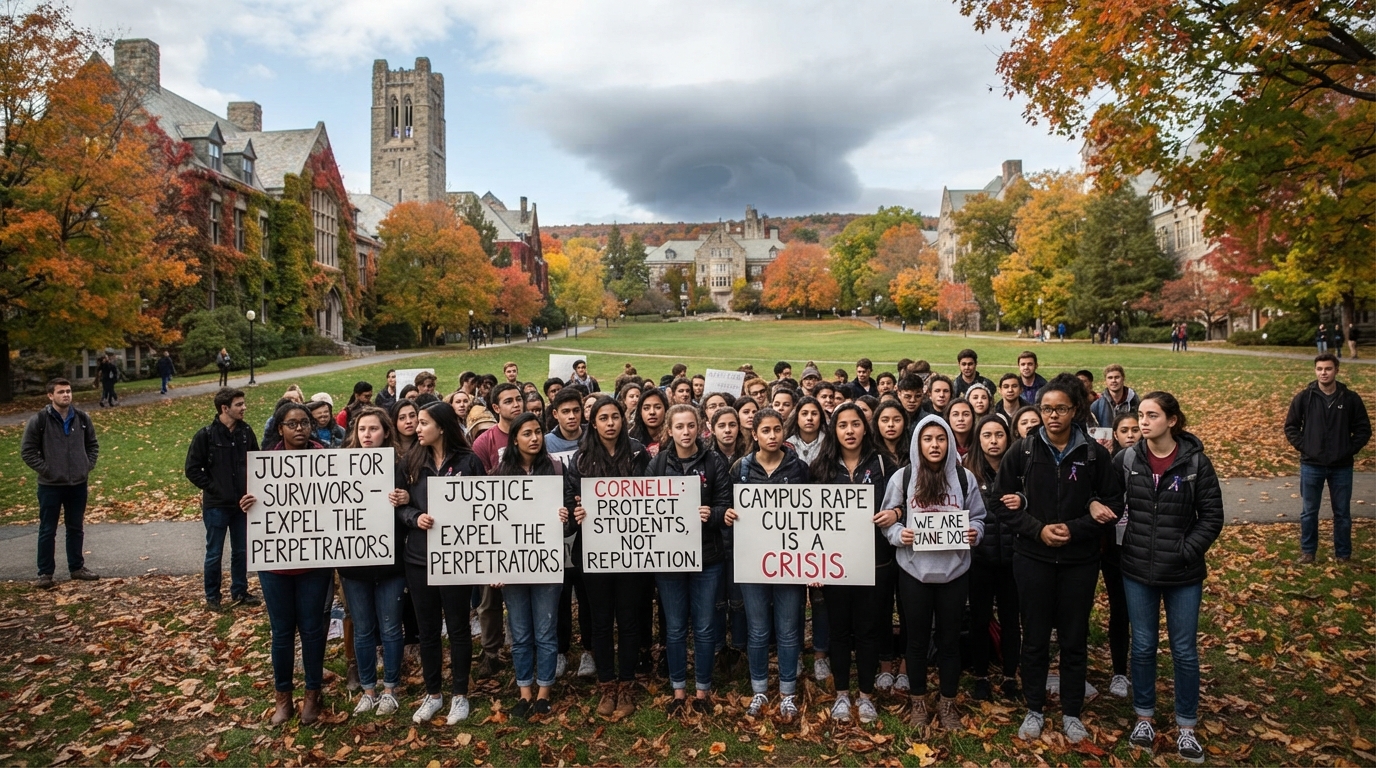
But students and faculty members say the investigation into an alleged gang rape that happened on these grounds two years ago has left a “dark cloud” hanging over the campus, fueling anger, concern about fraternity culture, and criticism of the university’s response.
Students and staff at the Ivy League school spoke to the BBC, some anonymously, saying the strain on campus had become obvious since the 2024 case returned to attention in recent weeks.
At a student assembly on Thursday, held so students could share their concerns, many demanded major change at the university.
Others called the perceived lack of justice a “disgrace” and said they felt embarrassed by the prestigious university, which has defended how it handled the case.
“We deserve to know that our institution values our safety more than its reputation,” undergraduate Sophia Riley Sim told those gathered.
Sim said she had been too distressed by the case to attend classes for the past week.
The accuser at the center of the alleged gang rape, identified anonymously as Jane Doe, filed a civil lawsuit against Cornell on 16 September, saying she was drugged and raped at a fraternity house in 2024.
She alleged that Cornell failed to protect her or properly punish the men involved in the incident. The men have been referred to as the Cornell Seven.
Cornell has already agreed to an independent investigation into the rape allegation.
The university has also defended its handling of the matter so far, saying it carried out an “extensive investigation” that lasted several months after the incident was reported, and that it complied with applicable federal civil rights law.
Soon after Thursday’s student assembly at Cornell, New York Governor Kathy Hochul announced that she had named state attorney general Letitia James as special prosecutor in the case.
She said she had “lost faith” in the Tompkins County district attorney, who had previously been handling the investigation. James is therefore taking over the case from Matthew Van Houten.
Van Houten’s office had initially decided the evidence did not meet the legal standard for charges - before reopening a criminal investigation last week in response to the new civil complaint, a step Cornell supported.
The upcoming “Justice for Survivors” protest, scheduled at the university for 5 October, is being promoted in flyers across campus. It urges Cornell to act against alleged rape culture.
Student organisers are demanding that Cornell expel and revoke the degrees of the alleged perpetrators, rewrite policies on sexual assault punishments, launch an external investigation of the university, and require prevention training for campus police.
In describing its earlier investigation of the case, Cornell says: “At its conclusion, the hearing panel issued a range of sanctions, which included expulsions and suspensions from Cornell.”
Cornell says it is legally barred from publicly revealing specific disciplinary outcomes for disciplined students, adding that “we recognise that this legal limitation can be frustrating”.
Across campus, the case has sparked anger.
One fourth-year student said it had been difficult to live there in 2024, after the incident, as rumors spread about Jane Doe.
Now, two years later, she told the BBC that she and her friends felt “overwhelmed” and “disappointed,” describing the campus atmosphere as a “dark cloud.” She believes Cornell mishandled the situation.
She wants the administration to acknowledge what she sees as its errors, saying the lack of transparency is upsetting.
She also questioned why several men in a group chat for members of Chi Phi - the fraternity group at the center of the allegations - did not speak out. A chapter of the fraternity was shut down in 2024 and remains barred from campus.
Students and community members also used Thursday’s student assembly to air their frustration and disappointment.
“I am very disgusted to be here, to be paying this institution to be here,” freshman Eliana Dolven-Miller said. “There was a lot of anger in that room, I was very angry.”
Eeshaan Chaudhuri, the student assembly chair, opened the meeting by saying the campus stood “with victims of sexual violence”.
“We don’t tolerate it here on campus, and I think I can speak for every single one of us, and I can say we’re absolutely ashamed of the events that happened on our campus,” Chaudhuri said.
The student group has also put forward a resolution calling on the university to release a written account of how it handled the alleged sexual assault, including what evidence was collected and whether and when the university referred the matter to campus police.
A faculty member said the mood on campus was “dismal”. Staff were not trained therapists, she said, so it was difficult to know how to handle these conversations with students.
It was an “incredible situation that was so… I just don’t understand,” she said, adding that she was unsure whether the university should have gone further, and noting that this was not the first time a fraternity group had had problems on campus.
Some of the freshmen, or first-year students, who spoke to the BBC had arrived at Cornell only last month.
A young woman said she and her friends had been talking about the allegations again that morning. Her friend said it had been hard to come to an Ivy League university feeling excited about the future, only to find this story dominating the news.
Students were not OK about what happened to Jane Doe, he said.
Cornell alumni have also weighed in.
More than 1,300 graduates have signed a letter urging the university to take “swift and expansive” action after the allegations resurfaced.
“Will Cornell take this as an opportunity to ask difficult questions about the proliferation of sexual violence on its own campus?” asks the letter, published in the university’s student newspaper.
“Or will it shy away from reform to protect its image? This is not an isolated incident.”