

A court verdict has been handed down to a former Uzbek serviceman who served as a drone operator in the ranks of the Russian Armed Forces
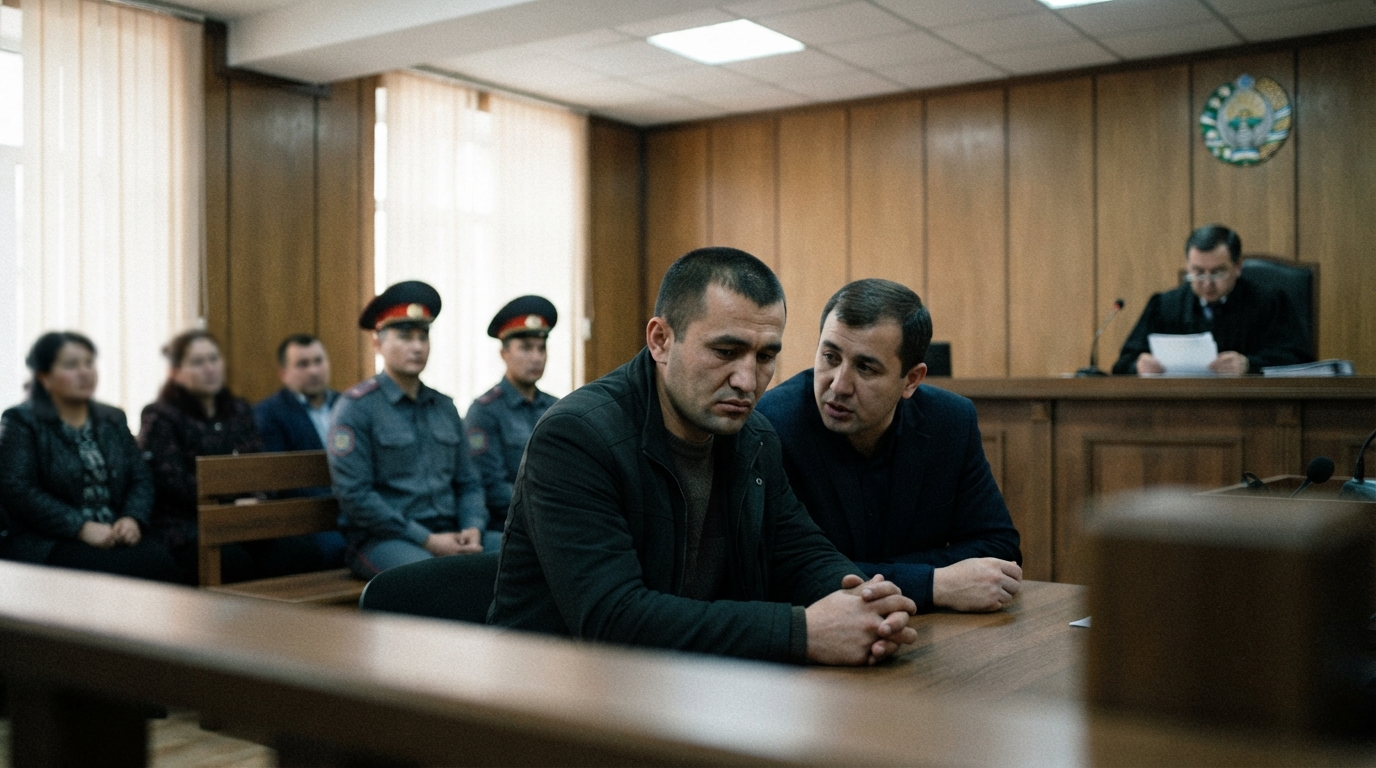
A court verdict has been handed down to a former Uzbek military serviceman who served as a drone operator in the Russian Armed Forces.
In the Qoshtepa District Court for Criminal Cases, a verdict was announced against a 31-year-old citizen who served as a drone operator in the ranks of the Russian Armed Forces.
According to reports, the man, born in 1995 in the Qoshtepa district of the Fergana region, completed his compulsory military service in 2015–2016 in a military unit belonging to the air defense forces in the Jizzakh region. During his service, he signed a five-year contract with the Armed Forces of Uzbekistan and worked as a mechanic-driver in one of the military units in the Samarkand region until 2019.
On March 14, 2020, he traveled through Kazakhstan to the Russian city of Kazan in search of work. He worked there in the construction sector for about a year, and in February 2021, he moved to Chelyabinsk, where he began working as a cook in a catering establishment.
In early March, while returning from work, he was stopped by two Russian law enforcement officers and taken to the Chelyabinsk city police department. First, his clothes and personal belongings were searched, but nothing prohibited was found.
"The police officers asked for 3,000 rubles in exchange for letting me go. I refused to give this money because I had earned it through my honest labor. About an hour later, they searched me again without witnesses and said that heroin was found in the back pocket of my pants," the Uzbek man said.
Following this, a Chelyabinsk court found him guilty of committing a crime under Article 228 of the Criminal Code of the Russian Federation and sentenced him to 11 years and 6 months of imprisonment. After the verdict, he began serving his sentence in Colony No. 18 in Chelyabinsk, during which time he was repeatedly offered to join the ranks of the Russian Armed Forces.
"At first, I strongly resisted. However, in December 2025, colony staff took advantage of my poor knowledge of the Russian language and deceitfully made me sign a contract to serve in the ranks of the Russian Armed Forces," the defendant said in his testimony.
After the contract was concluded, he, along with other convicts, was taken by truck to the city of Yekaterinburg. From there, he was transported by plane to a military unit in the Rostov region. Four days later, he was taken by military truck to the village of Pervomayskoye in the Donetsk region.
After undergoing three weeks of military training in Pervomayskoye, the man was later sent to the village of Merenivka in the Donetsk region and assigned to a drone unit of the Russian army.
"I was tasked with operating Mavic surveillance drones. Through them, we identified the locations of Ukrainian military personnel and sent this information to the military command center. Using phones was prohibited during service," the man said.
Despite the ban, he sent some photos and videos taken at the front to his younger brother in Uzbekistan via a Telegram account named "Ali."
In February 2026, he decided to flee the war zone and contacted a person named Abdullo living in Moscow, asking him for help.
"I transferred 500,000 rubles to Abdullo to get me out of the war zone. On February 27, I escaped from the war zone and reached the Rostov region. There, a person named Maruf, sent by Abdullo, met me and took me to Moscow. Upon arriving in Moscow, I applied to the Embassy of Uzbekistan and returned to Uzbekistan with a certificate of return to the homeland," the defendant testified.
The court found I.T. guilty of committing the crime stipulated in Part 1 of Article 154 of the Criminal Code. Taking into account his lack of a prior criminal record, his remorse for his actions, and other mitigating circumstances, Article 57 of the Criminal Code was applied. The defendant was sentenced to three years of correctional labor, with 20 percent of his wages withheld for state revenue.