

A 20-year project: When will Russia's new spacecraft fly?
"Roscosmos" plans to test a new reusable, crewed spacecraft using a parachute in the fall of 2026. The first crewed flight is scheduled for 2028 or 2029. However, American space commentator Eric Berger believes it is too early to trust this timeline.
**A 20-year project: When will Russia's new spacecraft fly?**
In his new article, Ars Technica journalist Eric Berger drew particular attention to the statement made by the head of "Roscosmos", Dmitry Bakanov, regarding the promising spacecraft being developed in Russia.
According to Bakanov, parachute drop tests of the spacecraft will be conducted in the Far East in the fall of 2026. The corporation plans to carry out the first crewed flight in 2028 or 2029. The "Angara-A5M" rocket will likely be used for the launch.
### The project began with cooperation with Europe
Nearly twenty years ago, Russia and the European Space Agency (ESA) began discussing the joint creation of a next-generation crewed spacecraft.
According to the agreements at the time, Europe was to provide the service module for a capsule designed to carry up to six people.
Later, Europe decided not to continue working on its own crewed spacecraft. "Roscosmos" then chose the path of implementing the project independently.
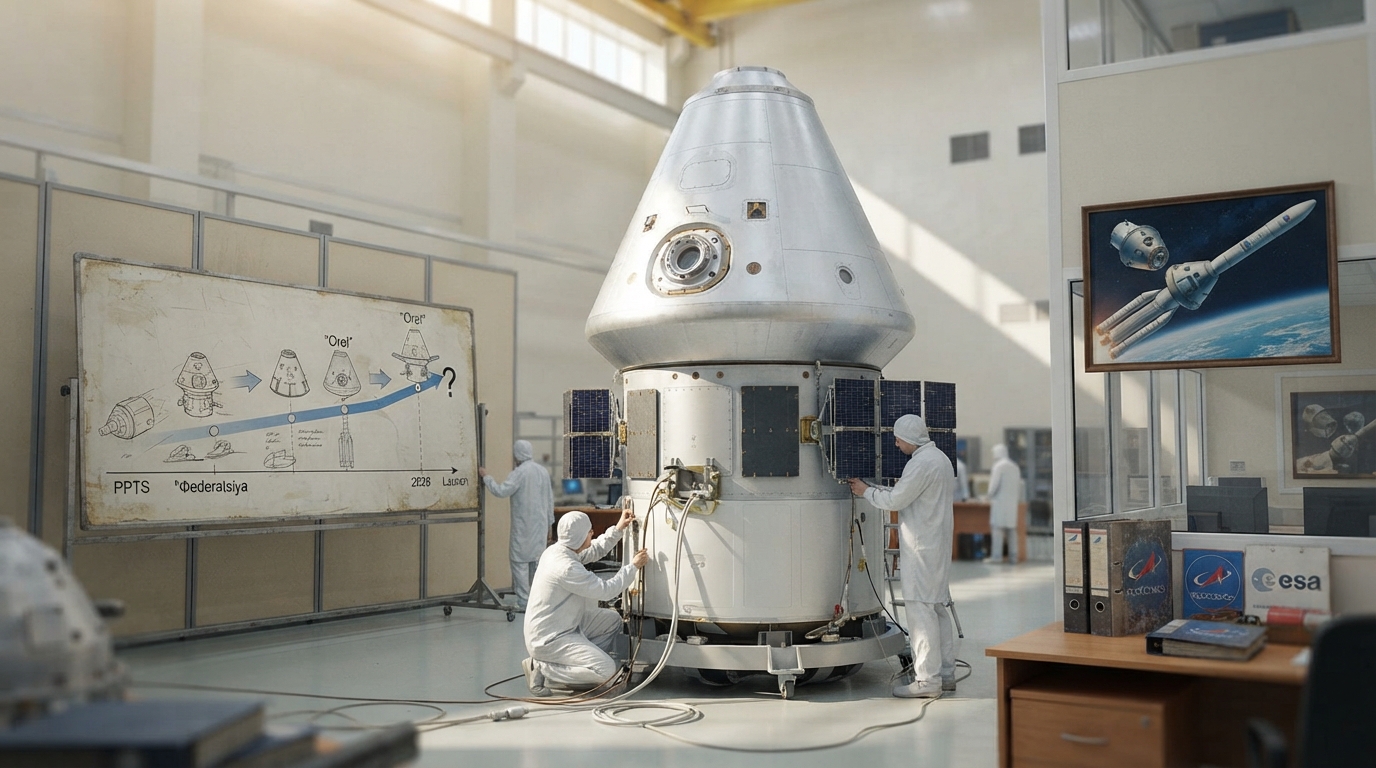
The project has changed its name several times during this period. Initially, it was called the "Prospective Piloted Transport System", then the "New Generation Crewed Transport Spacecraft". Subsequently, it was named "Federatsiya", and after that, "Orel".
Berger writes that despite nearly 20 years of development, numerous name changes, and computer-generated images, it remains unclear what actual progress is being made in the process of creating the spacecraft.
The parachute tests announced by Bakanov are being presented as the next practical step in the project.
The American commentator emphasized that one should not rush to mark the 2028–2029 flight dates on the calendar just yet.
He recalled that four years ago, Russian President Vladimir Putin spoke confidently about the "Orel" spacecraft and the revival of Russia's lunar program. According to Berger's assessment, the plans stated back then have not yet yielded the expected results.