

70,000 social and affordable homes to be built across England as part of £39bn plan
Funding has been granted to Greater Manchester, the West Midlands and West Yorkshire as well as £6bn for London.
In a move to tackle the housing crisis, ministers have unveiled plans for the construction of 70,000 social and affordable homes across England over the next decade, as part of a £39 billion initiative.
Funding has been allocated to several regions, including Greater Manchester, the West Midlands, West Yorkshire, South Yorkshire, North East England, and Liverpool, with London receiving a substantial £6 billion. This initial phase is part of a broader government program aiming to deliver 300,000 social and affordable homes nationwide.
Housing charities welcomed the announcement but cautioned that the proposed number of homes would still fall short of demand. The Conservatives, however, criticized it as an "unfunded spending commitment."
Of the new homes announced on Monday, 60% will be designated for social rent, which typically costs about half of market rates and is subject to stringent eligibility criteria.
Prime Minister Andy Burnham stated, "No child should be raised in a hostel room and no family should wait 10 years for a front door of their own. I have said from my first day in this job that everything starts with a good home." This comes as homeless figures under Labour have continued to climb to record levels.
Earlier this month, data revealed that 177,530 children were experiencing homelessness and living in temporary accommodation.
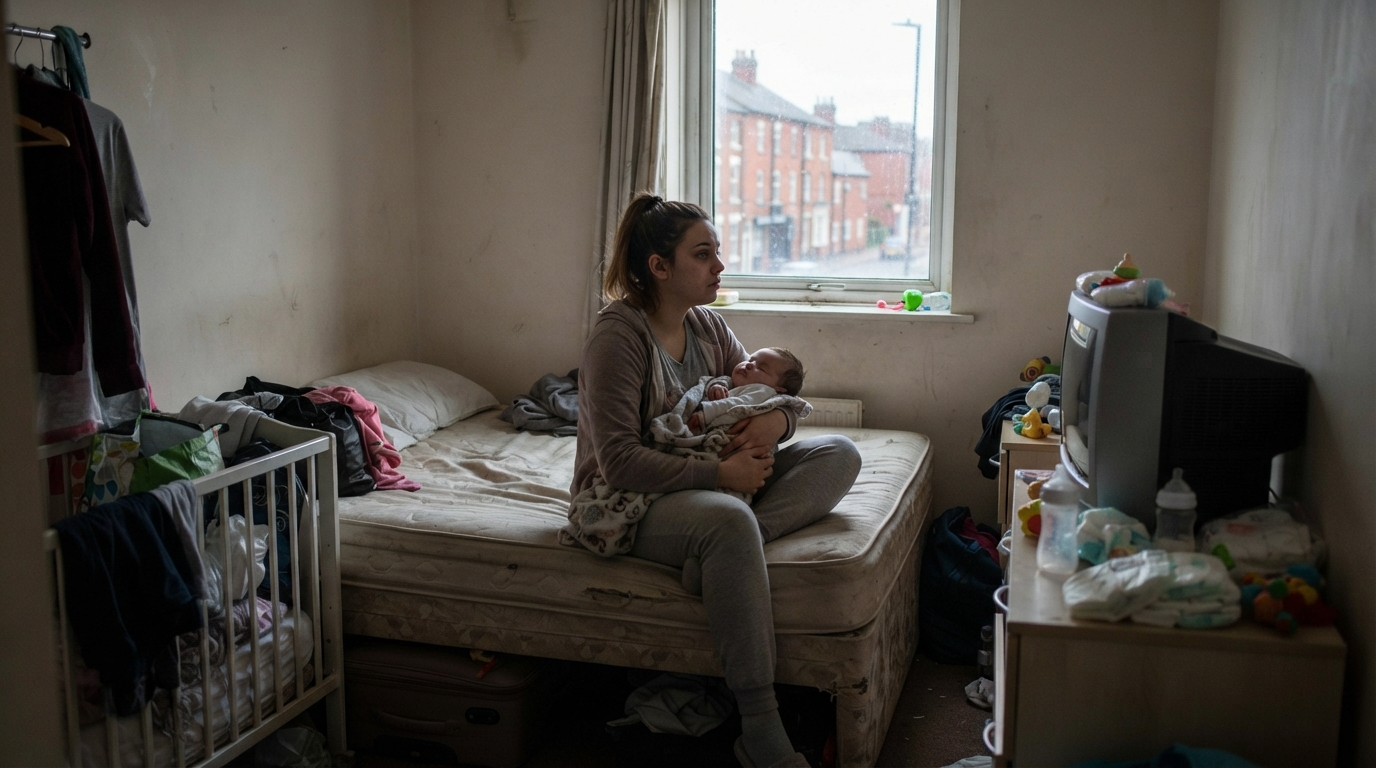
Natasha, 22, is one of the individuals awaiting a permanent home, having spent the last four months in a hotel in Milton Keynes with her son, Zayd. She spent the final months of her pregnancy and the initial weeks of her son's life in the hotel, with no clear indication of how long she would remain there, despite being told it was temporary.
"I'm just scared when he gets older, when he starts crawling around, I can't even allow him to crawl in such a place like that because it's so dirty," Natasha expressed. She recounted an ant infestation in her room while pregnant, which was eventually resolved by a room change.
Her challenges persisted, however. While Natasha has a private bathroom, she shares a kitchen with approximately 60 other residents. She described the hotel as housing a diverse group of people, not solely mothers and babies, leading her to feel unsafe using the shared space with Zayd.
Natasha likened her living situation to a "prison," noting that visitors are prohibited, preventing friends and family from assisting her with her five-week-old son. "I just want somewhere peaceful for him and calm. Somewhere nice where I can bring him up," she said.
As of March 2025, Natasha is among the 1.34 million households on social housing waiting lists, according to the latest government figures.
London is set to receive the largest share of funding, though the exact number of homes to be built in the capital has not been specified. Ministers confirmed that Monday's allocation is the initial phase of the 10-year program, with over £16 billion yet to be distributed outside London.
Housing Secretary Angela Rayner indicated that some of the new homes would be constructed by councils, emphasizing that she and the prime minister were "doing everything we can to get councils building once again."
Burnham had previously pledged "the biggest council house building programme since the post-war period," and the government announced additional millions for councils to support their housebuilding initiatives and provide expertise. However, the announcement did not clarify how the funding would be divided between council homes and those provided by housing associations.
In the 1950s, councils were constructing nearly 200,000 new council homes annually, but currently, half of councils do not own or build their own homes.
In 2024-25, just over 12,000 homes were built for social rent, marking the highest figure since 2013-14. However, organizations like the National Housing Federation and homeless charities have consistently argued that at least 90,000 social homes are needed each year to meet demand.
Social housing encompasses affordable homes managed by social landlords, including affordable rented properties and low-cost home ownership options like shared ownership, provided by local authorities and housing associations.
Charlie Berry, policy manager at housing charity Shelter, acknowledged the announcement as a "significant improvement" but stressed that it was "not near the level we need to truly tackle that backlog and end homelessness." She expressed a desire for Rayner to commit to an annual target for socially rented homes.
In addition to the promise and funding for more social homes, the Labour government has committed to building 1.5 million homes by 2029. Despite slogans like "build, baby, build," coined by former housing secretary Steve Reed, Labour is currently not on track to achieve this target.
BBC Verify, tracking the target using government statistics on Energy Performance Certificates (EPCs), which are legally required for new dwellings, indicates that approximately 203,000 new homes were delivered in England in the 12 months ending June 2026. To meet the government's five-year target of 1.5 million homes, at least 300,000 homes would need to be built annually.
Conservative shadow housing secretary Sir James Cleverly dismissed the announcement as "sleight of hand," stating, "The small print shows homes won't have to be delivered until 2039." He added, "Fewer homes will be delivered than previous programmes in this Parliament as social rent is more expensive. Labour have scaled back their affordable housing programme and expect us to thank them for it."
The Conservatives have stated their intention to end the provision of social housing for foreign nationals in England if they win the next election, estimating this would "free up" 228,144 homes for "British families." On Monday, Reform announced similar plans to prioritize British-born workers under 35 for social housing if they were to form a government.
Shelter countered that "there were already strict rules on who can access social housing" and that neither plan addressed the root causes of the problems.