

35 countries visa-free, another 42 with a simplified visa. What Uzbek citizens need to know about traveling
According to the Ministry of Foreign Affairs of Uzbekistan, citizens of the country can enter 35 countries visa-free, obtain a visa on arrival to another 29, and use an electronic visa to 13.
35 countries visa-free, another 42 with a simplified visa. What Uzbek citizens need to know about traveling.
Tashkent, Uzbekistan (UzDaily.uz) — Many Uzbek citizens are faced with the question of whether they need a visa for their chosen country and, if so, what type of visa is required before purchasing airline tickets. Entry regulations vary from country to country, and it's easy to confuse visa-free travel with visa-on-arrival or e-visa, which can lead to flight check-in denials or border issues.
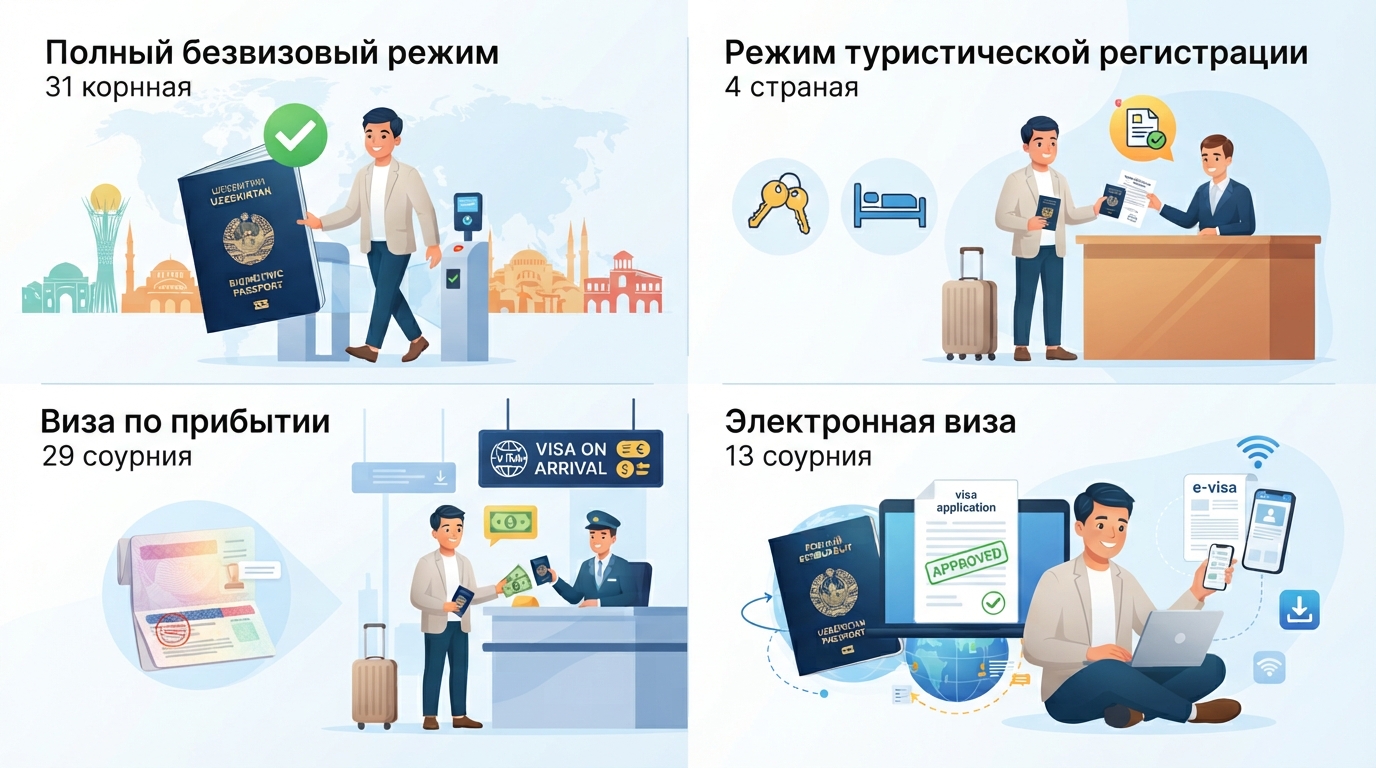
According to the Ministry of Foreign Affairs of the Republic of Uzbekistan, citizens of the country have several entry categories: full visa-free travel with 31 countries, tourist registration with 4, visa-on-arrival with 29, and e-visa with 13.
Let's look at the existing entry regimes, their differences, countries accessible visa-free or through a simplified visa procedure, and what you should check before traveling.
These four modes differ primarily in the time and location of entry permit processing. Visa-free travel and tourist registration require no visa at all; in the latter case, tourist documents are additionally checked at the border. A visa on arrival is issued directly at the airport or at a border checkpoint upon arrival. An electronic visa, on the other hand, must be obtained in advance, completely online, before departure.
Confusion between these modes often leads to problems at the airport: if a visa is required in advance, but travelers expect to obtain one upon arrival, they may be denied boarding. Therefore, the first step before any trip is to clarify the exact regime applicable to a specific destination country, rather than relying on the general notion that "visa-free travel is possible."
Visa-free travel does not mean unlimited stay in the country: each country sets a maximum length of stay and typically limits the purpose of travel to tourism, guest visits, or business meetings. Even with visa-free travel, work, study, or permanent residence permits require a separate permit.
Some visa-free regimes are established through bilateral agreements, such as those with Azerbaijan, Armenia, Belarus, Georgia, Kazakhstan, Moldova, Russia, Ukraine, Kyrgyzstan, and Tajikistan. This means that the conditions (including the length of stay) may differ from those with other countries on the list, so it's important to check the specific conditions for your chosen destination before traveling.
Unlike the full visa-free regime, where a passport is formally sufficient, the tourist registration regime requires the advance preparation of a package of documents, including a tourist voucher and hotel reservation confirmation. Without these documents, border guards have the right to deny entry even to citizens of countries with a simplified regime.
Since the requirements for a voucher and the list of documents vary by country, it's important to check the current procedure on the website of the embassy or consulate of your chosen country before traveling. These regulations are subject to change and do not always align with the general definition of "visa-free regime."
Upon arrival, travelers go to a dedicated visa processing counter, present their passport and, if necessary, additional documents—a return ticket, hotel reservation confirmation, or health insurance—then pay a fee and receive an entry stamp. Document requirements and fee amounts vary by country.
It's also important to clarify the accepted currency and payment method: some countries require cash payments in local currency or US dollars, and credit cards are not accepted everywhere. It's best to check this information on the destination country's embassy website before departure rather than upon arrival.
Applying for an electronic visa (e-Visa) typically requires completing an application on the country's official website, uploading a scanned copy of your passport and a photograph, and paying the visa fee online. Once approved, the visa is delivered electronically—you must print it or save it on your phone to present at check-in and passport control.
Application processing time varies by country: some countries make decisions in one or two days, while others take several weeks. It's best to submit your application in advance, not just the day before departure, especially if your trip is planned during the high tourist season.
Even with a nominally visa-free regime, entry requirements should be checked separately for each trip: countries periodically change their length of stay requirements and may introduce additional conditions (such as medical insurance or proof of funds), or, conversely, eliminate them. It's also worth checking passport validity requirements separately: in many countries, it must be valid for at least three or six months after the end of your trip.
If your route passes through a third country, it's important to check transit regulations in advance: the transfer country may require a transit visa or electronic entry permit, even if the final destination is visa-free for Uzbek citizens.
Visa requirements are not set in stone: countries enter into new agreements, change visa-free stay periods, or temporarily suspend existing ones. Therefore, a list that's current today may differ in a few months, making relying on outdated information from old articles or forums risky.
Before traveling, we recommend: checking the official list on the Uzbek Ministry of Foreign Affairs website, contacting the embassy or consulate of your destination country directly for further details (especially if your trip is for work, study, or an extended stay), and checking transit requirements if your route passes through a third country.
Up-to-date visa and health requirements for your specific route and passport can also be checked in the Timatic (IATA) database, which airlines use when checking in passengers for their flights.