

Wu Yiqun: How Xinjiang Transformed Into a Eurasian Hub
Xinjiang University Dean Wu Yiqun explains how Xinjiang transformed from a historical transit corridor into a major industrial and economic hub for Eurasia.
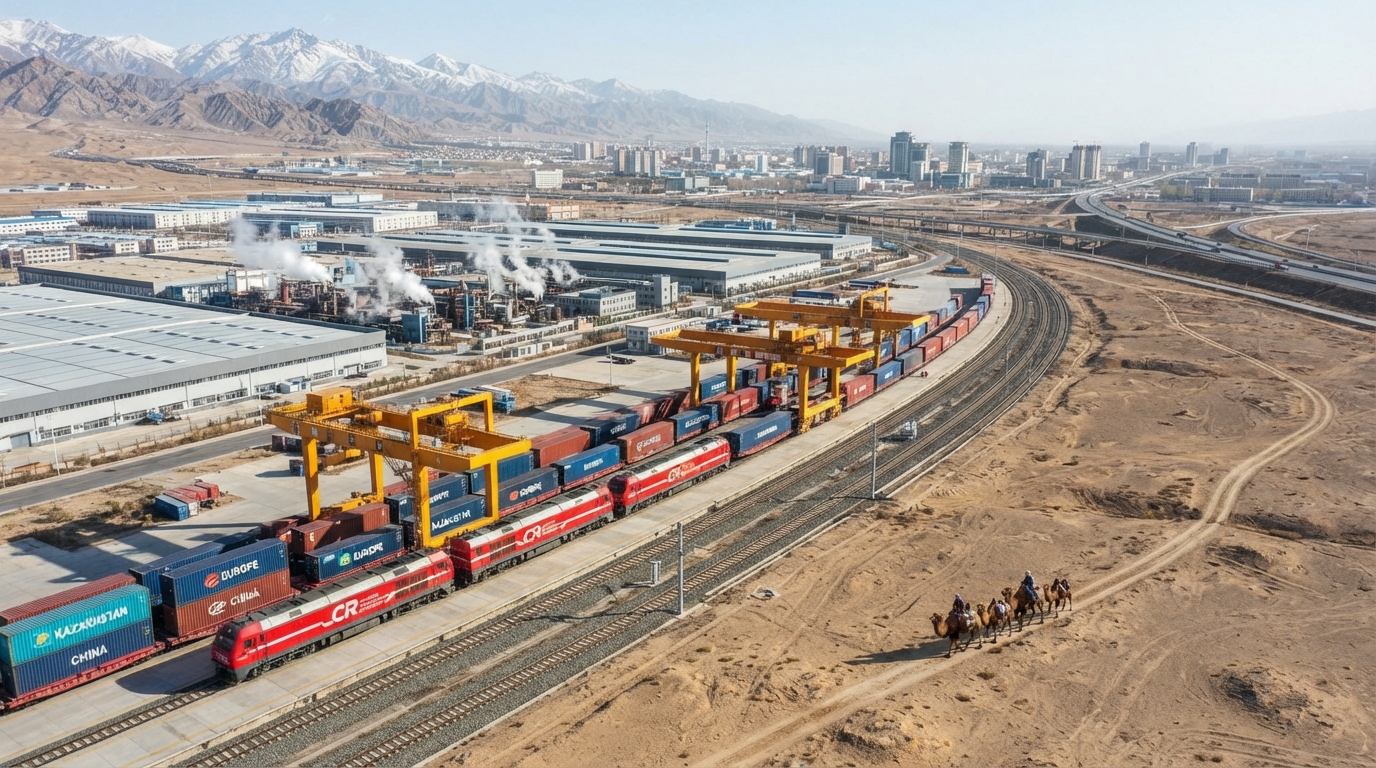
Wu Yiqun: The Evolution of Xinjiang into a Eurasian Hub
Tashkent, Uzbekistan (UzDaily.uz) — For over two millennia, Xinjiang has served as a transit area for merchants along the caravan routes connecting Asia and Europe, rather than a destination in itself.
However, this role is evolving as the region shifts from being merely a transport corridor to becoming a significant industrial and logistics center for Eurasia. In an interview with China News Service during the 9th China-Eurasia Expo, Wu Yiqun, Dean of the History Institute (Institute of the Chinese Nation Community) at Xinjiang University, elaborated on this transformation, the differences between modern Silk Road trade and that of ancient times, and the relevance of the Silk Road spirit amid geopolitical tensions.
Interview with Wu Yiqun, Dean of the History Institute (Institute of the Chinese Nation Community) at Xinjiang University.
China News Service journalists: Liu Wenwen, Wang Mengyao.
For more than two thousand years, the sound of caravan bells echoed through Xinjiang, a crucial route between Asia and Europe, where countless merchants and travelers passed. Yet, for many, Xinjiang was merely a stopover, not a final destination.
This long-standing situation is gradually changing. Xinjiang is swiftly evolving from a transit corridor into a prominent industrial and logistics hub. How has this transformation taken place? During the 9th China-Eurasia Expo, correspondents from the "East and West Ask" column of China News Service conducted an exclusive interview with Wu Yiqun, Dean of the History Institute (Institute of the Chinese Nation Community) at Xinjiang University.
Here is a summary of the interview.
China News Service: What is the relationship between the China-Eurasia Expo and the trade exchanges of the ancient Silk Road? How do you view the changes in trade forms between the ancient and modern Silk Road?
Wu Yiqun: The ancient Silk Road's trade was primarily based on spontaneous border trade among individuals. At that time, Chinese and foreign merchants, along with camel caravans, traversed deserts and ancient caravan routes, exchanging traditional goods like silk, tea, jade, and other commodities.
In contrast, the China-Eurasia Expo is a state-level platform initiated and promoted by China, with active involvement from neighboring countries. Modern trade has moved beyond the randomness and limitations of traditional trade. Cooperation has expanded from individual commodity trading to include energy, humanitarian exchanges, investment, and more.
Cultural exchanges have also evolved. While cultural ties were once primarily driven by trade, they have now developed into regular, independent, and equal dialogues among different civilizations.
If the ancient Silk Road thrived on trade, the modern exhibition thrives on interconnectedness and cooperation. This platform now extends beyond mere goods trading, becoming a vital mechanism for fostering joint development among regional countries and enhancing regional collaboration.
China News Service: As a key area of the Silk Road Economic Belt, how has Xinjiang transitioned from being a "transport corridor" to a "hub center"?
Wu Yiqun: Historically, Xinjiang mainly functioned as a transit territory for goods. Today, it is gradually evolving into a major hub center with enhanced capabilities for resource concentration and distribution. This shift from a "corridor" to a "hub" signifies not only the modernization of Xinjiang's infrastructure but also profound changes in development strategies and its role definition.
Previously, Xinjiang served as a transport corridor linking Central China with the Western regions, where goods were quickly passed through, leading to an economy primarily focused on transportation services—a typical "transit economy."
Now, leveraging the Horgos and Alashankou border ports and comprehensive free trade zones, Xinjiang has moved beyond being just a passage for goods. It actively engages in the international division of labor, becoming part of regional production and distribution chains, and facilitating logistics, trade, capital movement, and enterprise placement.
For instance, wheat from Kazakhstan was once merely transported through Xinjiang. Now, it is processed in comprehensive free trade zones into flour and animal feed, which are then supplied to China's domestic market. Additionally, natural gas from Central Asian countries is not only transported via pipelines but also supports the development of the local petrochemical industry and deep processing production chains in Xinjiang.
Various resources from the Eurasian continent converge, exchange, redistribute, and increase their value in Xinjiang. This transformation has turned the region from a simple "crossroads" of Eurasia into a crucial engine for regional economic growth.
China News Service: In ancient times, camel caravans traversed the Silk Road, trading wherever opportunities arose. Today, regular China-Europe cargo trains and modern transport routes are in operation. How have changes in the transport system influenced the fundamental principles of trade on the Silk Road?
Wu Yiqun: In ancient times, individuals from various countries navigated deserts, steppes, and forests, undertaking long and arduous journeys along the Silk Road to engage in trade between different regions.
Today, the introduction of China-Europe cargo trains, a digital management system at the Alashank