

Workers in Germany have been left with unpaid wages worth 35 billion euros
In Germany, non-compliance with minimum wage requirements by employers has cost employees, social security funds and tax authorities a total of around 64 billion euros since 2015, the dpa agency reported on August 10, citing an analysis by the German Trade Union Confederation (DGB).
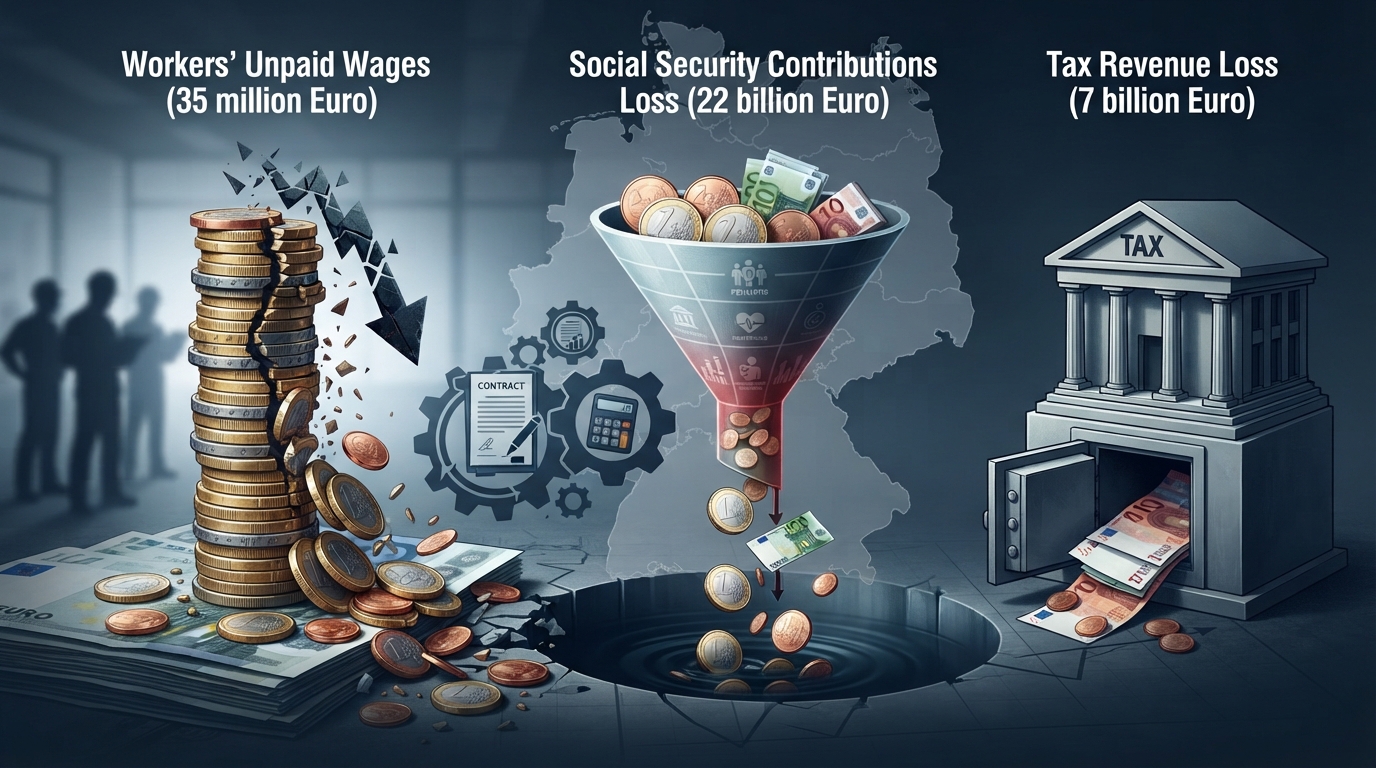
In Germany, workers have been left with unpaid wages worth 35 billion euros, according to calculations by the DGB (German Trade Union Confederation). This amount is due to employees not being paid the full statutory minimum wage.
Social security funds have also lost 22 billion euros. This is mainly due to insufficient contributions to the social security system due to underpayment or non-payment of wages officially due to employees.
In addition, German tax authorities have failed to collect 7 billion euros in income tax.
The trade union association notes that in some cases such financial losses are the result of criminal acts related to employers' failure to fulfill their legal obligations.
The analysis is based on data on working hours and earnings obtained from a survey of employees.
According to the DGB, since the introduction of the statutory minimum wage in Germany in 2015, an average of around 2 million employees have been paid less than the statutory minimum wage each year. These employees were paid an average of between €1.70 and €2.40 per hour.
As a result, employees not only lost part of their current income, but also their social security contributions were reduced. This also had a negative impact on the revenues of social security funds.
As the text states, the statutory minimum wage in Germany is currently €13.90 per hour. This amount can only be reduced in certain exceptional cases stipulated by law. In particular, special rules may apply to certain internships.
According to the DGB analysis, circumventing minimum wage requirements has caused financial losses of billions of euros, not only to the personal income of employees, but also to the state budget and social security system.