

Why Wimbledon is serving Indian ice cream and Bollywood beats
Departing from tradition, Wimbledon shed its restraint to target new audiences in cricket-crazy India.
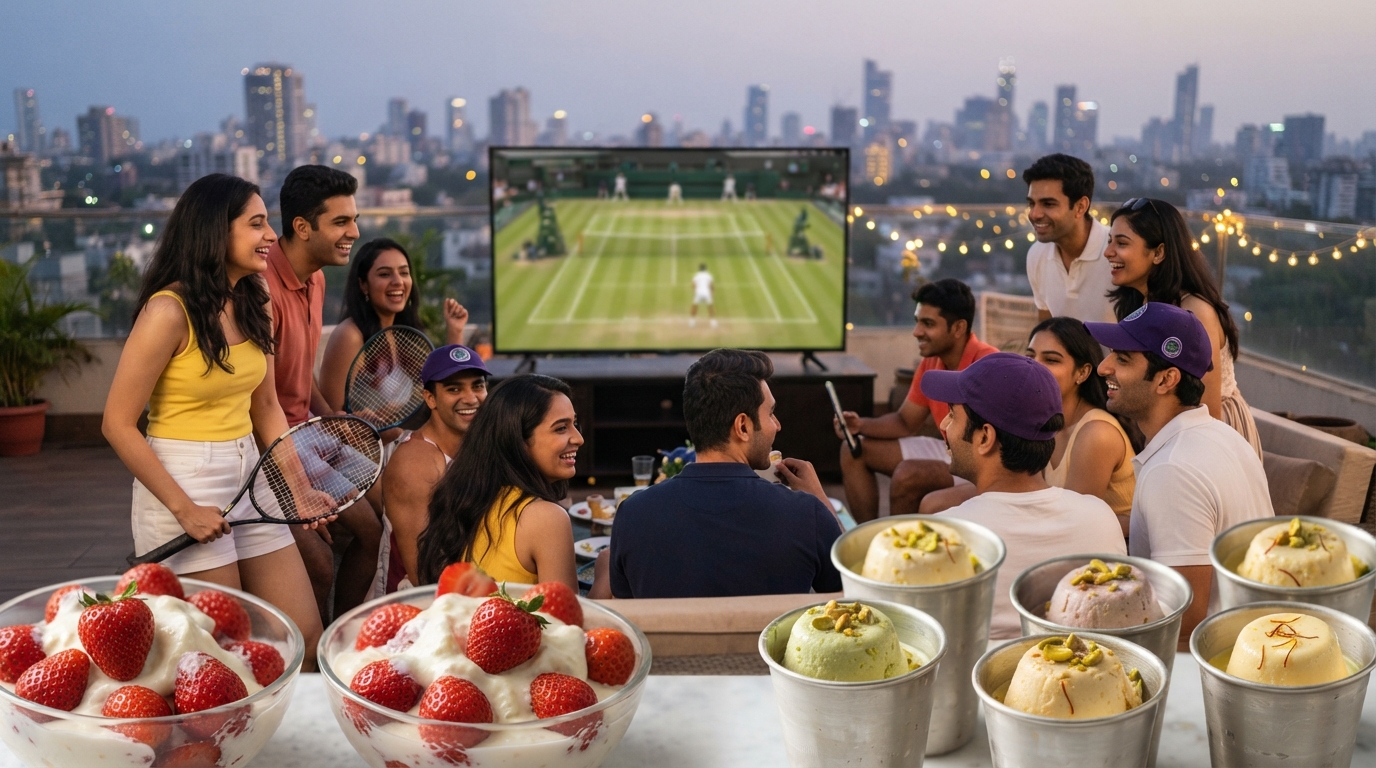
Wimbledon is embracing Indian culture with kulfi and Bollywood music to attract viewers in the cricket-dominated nation. This strategic shift has reportedly led to a significant increase in viewership, with Jannik Sinner's men's final victory over Alexander Zverev drawing approximately 2.7 million livestream viewers in India, despite airing after midnight local time.
While Wimbledon is renowned for its strict traditions, such as the all-white dress code and minimal advertising, organizers are adapting their approach to penetrate the Indian market, where tennis is a niche sport. This year, Wimbledon collaborated with a historic Delhi kulfi (Indian ice cream) maker, offering an Indian twist to its traditional strawberries and cream. Its Instagram account also featured reels of tennis stars set to popular 1990s Bollywood songs. Additionally, celebrity cricketers and Indian influencers were invited to the Royal Box to expand the tournament's appeal.
Wimbledon also localized its marketing efforts by distributing digital content in various Indian languages. This strategy appears to be successful, with an average of 853,000 viewers tuning in to the tournament in India this year, an 18% increase from the previous year, according to local media. JioStar, the exclusive streaming platform for the matches, did not provide official data to the BBC.
Sports branding expert Darshana Bhalla told the BBC that Wimbledon's focus on India is a deliberate strategy. India already represents Wimbledon's largest international audience by reach. The upcoming year 2026 is particularly significant, as Arnav Paparkar will be the first Indian in 36 years to reach the under-18 boys' singles quarter-finals. Bhalla noted that India is experiencing a surge in young tennis talent across both ATP and ITF circuits, and premium urban sports consumption is rapidly expanding beyond cricket, with streaming platforms effectively targeting niche audiences.
Sally Bolton, chief executive of the All England Lawn Tennis Club, Wimbledon's governing body, previously informed the *Financial Times* that India, alongside the US, is a "main focus" for expanding the Grand Slam's audience. With India projected to become the world's most crucial growth market for sport in the coming years—the sector is estimated to grow at a compounded rate of 12-14% to 2030, nearly double the global average, according to KPMG—tournaments like Wimbledon are increasingly adopting culturally specific engagement strategies for Indian audiences.
Bhalla explained that Wimbledon has recognized a major shift in global marketing. While premium brands once equated exclusivity with distance, they now understand that exclusivity stems from belonging. She stated that Wimbledon has altered its entry point, allowing young Indians to discover the tournament through familiar cultural elements, such as the kulfi collaboration, and the incorporation of Punjabi, Bollywood, and Tamil music, along with Indian content creators. Bhalla emphasized that this is more than just tactical social media engagement; it's about building a cultural bridge for a vast potential audience currently focused on cricket.
Upasna Dash, founder of Jajabor Brand Consultancy, told the BBC that reducing the "cultural distance" is crucial for many younger Indians who may perceive Wimbledon as aspirational but also remote. She added that the focus on social media-led marketing reflects how people discover events today. Younger audiences often encounter global events through social media before engaging with the event itself, meaning the campaign briefly enters their world rather than asking them to enter Wimbledon's.
For streaming platforms like JioStar, the tournament offers an opportunity to broaden engagement with a new demographic, create calendar events, and diversify beyond a single sport. JioStar was reportedly seeking to renegotiate its $3 billion broadcast rights contract with the International Cricket Council for 2024-2027 due to financial losses. While the partnership remains active, experts suggest that increasing investment in tennis makes strategic sense in such an uncertain scenario.
Bhalla stated that for JioStar, tennis expands the engagement calendar, attracts affluent urban audiences, and diversifies advertiser categories beyond cricket. She added that in India, cricket provides scale, while tennis offers premium audiences. Wimbledon, she noted, brings something cricket cannot: a premium, affluent, English-speaking, urban audience actively sought by brands in luxury, automotive, banking, fintech, travel, and premium consumer goods.
However, for the awareness generated by this branding blitz to translate into sustained, long-term engagement with the sport, Wimbledon must "create lasting relevance long after the tournament ends," according to Aryan Anurag, co-founder of Binge Labs, a Delhi-based social media agency. He warned that if these moments are treated as one-off campaign tactics around a tournament, their impact is likely to be short-lived. Dash added that for curiosity to evolve into genuine fandom, more grassroots engagement and continued market investment will be necessary.
Nevertheless, Bhalla noted that every major global sports property is observing Wimbledon's experiment. If it demonstrates that culturally contextualized storytelling can significantly increase engagement in India, then F-1, the NBA, the NFL, the UFC, La Liga, and the Premier League are expected to deepen their India-first content strategies.