

Why Uganda seems to be winning the battle against Ebola as virus spreads in DR Congo
Uganda discharged its last Ebola patient from hospital roughly two weeks ago.
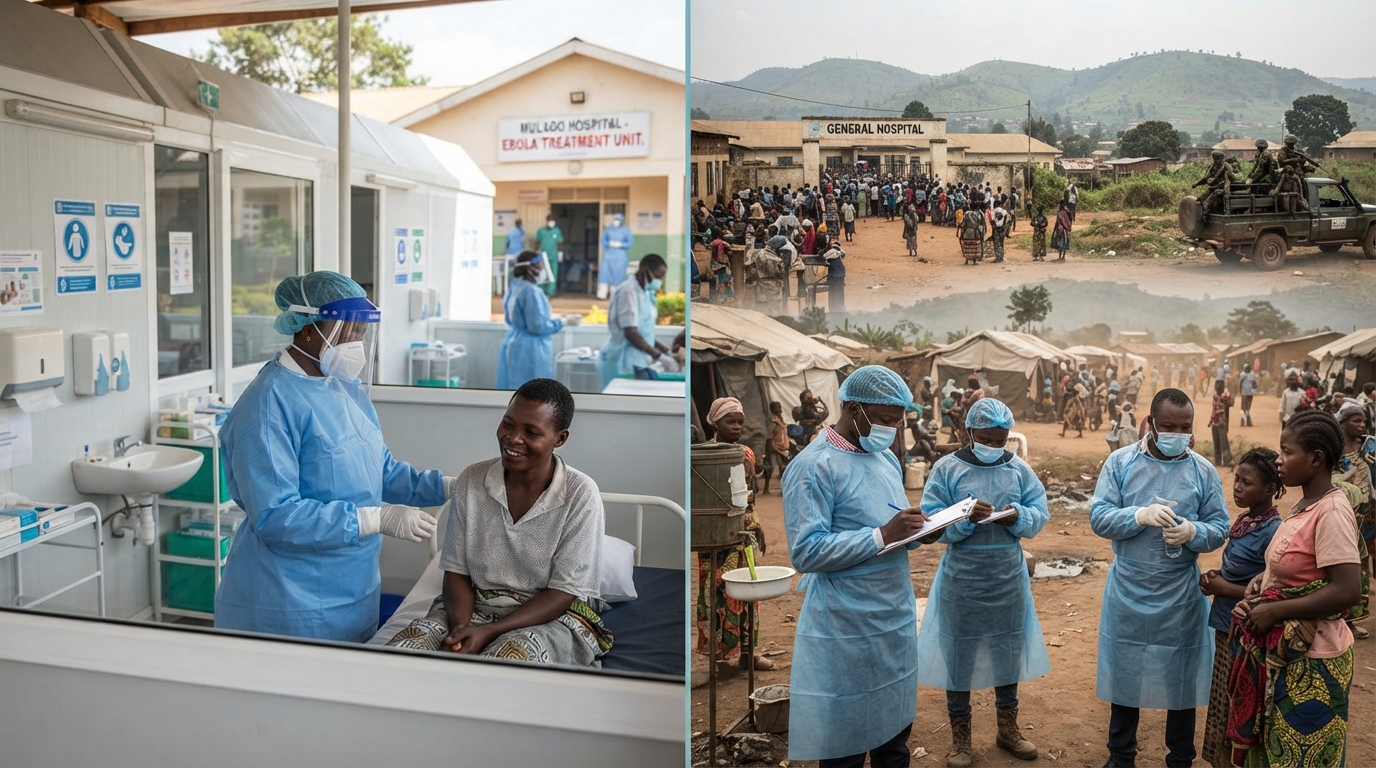
Uganda appears to be successfully combating Ebola, even as the virus continues its spread in the Democratic Republic of Congo. Ugandan authorities attribute their effective response to lessons learned from previous outbreaks.
The Ebola outbreak in eastern DR Congo has escalated to become the second-worst on record, with the official death toll surpassing 1,500. Experts suggest the actual number of fatalities since the outbreak was declared in May is likely much higher. Compounding concerns, DR Congo officials confirmed on Thursday that the virus is disseminating at a significantly faster rate than in prior outbreaks.
In stark contrast, neighboring Uganda, which also reported infections in May, presents a vastly different scenario. Uganda's health minister expressed "a moment of joy" two weeks ago when the final Ebola patient was discharged from the hospital. The country recorded only 20 cases and two deaths from the virus.
Dr. Kasonde Mwinga, the World Health Organization's chief in Uganda, stated that this relatively low casualty count was not due to "luck or chance," but rather "because people invested in preparedness," as she informed the BBC.
This current outbreak marks the 17th in DR Congo since Ebola's discovery 50 years ago. Uganda, by comparison, has experienced nine outbreaks since 2000. Officials there assert that insights gained from past tragedies have enabled them to prevent the disease from ravaging the country on multiple occasions.
An illustrative example is the case of a 12-year-old girl who arrived at a hospital in Luwero district in 2011. Her symptoms prompted immediate caution: she was isolated, medical staff wore personal protective equipment during her treatment, and upon her death three hours later, her body was meticulously sealed in a coffin. These precautions successfully halted the spread of what a blood sample later confirmed to be Ebola.
"We know Ebola. It's been here a few times, we know how to deal with it," government spokesperson Alan Kasujja told the BBC's Newsday programme.
Uganda's initial known case in the current outbreak was a man from DR Congo who sought treatment across the border. After health authorities confirmed multiple imported cases from DR Congo, they activated a specialized Ebola treatment center at Mulago hospital in Kampala, the capital.
Dr. David Kaggwa, head of the facility, noted that the center, which was utilized during an Ebola outbreak last year, had existing medical supplies and an "emergency medical team" on standby. "It was a matter of sorting and ordering a few more supplies, and then actually in one day we were ready to receive the patients. So, it is easy, it's not that we're starting from scratch," he explained.
Of the 20 individuals who tested positive in Uganda, 15 originated from DR Congo. It is believed that the first two cases may have been unaware of their condition. However, after Uganda and DR Congo jointly declared the Ebola outbreak on May 15, individuals exhibiting symptoms—including headaches, fever, and vomiting—"came direct to the treatment unit," according to Dr. Kaggwa. He suspects that because these patients did not pass through general hospitals and interact with other patients and medics, there was minimal opportunity for community transmission.
To curb the disease's spread, authorities also closed the border between Uganda and DR Congo, despite the financial repercussions for Ugandans who engage in cross-border trade.
Uganda's swift action was aided by an advantage over DR Congo in responding to the virus. Before the first cases were reported in DR Congo, Ebola had been circulating undetected for weeks. This was because health officials were testing for common Ebola species, not the rare Bundibugyo species responsible for the current outbreak. Uganda only detected its first case after DR Congo had identified and publicized multiple infections, meaning knowledge of the outbreak was public, allowing Uganda to act quickly to contain the virus.
"Surveillance mechanisms were put in place then it was easy to identify all the patients quickly," Dr. Kaggwa stated.
In contrast, DR Congo has faced greater challenges with surveillance and contact tracing. A field investigator tracking the virus in Bunia, an outbreak epicenter, informed Reuters that surveillance was hindered by inadequate planning, logistical bottlenecks, and the recruitment of inexperienced staff. "We discover the disease only after it has already spread," Dr. Moubarack Kano said. "We're just chasing it."
This situation is exacerbated by the insecurity in eastern DR Congo. Ituri, the province at the heart of the outbreak, has been under military rule for several years as the army attempts to suppress dozens of armed groups. Further south of Ituri, large areas are controlled by M23 rebels, a powerful militia that claims to have contained the outbreak. Their Ebola response coordinator, Dr. Fred Kaniki, attributed this achievement to early detection and contact tracing, telling the BBC: "In the course of a month we registered two more cases originating from those index cases and successfully followed up 400 people."
However, the M23 conflict and other pockets of violence have displaced millions in the region, complicating surveillance in DR Congo. Artisanal mining and cross-border trade also increase the chances of Ebola spreading as people are constantly on the move.
Conversely, Uganda successfully quarantined over 6,000 contacts of known Ebola patients during the outbreak. These contacts were isolated for a 21-day incubation period. "That is very, very important because usually cases come from those contacts," Dr. Kaggwa emphasized. Kasujja concurred, stating, "I would say that our success is mainly due to our promptness and completeness of follow-up."
Official data indicates that more than 1,500 people have died from Ebola in DR Congo.
This is not Uganda's first impressive response to a health crisis. In the 1990s and 2000s, the country received widespread acclaim for its successful campaign against HIV and AIDS, which saw HIV prevalence decline from over 10% to 6% in approximately a decade. A large government program promoted the "ABCs": abstinence, being faithful, and condom use.
Community cooperation is also crucial in preventing infections during an outbreak, Kasujja added. "To this day, despite the fact that there are announcements that Uganda has no Ebola patients [members of the public] are still being careful, still taking the necessary precautions," he noted.
This cooperation is exemplified by one of Uganda's first Ebola cases, a nurse who contracted the virus while working in an intensive care unit in Kampala. Shortly before the outbreak was officially declared, she had treated a patient who later died—unbeknownst to her—of Ebola. She recounted to the BBC how she began feeling ill two weeks later, experiencing headaches, joint, and muscle pains. Painkillers were ineffective, and a hospital conducted various tests, including for malaria. She sought a second opinion and, upon learning that two colleagues had been diagnosed with Ebola, immediately chose to self-isolate. Like many other patients, she fully adhered to the guidelines, even during the frightening period when her 11-month-old baby, whom she was still breastfeeding, was taken from her and quarantined for 21 days.
Uganda has since declared itself entirely Ebola-free, deviating from the protocol of waiting 42 days from the last patient's recovery to declare an outbreak over. The health ministry stated it could make this announcement because the first case of the virus was imported, and there was never any "unexplained community transmission."
However, the reality of a long, porous border with Ituri, the Congolese area with the most infections, means the virus could easily re-enter Uganda. Consequently, Uganda has dispatched dozens of healthcare workers to DR Congo to assist their "brothers and sisters" in combating Ebola, as Uganda's Health Minister Chris Baryomunsi stated on X. "We are going to where the problem is," Kasujja explained. "Uganda cannot win against Ebola if the Democratic Republic of Congo fails."
Uganda has also intensified screening at the border and continues to educate the public on prevention and management measures for the disease. "We're always very prepared," Dr. Kaggwa affirmed.