

What happened to Lisa Ross? Reporting from Athens as a murder case unfolds
The death of Lisa Ross has attracted significant attention from international media and has horrified the people who lived near where her body was found.
**The Unfolding Mystery of Lisa Ross's Death in Athens**
The discovery of Scottish aid worker Lisa Ross's body in a suitcase within an abandoned building in Athens has ignited a murder investigation, drawing significant attention both locally and internationally. The BBC dispatched a reporter to Athens the week after the grim find, as a man had been accused of her murder.
The shocking nature of the details has resonated deeply with residents of the Kypseli area, where the 38-year-old's body was found. Many expressed genuine horror, noting that their neighborhood was typically very safe. Lisa's body was located in a derelict car showroom on Evelpidon Street, a graffiti-covered shell with security fencing and vegetation growing from its roof. Despite its dilapidated state, the area is bustling, popular with tourists, and surrounded by apartment blocks, a park, and a sports club.
Lisa, who had been volunteering with a refugee support group for approximately a month, resided less than a mile away in a traditional Greek apartment building. Neighbors in her 12-flat building, where Lisa was staying on the ground floor, expressed terror at the proximity of the events. Police had searched her apartment for fingerprints, leaving black markings on a door.
The man accused of Lisa's murder is Sharif Ahmadzai, a 26-year-old born in Afghanistan who arrived in Greece as a refugee at age 15. Ahmadzai, who has an American wife and converted to Christianity, had established a charity to assist refugees.
Information regarding the case initially emerged primarily from police sources, though not officially from the police themselves. The police union, seemingly operating under different rules than their superiors, provided a steady stream of details. They reported CCTV footage showing Ahmadzai moving a suitcase believed to contain Lisa's body and stated that he admitted to moving the body but denied committing murder.
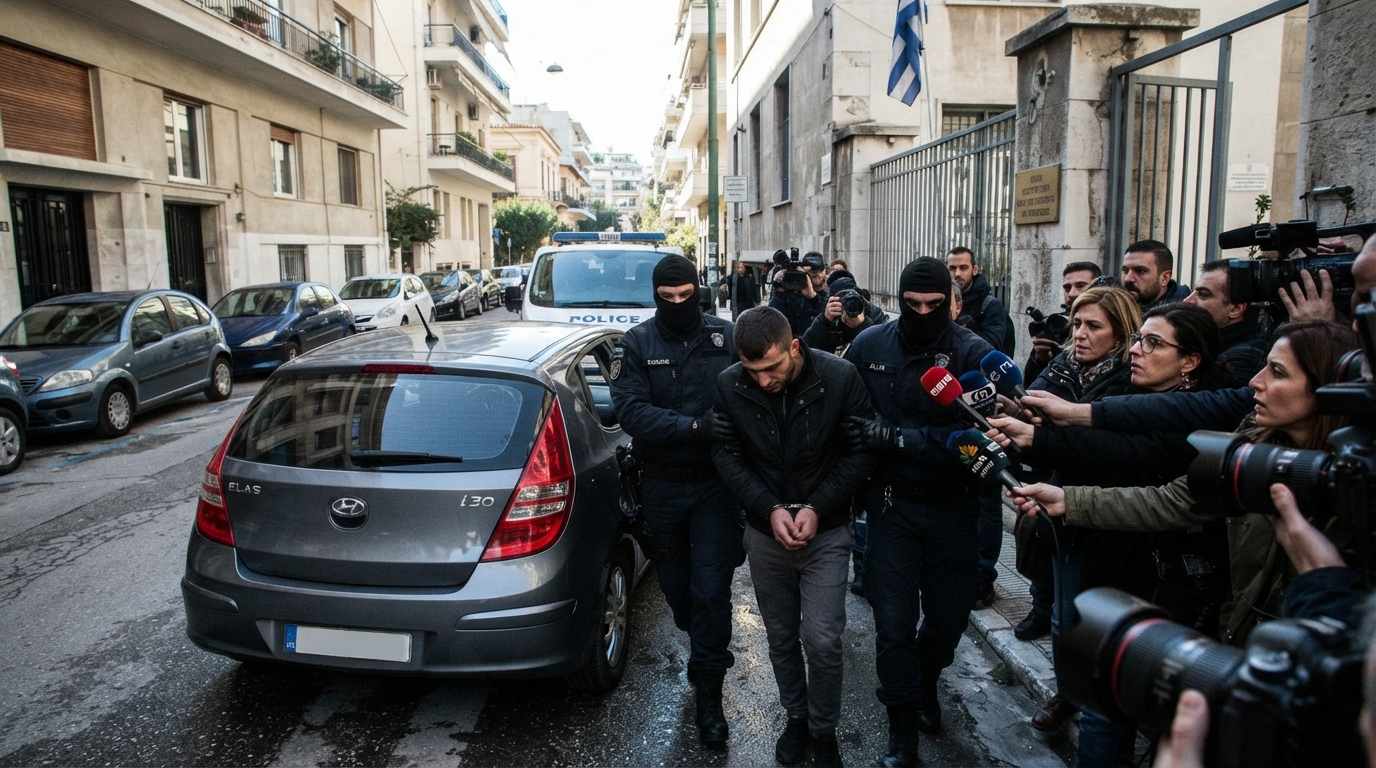
Ahmadzai's first court appearance took place on a Wednesday morning in a building on the same street where Lisa's body was discovered. Unlike Scotland, only accredited court reporters were permitted inside. International and Greek journalists waited outside, and a sudden burst of excitement erupted when local reporters received video of Ahmadzai being escorted into a car at police headquarters. He arrived at court in a small, grey Hyundai i30 hatchback with blacked-out windows, driven swiftly into a secure compound. A local news contact, Daphne, filmed him on her phone as he exited the vehicle.
On Thursday, Ahmadzai returned to court to be charged and remanded in custody until his trial, which could take up to 18 months. This time, the reporter gained access to the compound and waited three hours for the hearing to conclude. Upon his exit, Ahmadzai, handcuffed and flanked by two tall, armed, balaclava-clad police officers, appeared small and dejected, his head bowed. He walked swiftly past reporters, who noted the contrast with previous images and videos. When asked if he knew Lisa or had killed her, he remained silent.
The police union later informed the BBC that Ahmadzai's arrest followed his wife's provision of "key" and "decisive" details, placing her husband and Lisa at the same apartment on July 15. She told police that she and her husband had met Lisa in February while volunteering for a refugee charity in Athens. Ahmadzai reportedly denies homicide with intent, the equivalent of a murder charge in Scotland, but admits to moving the body, claiming he feared being blamed for her death.
The case has been marked by an unusual number of media leaks, which Ahmadzai's defense lawyer, Christos Erdas, highlighted as potentially detrimental to his client's presumption of innocence. Erdas stated that his client exercised his right to remain silent to present his defense fully once the case file was complete, and that his rights had been "violated" by the leaks of evidence.
Greek journalists, accustomed to such situations, have expressed fascination that reporters traveled from Scotland to cover the case. The BBC reporter was interviewed by Greek TV channels Star and ERT, who were curious about the Scottish interest and public reaction. One reporter likened the case to a horror film script.
As the investigation into Lisa Ross's death continues, the reporter emphasized the importance of remembering the human element at the heart of the story. Lisa Ross, whose untimely death in horrific circumstances has left a family seeking answers, remains the most crucial aspect of the unfolding narrative.