

Water restrictions are being introduced in Europe due to heat and drought.
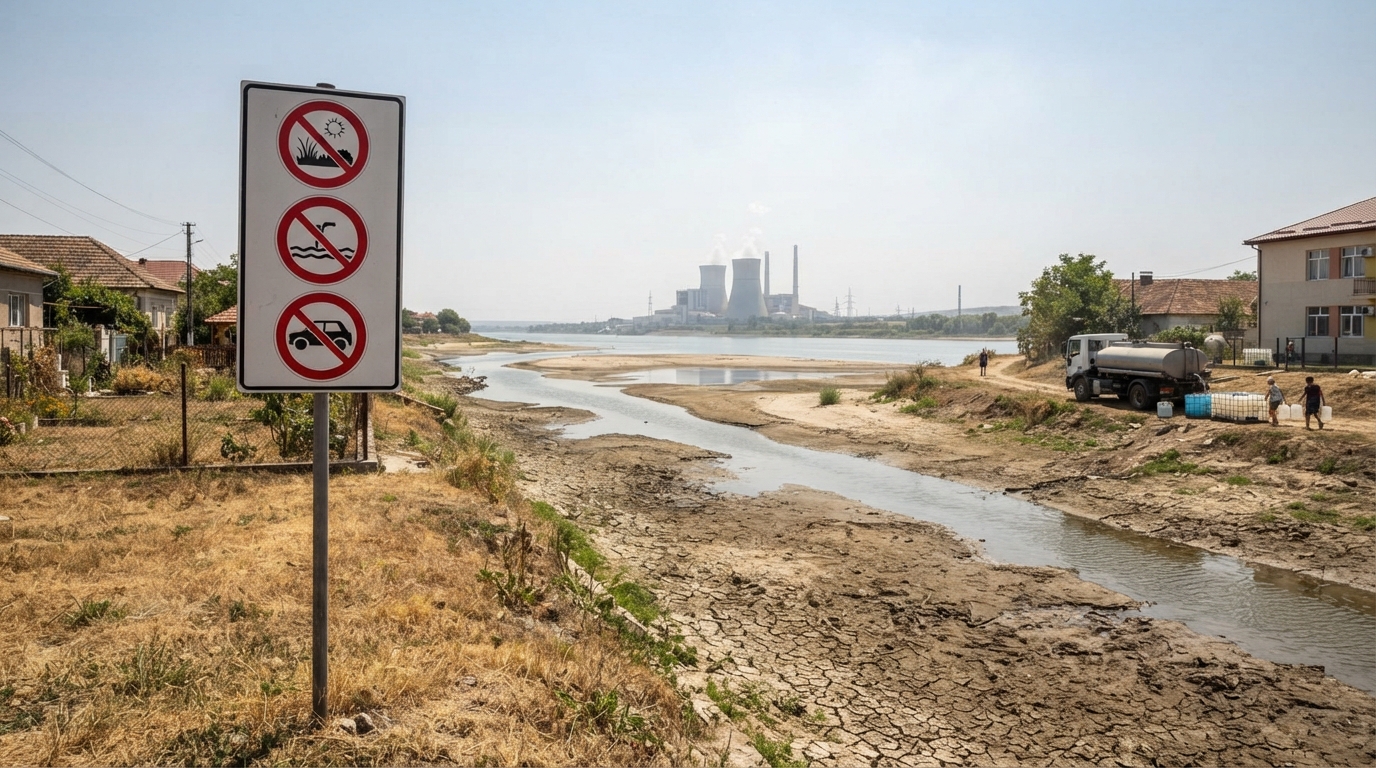
Due to abnormal heat and drought, water restrictions are being introduced in Europe.
Uzbekistan, Tashkent – Podrobno.uz News Agency.
A prolonged period of high temperatures and insufficient precipitation has led to serious water shortages in several European countries. In Germany, dozens of regions have tightened water use regulations, and Moldovan authorities are warning of possible water supply disruptions due to the critically low level of the Dniester River.
In Germany, restrictions are already in effect in 109 municipalities. Residents are prohibited from watering lawns and gardens, filling swimming pools, and washing cars. In some areas, these measures have also extended to the agricultural sector, with farmers restricting the amount of water they can draw from rivers and lakes for irrigation.
The current situation is due to insufficient precipitation in the winter and spring, falling river levels, and several extreme heat waves.
In Munich, city authorities have banned the use of water for filling garden pools, watering lawns, and washing cars. In Hanover, garden watering is permitted only when temperatures drop below 27 degrees Celsius, while in Potsdam, irrigation of the state palace gardens has been suspended.
Jörg Drewes, a professor at the Technical University of Munich, believes that the restrictions imposed are insufficient for a long-term solution. He believes Germany needs to expand the use of treated wastewater for industrial purposes and develop systems for redistributing water resources between regions.
A difficult situation is also developing
in Moldova. Due to a sharp drop in the Dniester River's water level, the country's authorities have begun preparing for possible water supply disruptions. Environment Minister Grigore Hadjder stated that Moldova is already using strategic water reserves, and hospitals and kindergartens in Chisinau have begun to create drinking water reserves.
At the same time, a dispute has arisen between Chisinau and Tiraspol over the regulation of the Dniester River's flow. The authorities of the unrecognized Transnistria region opposed the decision by Moldova and Ukraine to reduce water discharges from the Novodnistrovsk Reservoir without their participation. Chisinau stated that water resources are managed within the framework of bilateral agreements with Ukraine.
The consequences of the drought have already affected the region's energy sector. Previously, record-low Danube water levels caused problems in Romania and Hungary: in Romania, work was being carried out to ensure cooling at the Cernavoda Nuclear Power Plant, while Hungary warned of the risk of operational disruptions at the Paks Nuclear Power Plant.