

Venezuela government to launch formal talks with opposition members
The opposition says the aim of the talks is to strengthen the democratic institutions and the electoral system.
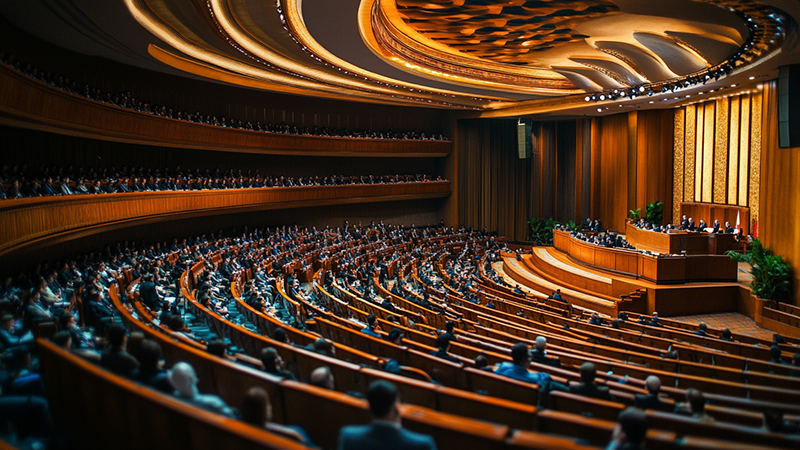
Venezuela's government is set to initiate formal discussions with certain opposition figures starting August 1. Jorge Rodríguez, representing the government, has already met with former opposition lawmaker Dinorah Figuera.
This announcement follows the US military's capture of Nicolás Maduro, the then-Venezuelan leader, during a dawn operation in Caracas six months ago, after which he was taken to New York to face drug-trafficking allegations. Since that event, former Vice-President Delcy Rodríguez, a supporter of Maduro, has maintained power with backing from the Trump administration, much to the dismay of the opposition, which anticipated a governmental shift following Maduro's removal.
An opposition statement indicated that these discussions aim to establish "a route map towards democracy." The plan for formal negotiations was revealed almost simultaneously by a faction of opposition politicians and Jorge Rodríguez, who leads the government-controlled National Assembly.
Jorge Rodríguez, brother of interim president Delcy Rodríguez, pointed to the devastation caused by the recent twin earthquakes that struck northern Venezuela on June 24 as a catalyst for the talks. The confirmed death toll has reached at least 4,734, with numbers expected to rise as more bodies are recovered from the debris. "Only through unity can we move forward with reconstruction and maintain peace," Jorge Rodríguez stated briefly.
The opposition's statement elaborated on the support received from the United States since the earthquakes, emphasizing that "Venezuela is not alone." Many structures collapsed under the impact of the quakes.
The opposition group consists of former lawmakers elected to the National Assembly in 2015, the last instance when opposition parties held a majority. Subsequent National Assembly elections have either been boycotted by the opposition or deemed neither free nor fair, as Maduro and his PSUV party have tightened their control over all government branches.
Dinorah Figuera, who returned to Venezuela in June after nearly eight years in exile, will lead the opposition team. Upon her arrival in Caracas, she informed reporters that her trip was "on invitation from the [US] State Department" to advocate for the renewal of the National Electoral Council (CNE), which has been dominated by Maduro loyalists for years. The CNE declared Maduro the victor of the 2024 presidential election, despite independent electoral observers reporting a significant win for opposition candidate Edmundo González.
In a statement released on Tuesday, the opposition group emphasized that the discussions would prioritize strengthening democratic institutions and the electoral system, as well as ensuring guarantees for political participation. For years, opposition politicians and critics of the Maduro government have faced persecution, with many imprisoned and others forced into exile.
Despite the release of numerous political prisoners following Maduro's ouster, 372 remain incarcerated, according to the prisoners' rights organization Foro Penal. The most prominent opposition leader, María Corina Machado, has yet to return to Venezuela after secretly leaving in November to receive the Nobel Peace Prize for her efforts in promoting democracy.
Although she dedicated her Nobel Prize to US President Donald Trump, his administration now appears to favor Dinorah Figuera over Machado as the negotiator for a democratic transition in Venezuela. Machado attempted to return to Venezuela shortly after the twin earthquakes but was unsuccessful. While President Trump has denied blocking her efforts to enter the country, US media previously cited unnamed officials describing her return attempts as "potentially disruptive" to post-earthquake recovery efforts.
Machado has not yet responded to the announcement of the talks but has called for a meeting of the coalition of opposition parties she leads later on Wednesday to discuss the matter. Venezuelans have expressed anger towards the government for its perceived negligence in responding to the earthquake crisis.